
 E-Paper



Greater Noida: On-the-spot challans on Yamuna Expressway
Since it was opened in August 2012, the Yamuna Expressway — which connects Greater Noida with Agra — has witnessed 4,984 accidents till April 10, 2018.


The Gautam Budh Nagar traffic police, in association with the Yamuna Expressway Industrial Development Authority (YEIDA), will start issuing on-the-spot challans against vehicles caught violating traffic rules on the Yamuna Expressway from April 16.
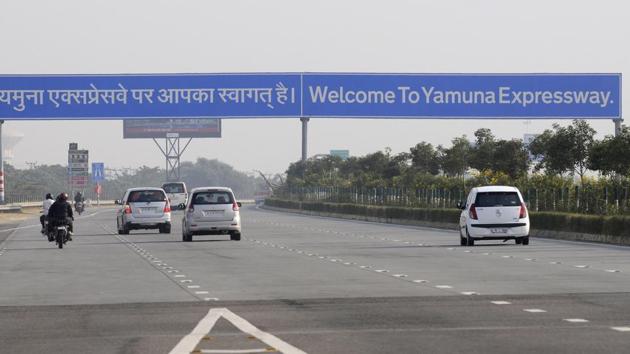
“We will start on-the-spot challan. With the help of Google map, a vehicle owner will get warning signals if they cross the speed limit of 100 km per hour on the eway. Besides, we have directed the Jaypee Infratech, the operator, to put streetlights on 165 km stretch of the eway and also install crash barrier in phases for the safety of commuters,” said Arun Vir Singh, chief executive officer of the YEIDA.
Apart from this, Jaypee Infratech has also been directed to take other steps that help reduce accidents.
Since it was opened in August 2012, the Yamuna Expressway — which connects Greater Noida with Agra — has witnessed 4,984 accidents till April 10, 2018.
Last week, in a meeting held in Lucknow, Uttar Pradesh chief minister Yogi Adityanath directed the YEIDA, Jaypee Infratech and the police to take effective steps to reduce road accidents. The meeting was held after the Supreme Court ordered the state government to ensure safety of motorists on the expressway. The SC directions came in response to a petition that sought safety for motorists on the eway on which 540 people have been killed in accidents so far. SC will hear the road safety case again on April 20, said officials.
According to the plans, the police and the authority has integrated 25km Noida-Greater Noida Expressway with the Yamuna Expressway.
“Since Noida has an intelligent traffic management system and the Yamuna eway also has high-definition cameras at regular intervals, catching traffic violators won’t be tough. If a vehicle crosses the 100km/hour mark, our control room in Noida’s Sector 14A and Jewar toll plaza will get a message about the details of the vehicle. When the vehicle will approach the toll plaza executive to pay toll, we will hand over a copy of the challan,” said Anil Kumar Jha, superintendent of police (traffic), Gautam Budh Nagar.
At present, the police sends challan through post office, which is ineffective as a large number of the postal challans are not received by the vehicle owner.
“In the last two months, around one lakh over-speeding challans have not been delivered on the addresses mentioned on vehicle registration certificate. To make enforcement better, we have decided to issue challan on the spot,” said Singh.
A software is installed at the Jewar Toll Plaza to record the speed of every vehicle that runs on the expressway.
The speed limit for medium and small vehicles is 100 kilometres per hour (kmph), whereas the speed limit for heavy vehicles is 60 kmph.


Stay updated with all the Breaking News and Latest News from Mumbai. Click here for comprehensive coverage of top Cities including Bengaluru, Delhi, Hyderabad, and more across India along with Stay informed on the latest happenings in World News.


