For a nation that was the largest regional donor for Afghanistan, India has had little say in shaping the response to developments in the war-torn country following the Taliban takeover in mid-August through various regional mechanisms.
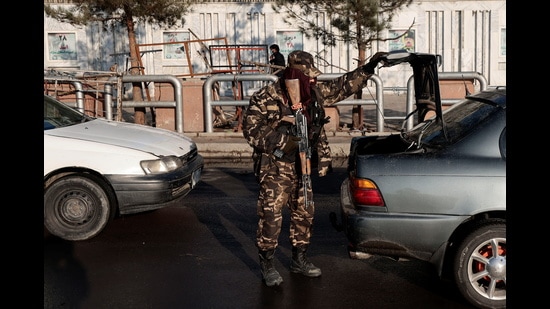
The dialogue will also help India remain relevant in shaping the response to developments in Afghanistan and build on the work it has done in the recent past, such as piloting UN Security Council resolution 2593, which New Delhi has held up as a template for dealing with the Taliban setup in Kabul (REUTERS)
Now, India is hoping to change that by hosting its first dialogue of key regional countries on Afghanistan on November 10. More significantly, the Delhi Regional Security Dialogue, to be chaired by National Security Adviser (NSA) Ajit Doval, will bring together the security tsars of seven countries, including Iran and Russia.
Though Pakistan and China were invited to the dialogue, their decision not to attend is hardly surprising, given the state of India’s bilateral relations with both countries. India-Pakistan ties continue to be at an all-time low, and New Delhi and Beijing are locked in a military standoff along the Line of Actual Control (LAC) that has taken relations to their lowest point in decades.
The Indian side is looking to the dialogue to help in forging a cooperative approach to tackle threats emanating from Afghanistan, including terrorism and radicalisation. The presence of top security officials from five Central Asian states – Kazakhstan, Kyrgyzstan, Tajikistan, Turkmenistan and Uzbekistan – will be significant in this regard.
The dialogue will also help India remain relevant in shaping the response to developments in Afghanistan and build on the work it has done in the recent past, such as piloting UN Security Council resolution 2593, which New Delhi has held up as a template for dealing with the Taliban setup in Kabul.
According to an Indian assessment, the five main threats and challenges following the Taliban takeover are terrorism within Afghanistan and across its borders, radicalisation and extremism, cross-border movements that are a key concern for Central Asian states, drug production and trafficking, and the threat emanating from vast amounts of weapons and military gear left behind in Afghanistan by US troops.
While some of the countries attending the day-long dialogue, such as Russia and Iran, have engaged closely with the Taliban for some years, the Indian side believes they still have a high degree of convergence on the concerns and objectives in Afghanistan, such as ensuring an inclusive government in Kabul and inculcating a culture of moderation.
The dialogue will also look at ways to deliver humanitarian aid to the Afghan people – an area where New Delhi’s efforts to help have been stymied by Islamabad’s obdurate refusal to allow the shipping of Indian relief materials through Pakistani territory.
The need for humanitarian assistance is pressing as a UN assessment has shown that the shocks of drought, conflict, Covid-19 and an economic crisis have left more than half the Afghan population facing a record level of acute hunger. The assessment also highlighted the need for an urgent international response to prevent a humanitarian catastrophe as one-in-two Afghans will face emergency levels of acute food insecurity from November through the March lean season.
However, India will have to temper its expectations from the dialogue with some amount of pragmatism. While Tajikistan has taken the lead in pushing the Taliban to form an inclusive government with the participation of Tajiks, the political leadership of some Central Asian states, such as Uzbekistan, has shown a greater willingness to work with the Taliban to ensure stability in the region.

 E-Paper