
 E-Paper



Bolster forensics, but don’t link with jail term
Forensic science is a powerful tool, one is used at both the investigative stage and the prosecution stage of a criminal case. But its use must be carefully monitored, and girded with judicial oversight and robust safeguards

 Prefer HTon Google


Last week, Union home minister (HM) Amit Shah said that the Centre wanted to make the use of forensic science mandatory during the investigation of criminal offences that attract more than six years imprisonment. He added that the necessary amendments in laws will be made to make such use legal and compulsory. Days later, Delhi Police followed up with a standing order, making it mandatory for investigating officials to use forensic technology while probing heinous crimes.
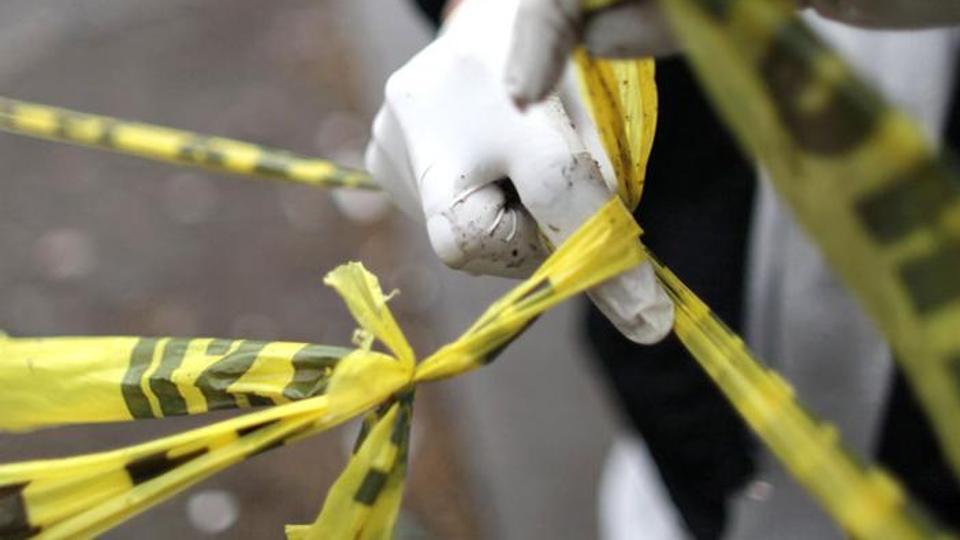
While the rationale of linking forensic examination only with offences punishable with more than six years is not clear, the idea has its advantages and disadvantages. It is undeniable that forensic evidence remains unaffected when compared to oral testimonies of witnesses, who often turn hostile. It is also a fact that the use of forensic science in criminal investigations in India is far less compared to developed countries. Several police reform commissions have also recommended increasing the use of forensic science, and avoiding short-cut and third-degree methods of interrogation.
However, the importance of forensic science must not be tied only with cases attracting a certain quantum of punishment. For example: While fatal accidents, stalking a woman electronically, and the bulk of cybercrimes (under the Information Technology Act) are punishable only with imprisonment up to three years, the forensic examination of vehicles involved in a collision and cyber forensics of suspect computer systems is valuable in nabbing the culprits. So, if a forensic examination is made compulsory for heinous offences, other offences (with lesser punishment) may suffer because of the limited forensic resources in states.
Further, despite taking precautions, traces or samples collected from a crime scene may get spoilt or be insufficient in quantity for examination. In sexual assault cases, the medical examination of a victim is useful only when conducted within three to four days. The mandatory provision, therefore, may not always be beneficial. The use of certain techniques (without consent) such as a narco-test, lie-detection test and brain-mapping has been held unconstitutional by the Supreme Court. Any new scientific test, therefore, will have to stand the scrutiny of the constitutional courts as well.
It is also essential to evaluate the historical development of FSLs in states. The FSLs of new states are still ill-equipped and under-staffed. District mobile FSLs are either non-existent or lack requisite resources. The corpus of the police modernisation fund scheme, under which the state FSLs get most of their funds, has dropped from about ₹1,560 crore in 2013-14 to about ₹460 crore in 2022-23. Even if the Centre is ready to provide financial assistance to states, state governments will have to sanction and induct staff to run the labs. As crime control is the primary responsibility of the states, it is necessary that state governments are also brought on the same page to allocate necessary funds.
Currently, electronic records are admissible as a document in a court of law but the value of expert opinion (of a forensic expert) is only corroborative in nature. Therefore, to increase the credibility of forensic examination, the evidence act may be amended to make the result of certain techniques such as DNA examination and fingerprint identification or comparison — whose jurisprudence has sufficiently developed — admissible in the court with enhanced value.
Forensic science is a powerful tool, one is used at both the investigative stage and the prosecution stage of a criminal case. But its use must be carefully monitored, and girded with judicial oversight and robust safeguards. The arrest of the notorious American serial killer Dennis Rader — infamously known as the BTK killer — in 2005 after 31 years and 10 murders was only made possible by the forensic examination of the metadata of a floppy disk.
On the other side of the spectrum stands the 2015 admission by the Federal Bureau of Investigation that its hair sample analysis over two decades overstated forensic matches to help the prosecution (this included 32 defendants who were eventually sentenced to death). Encouraging the use of forensic techniques in criminal investigations is logical, but the aim should be to strengthen the forensic infrastructure and dig out the truth, not link it with the quantum of punishment and conviction rate.
RK Vij is former special director-general of policeThe views expressed are personal


