
 E-Paper



Chennai’s airport game must take off post-haste
Almost all metropolitan airports — Mumbai and the NCR have two each — have vastly improved facilities. Chennai, however, remains a glaring exception.

 Prefer HTon Google


India’s airports have seen a dramatic makeover in almost all metro cities and several tier-II towns, largely due to the entry of the private sector into airport infrastructure and management. Those who flew in the 1970s and 1980s may recall how decrepit airport infrastructure made the risk of a beam or an entire roof collapsing seem higher than an aircraft-related incident. Even major airports had a tired look and feel, a signature of the Airport Authority of India (AAI)’s management.
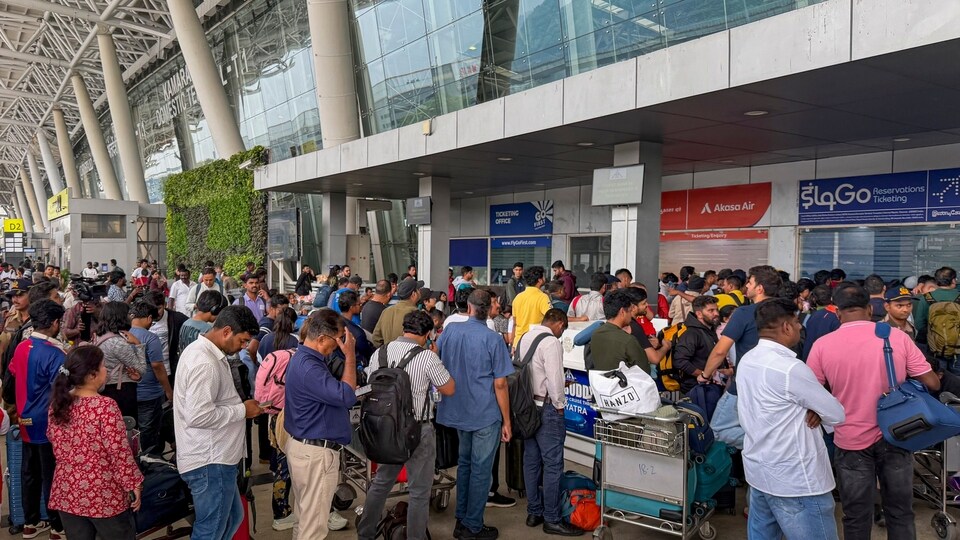
Now, almost all metropolitan airports — Mumbai and the National Capital Region have two each — have vastly improved facilities. Chennai, however, remains a glaring exception. In 2005-06, when the privatisation of metropolitan airports was in full swing, Tamil Nadu’s DMK government of the time rejected privatisation and forced the city to yield to another below-the-mark AAI facility. I recall attending the inauguration of two AAI facilities — Dabolim (Goa) and Chennai — and documenting their pronounced inadequacies.
Also Read: Home minister, aviation minister review passenger facilities at major airports
Recently, en route to Colombo from MOPA (Goa), via Chennai, I realised that unless you have a private car receiving you at the domestic arrival, passengers of all ages landing at Chennai airport are forced to haul their luggage and then ride a buggy to a cramped area where they can hail an app-taxi ride or public transport. This is undoubtedly an inconvenience to the lay flyer since the majority of the arrivals use public transport to travel from the airport to their destinations — it is worse when they have to navigate the busy roads outside the airport’s perimeter to board a bus.
One way to fix this is to allow taxis to meet flyers at the exit and make those with private cars and drivers tug their luggage and ride buggies. One is sure that this would make the AAI officialdom find a way out of the present mess quicker than one can imagine.
Flyers complain that the airport feels permanently under-construction, owing to its constant need for renovation and upgrades. It lacks sufficient seating, faces prolonged baggage carousel delays, and experiences severe peak-hour gridlocks both within the airport and at the exit. Things are not much better on the airside, with high usage of shuttle buses and trams on the tarmac due to low aerobridge availability. And parking remains just as much a challenge on the airside as on the terminal side.
Not surprisingly, Chennai has been slipping in airport rankings (as recently reported in the media); indeed, once considered a laggard of the metropolitan airport pack, Kolkata airport frequently threatens to unseat its southern cousin in the rankings, thanks to the latter’s stagnant traffic growth and cancelled flights.
Tamil Nadu has paid a heavy price for the failure to expand — ministry sources say that over the last several years, Chennai has lost valuable American-West-Coast-bound daily traffic to Bengaluru, Karnataka, where flyers are ferried directly to the international terminal in brand new cars, at nominal cost. Whether this is due to better pricing or wider availability of routes and options is not clear, but the fact remains that traffic that would have earlier flown from Chennai is now choosing Bengaluru.
Many airlines have withdrawn flights from Chennai due to the airport’s capacity and infrastructure bottlenecks. It now risks losing the race to Bengaluru and Hyderabad for no other factor than its inability to compete. The damage done by successive administrations in Tamil Nadu and their refusal to cede control is now well-documented.
Expert projection that the airport, as it exists today, will hit saturation by 2028-2032 should be a reason for worry. The site picked by the previous administration for a new airport, at Parandur (70 km from the heart of Chennai), was rejected by the new dispensation in power in Tamil Nadu, after the project was opposed by local farmers and activists (the site hosts many key wetlands).
Also Read: Noida Airport’s promises and portents at take-off
It is now incumbent upon the new administration to choose from two pathways out of the mess: Identify a brand new site within a reasonable distance from the city, get all clearances, and bid it out to a private player — ideally before 2032 (a Herculean task) — or reverse the rejection of the Parandur site, find ways to mollify the farmers, facilitate solutions to environmental concerns and get the project running at the earliest. A properly conceived and executed public transport linkage must accompany construction, given the distance from the city.
Meanwhile, the new chief minister could send a team (including AAI officials) to visit Colombo airport. Though it doesn’t set any groundbreaking standards, the government-run and managed facility should inspire many ideas on how to improve Tamil Nadu’s airport game.
Anjuli Bhargava writes on governance, infrastructure, and the social sector. The views expressed are personal


