
 E-Paper



Dalit migrants and the New Year at ‘Bhima Koregaon’
The name ‘Bhima Koregaon’ became so popular throughout the country after a clash at the site of the Bhima Koregaon obelisk on January 1, 2018. Many became curious to know about it from other parts of the country since its popularity was limited to Maharashtra and some western part of India


The celebration of the new year has taken a prominent space in our everyday socio-cultural life, but where do Dalit migrants celebrate their new year in Maharashtra?. The author’s visit to Bhima Koregaon on January 1, 2017 and 2018 explored and highlighted an emerging pattern of everyday cultural notion among Dalit migrants. Further, it was found that while the congregation of Dalits from Maharashtra at Bhima Koregaon was frequent, the visit by Dalit migrants demonstrated aspiration of ‘dignity, justice, and fraternity.’
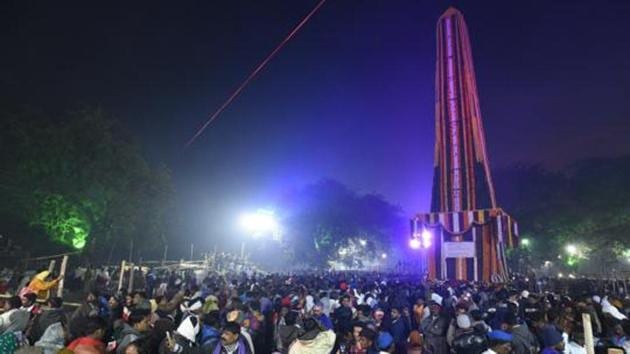
The name ‘Bhima Koregaon’ became so popular throughout the country after a clash at the site of the Bhima Koregaon obelisk on January 1, 2018. Many became curious to know about it from other parts of the country since its popularity was limited to Maharashtra and some western part of India. It was January 1, 1818 when the battle of Bhima Koregaon was fought between the British and the Peshwa ruler, and won by the British. Mahar soldiers played a crucial role in winning the war. Thus, British had to pay due respect to them by erecting an obelisk at the war site. For a quite long time, this obelisk was being treated as a great place of pride for Dalits. Even Babasaheb Bhimrao Ambedkar declared it ‘a symbol of Mahar valour’. He used to visit this obelisk on January 1 every year since 1927 to pay tribute to the Mahar soldiers. Dalits of Maharashtra used to visit Bhima Koregaon obelisk since Ambedkar visited this place. Over the years, the number of visitors increased drastically. In the last few years, Dalit migrants from the northern part of India to Maharashtra and their engagement with fellow Dalits introduced them about the socio-cultural and political significance of Bhima Koregaon.
Caste Identity
Dalit migrants did not know much about the political history of Bhima Koregaon and associated pride with it before coming to Mumbai. It is their everyday life in Mumbai and their relationship with fellow Dalits, which introduced them to Bhima Koregaon. They feel that historical studies have done great injustice with them. They have to go through a long process before paying visits to Bhima Koregaon on January 1 each year. The leaders among Dalit migrants, communicate with local Dalits prior one to two month before the congegration of Bhima Koregaon and plan the visit on every January 1. Everything is managed by a group of migrants. Their caste identity plays a crucial role to develop a cordial relationship with native Dalits.
HISTORY OF SELF-RESPECT
In the words of the organiser of the Bhima Koregaon visits, “We are here to remember our forefather’s fight against inequality and caste discrimination.”
Dalit migrant visitors firmly believe Mahar soldiers participated in the battle of Bhima Koregaon to get rid of untouchability and prolonged inequality. The occasion is no less than a festival for Dalit migrants who visit the obelisk with their family members and also buy new clothes for their children in advance. Apart from this, they buy books, photos, pamphlets, bracelets and chain related to Bhima Koregaon and Babasaheb Ambedkar during the visit. They spend enough amounts on visiting this place to get a feel of their history of self-respect. The visit to Bhima Koregaon may be ordinary for Dalits of Maharashtra, but it is a new emerging pattern and could be seen as claiming their history. Interpretation of Dalit migrants about Bhima Koregaon emphasized commemorative as a symbol of ‘fight for equality, justice, pride, and dignity.
(The writer is assistant professor, Indira Gandhi National Tribal University, Amarkantak, Madhya Pradesh)


