
 E-Paper



Delhi elections a wake-up call for Cong, INDIA bloc
After Haryana and Delhi, the bloc faces another litmus test in Bihar, where assembly elections are due in November-December.

 Prefer HTon Google


Even before the Delhi assembly election results were out, people had started speculating whether the INDIA bloc was signing its death warrant. Jammu and Kashmir chief minister (CM) Omar Abdullah demanded that members of the bloc should get together to work out a framework for moving forward once the elections ended. Abdullah was worried as bloc members, Aam Aadmi Party (AAP) and the Congress, were contesting against each other in Delhi. His apprehension proved right.
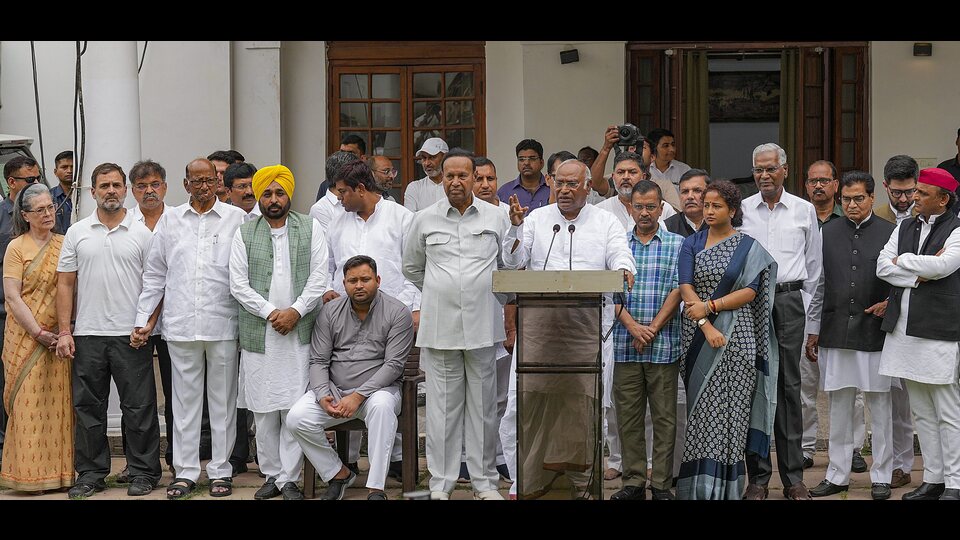
The bloc faces another litmus test in Bihar, where assembly elections are due in November-December. The Tejashwi Yadav-led Rashtriya Janata Dal (RJD) and the Congress have been contesting elections jointly here. But, key coalition members regret conceding far too many seats to the Congress in the 2020 assembly elections.
The Congress managed to extract 70 seats for itself in the seat-sharing deal, but won only 19 in the last election. Yadav, in fact, missed the CM’s post by just 13,000 votes and 12 seats. Had the Congress delivered its part of the bargain, Bihar’s political landscape would have been different.
In 2017, after losing the Uttar Pradesh assembly elections, Samajwadi Party (SP) leaders also had the same lament. The same story played out in Tamil Nadu. That’s why, in the last assembly election, the Dravida Munnetra Kazhagam (DMK) gave the Congress only half the number of seats it was allocated in the previous election. Will Yadav adopt the same approach in Bihar this time?
The Congress is restricted to just three states today — Telangana, Karnataka, and Himachal Pradesh — and is increasingly dependent on allies for political relevance. Jharkhand and Tamil Nadu are prime examples. The party is consistently losing its ability to win elections on its own.
Congress supporters may feel uncomfortable, but they should learn from the party’s arch-rival, the Bharatiya Janata Party (BJP). The BJP played second fiddle in many states such as Bihar for years. Even when the party had more legislators, it made Nitish Kumar the coalition leader there.
The Congress’s attitude presents a stark contrast. It refused to even make Kumar the convenor of INDIA bloc, which caused him to return to the BJP-led National Democratic Alliance (NDA).
In Maharashtra, this story was repeated. In the last assembly election, the Congress frittered away a great opportunity. The party refused to accept Uddhav Thackeray as the CM candidate and kept squabbling for more seats. This public wrangling dented the Maha Vikas Aghadi (MVA)’s image and that of the Pawar-Thackeray duo. One need not be surprised if cracks appear in the MVA in coming months.
Similarly, Arvind Kejriwal had been keen on an alliance with the Congress in the Gujarat assembly elections, but was kept waiting. In that election, his party, the AAP, secured 13% of the votes, at the Congress’s expense. The AAP also hoped the Congress would be favourably disposed towards it during the Haryana assembly elections. But it received the Gujarat treatment again.
This was why Kejriwal fielded his party’s candidates without bothering to consult with the Congress in Delhi. But in Delhi, the Congress played the role the AAP had played against it in Haryana and Gujarat. The AAP secured just 2% fewer votes than the BJP, while Congress gained 2% votes in Delhi compared to the last assembly elections. Had the AAP-Congress coalition retained the said 2% of the votes, the political landscape of Delhi would have been quite different, and the INDIA bloc would have emerged stronger.
The Congress’s central command today has little effective control over state units. It is rumoured that Rahul Gandhi had been willing to fight the Haryana and Gujarat assembly elections in coalition with the AAP. He was also okay to ally with the AAP in Delhi. But, the state units insisted that the Congress would do well on its own.
The party’s entrenched political families may make tall claims, but the fact is that they have lost their clout for good. The way Congress is trying to woo the other backward castes by insisting on a caste census can rattle leaders such as SP’s Akhilesh Yadav, the RJD’s Tejashwi Yadav, and DMK’s MK Stalin, who have created their political fortunes on the same vote bank.
The Congress is facing its most potent challenge since Independence in the form of the Modi-Shah combine. You may ask: When will Congress learn? The sad reality is even the party’s helmsmen are clueless.
Shashi Shekhar is editor-in-chief, Hindustan. The views expressed are personal


