
 E-Paper



Ecostani | Is your food healthy or not? FSSAI should clearly tell consumers
Not having the right front-of-package label (FOPL) or a delay in making FOPL mandatory will have an adverse health impact for millions of Indians, as the problem of obesity grows


As the Food Safety and Standards Authority (FSSAI) of India comes out with comprehensive guidelines on health food for all, and health star rating for pack food and beverage, a raging debate has started over which rating system is better — health star or healthy/unhealthy warning system.
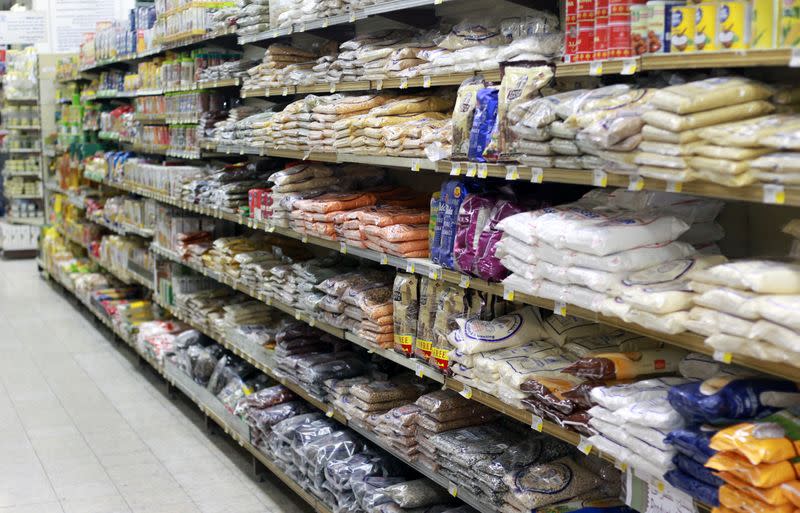
In the health star rating system, the products are rated from one to five stars on their health impact quotient. The warning system is simpler with the label clearly declaring whether a product is healthy or not. FSSAI, in the next few months, is likely to decide which label is best for the guidance of consumers.
Determining health and safety standards
To deal with the problem of rising obesity, the World Health Organization (WHO) recommends front-of-package label (FOPL) nutrition labelling as a policy to promote healthy diets and reduce consumption of foods high in sodium, saturated and trans fats, and added sugar.
To deal with the issue, FSSAI, in 2019, set up a panel of experts to determine comprehensive food safety standards for food and beverages, whose consumption is on the rise and is said to be a cause of many health-related issues, especially for the younger generation.
The business of packaged food and beverages in India has increased from $1 billion in 2006 to $36 billion in 2019. In India, nearly one in four adults and one in 20 children are classified as overweight or obese. Studies have shown rate of obesity in India is rising at a faster rate than the global average, and obesity prevalence is expected to more than triple by the year 2040, without intervention.
In these two years, experts studied similar health standards in the developed world and came out with a set of recommendations. A committee of experts recommended lower than the World Health Organization (WHO) threshold levels for two categories — food and beverages — to declare them healthy. The levels recommended were for nutrients such as salt, total sugar, iodine, sodium, saturated fat and saturated fatty acids in 100 grams of the food.
The committee has recommended threshold levels for 18 food categories, with 25 different thresholds covering around 115 sub-categories, a government official said. He added that a food product is declared “excessive” if the nutrient is more than the threshold level. For instance, if saturated fatty acids are more than 10%, the product will be declared excessive for fatty acids.
After comparing energy intake from packaged food in various countries, the committee recommended a total energy intake of 400 calories for food and 100 calories for beverages for 100 grams. Sugar recommended is 20.7 grams for food and 6 grams for beverages for every 100-gram intake. Similarly, saturated fat recommended was 6 grams and 3 grams for food and beverages respectively. The recommendation is similar to the one prescribed in Australia and New Zealand.
The committee said that the threshold levels should be voluntary from mid-2023 and should become mandatory from mid-2027. Officials said that the recommendation was made for the industry to adopt the new threshold levels. FSSAI also recommended that the health advisory on packaged food products should be readable and clearly state how many calories it provides to a person and whether it is over the prescribed limit or not.
The emergence of the health star option
The recommendations will lead to a guide on healthy packaged food and beverages, and the labelling of food and beverage packets to clearly show consumers the impact of the food product on one’s health.
FSSAI has decided to come up with guidelines and a roadmap for improving the health quality of packaged food.
The first in this is the FOPL, clear guidance to consumers on the health quality of the food product. For this, the authority is likely to recommend a health star rating system, in which the product with an adverse impact on health would get a lower star than the one with a positive health impact.
“The star rating system will have a positive health impact. The five star rated products would mean they are good for health and a single star would mean that they have an adverse impact on one’s health,” the official said.
An FSSAI-commissioned Indian Institute of Management-Ahmedabad (IIM-A)study recommended the health rating system.
A randomized controlled trial (RCT) was carried out by IIM-A on a nationally representative sample of 20,564 respondents covering all major states of India, officials said. Of them, 62% were contacted physically and the remaining were through video calls. The sample size covered all groups and genders.
The sample size was randomised to one of the six groups, i.e. No FOPL, Health Star Rating, Nutriscore, Warning label, Multiple Traffic Lights and Monochrome GDA (Guideline Daily Amounts). These were the six warning systems suggested by FSSAI to IIM-A for conducting the survey.
IIM-A told FSSAI that most of the respondents preferred a health star rating over other models for “achieving a careful combination of the dual objectives of ease of identification and understanding; and change of purchase behaviour” of the consumers in large parts of society.
At an FSSAI meeting with stakeholders this February, it was decided that as FOPL is being considered for the first time, thresholds may be initially fixed as proposed and reviewed later based upon experience over the initial years of implementation, which showed minutes of the meeting.
Critics suggest clear labels
However, independent experts on the panel on FOPL such as George Cheriyan from CUTS International and Amit Khurana from the Centre for Science and Environment opposed the recommendation of the use of health star rating, claiming that these ratings are taken with “positive connotation” and may not lead to low consumption of low star rated products.
They asked FSSAI to consider the warning label which clearly tells the consumer whether the product is healthy or not. They also argued that several countries, especially in Latin America, have adopted the warning labels and it has led to a reduction in the consumption of unhealthy packaged foods.
“The health star rating fails to tell the consumer the harm of consumption of lower star rated product. International studies have clearly shown that the health rating systems have not led to lower consumption of unhealthy packaged food,” said Arun Gupta, convener of National Advocacy in Public Interest (NAPI) which campaigns on the adverse health impact of packaged foods.
He added that the All India Institute of Medical Sciences conducted a joint study of 2025 people across India and recommended that warning labels are quicker to understand and easy to recognise. The study recommended that FOPL should be mandatory for all packaged food and said that 93% of consumers surveyed were of the view that labels would be helpful to convey nutritional information. “Warning Labels are quicker to understand (40.6%), easy to recognise (40.7%) and help in buying healthier food products (39.6%) amongst all other labels,” the AIIMS study said.
Consumer rights groups also asked FSSAI to make FOPL mandatory for food and beverage products mandatory immediately and not to wait till 2027 considering increasing in obesity and other non-communicable diseases in the country. A WHO representative also made a similar point and suggested that at the most, three years may be given for such transition, said minutes of the meeting held at FSSAI on FOPL in February this year.
However, FSSAI has decided to stick with the expert group suggestion of a four-year transition from voluntary to mandatory FOPL in the draft regulations to be issued soon. Many experts believe that both not having the right FOPL and the delay in making FOPL mandatory will have adverse health impacts for millions of Indians, especially in the younger age group. FSSAI should make FOPL mandatory clearly stating whether food is healthy or not within a year.
 ABOUT THE AUTHORChetan Chauhan
Chetan Chauhan is the National Affairs Editor looking into all aspects of news and features from across India. A Chevening scholar with over three decades of experience in reporting and news management, Chetan has extensively covered all important aspects of the social sector, political economy, environment and climate change nationally and internationally. He did a journalism course at the Reuters Institute of Journalism in Oxford and Digital Media training at Nanyang Technological University in Singapore. He started as a reporter with The Statesman in 1996 and joined the Hindustan Times in 2000 in the metro bureau covering environment, crime and Delhi politics. He covered hot local news, from the Jessica Lal murder case to the rebellion of Delhi Congress MLAs against then Chief Minister Sheila Dikshit, to the replacement of toxic vehicle fuel with cleaner compressed natural gas (CNG) in the national capital. Some of his stories on air pollution became part of the Supreme Court’s landmark MC Mehta versus Government of India case in the National Capital Region (NCR), forcing the government to take corrective measures. As part of the national political bureau since 2004, he covered important central sectors such as environment, education, social justice, labour, rural development, water resources, renewable energy, agriculture, broadcasting and the Planning Commission for more than a decade producing several exclusive and investigative breaking stories. His specialisation is the environment, having covered at least a dozen United Nations global conferences on climate change, biodiversity and wildlife including climate summits in Paris, Copenhagen and Bali. He also covered India’s two five-year plans ---11th and 12th and reported on drafting and execution of right based laws such as Right to Education, Right to Information and rural job guarantee law, MG-NREGA, now being introduced in new format as VG-RAM-G Act. He has in-depth knowledge of social sector issues. He was one of the first to report on tigers vanishing from Sariska and Panna wildlife reserves in 2004 and 2008, respectively, leading to the setting up of the National Tiger Conservation Authority (NTCA) and the introduction of stringent penal provisions for poaching. He has written extensively on the rising human-animal conflict in India and the degradation of India’s biodiversity hotspots because of mining and other activities. Since 2004, Chetan has covered Parliament comprehensively and participated in training on the nuanced coverage of Parliament proceedings. He has travelled extensively across India to cover national and provincial elections since 1998, especially in the Hindi heartland states, considered India’s road to power. He writes a regular column for Hindustan Times, Ecostani, on important national politics, economy, Himalayan ecology and environmental issues. His other responsibilities include providing inputs for edits and edit page articles for the publication, apart from managing news flow from across India.Read More


