
 E-Paper



Ecostani | Voter apathy or political discontent? What low voter turnout means for 2024 polls
Voter turnout dropped in phase I as compared to previous polls. Factors such as hot weather and weaker election campaigns may have contributed to this decline.

 Prefer HTon Google


Voter turnout for the 18th Lok Sabha in the first and the largest phase of polling on April 19 was about four percentage points less than for the same 102 parliamentary constituencies in 2019. The development comes in the backdrop of the Election Commission of India’s (ECI) promise to increase the polling percentage by cleaning the electoral rolls and better voter awareness campaigns.
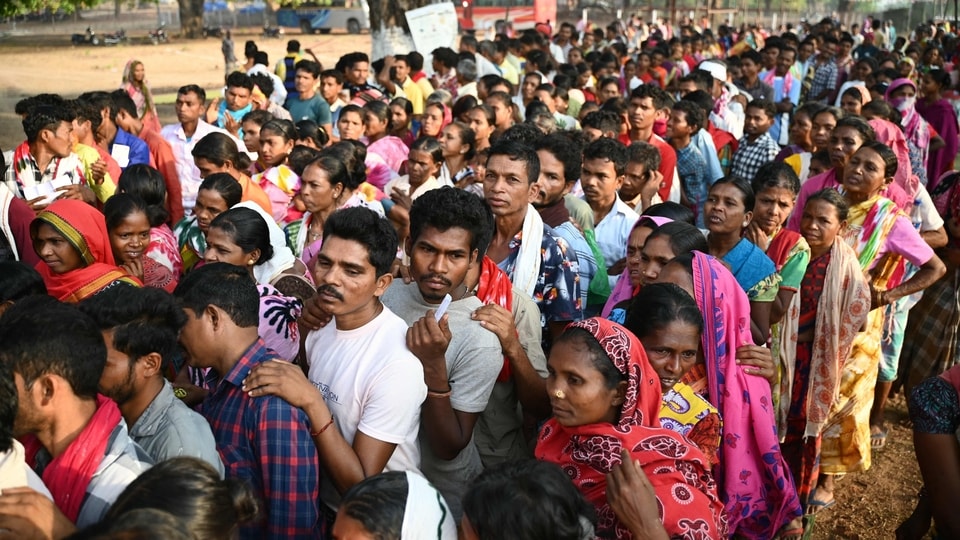
In the first phase, more than 160 million voters were eligible to vote and only 65.5% came out to vote as compared to around 70% in 2019 in the same constituencies. According to the ECI voter turnout app, the voting declined in 19 of the 21 states and Union territories that went to polls, including Tamil Nadu and Uttarakhand, where voting took place for all the Lok Sabha seats.
In Tamil Nadu, the decline was about three percentage points and in Uttarakhand about 5.16 percentage points. In Rajasthan, where 12 of the 25 Lok Sabha seats went to polls in the first phase, the decline was about six percentage points. A smaller number of voters turned out in the first phase of polls in Uttar Pradesh and Bihar, which together sent 120 MPs out of 543 to the Lok Sabha.
An increase was recorded in Bastar, the only seat out of 11 in Chhattisgarh that went to polls on Friday, and in Meghalaya.
The ECI termed the decline as “significant” and not “alarming” but expressed concern over the fall in polling percentages. One reason given for the decline was hot weather and temperatures crossing 40 degrees Celsius in several poll-bound areas. There were also complaints of long queues at polling booths with no drinking water facility and police aggressively questioning the identity of voters.
Another reason cited by political experts was voter apathy towards political parties because of the diatribe in campaigns such as creating a divide based on religion, abusing opponents and frequent party hopping along with weak election canvassing by both ruling and opposition parties. “It appears that political parties are focusing more on social media rather than door-to-door campaigns,” said psephologist turned political activist Yogendra Yadav in a TV interview.
Voting trends in elections
It is a known trend in Indian elections that the voter turnout in state assembly elections is higher than the parliamentary polls because of higher voter engagement in the former.
Since the mid-1980s, the voting percentage in national elections had increased due to higher participation of marginalised sections, especially in the 1990s when the other backward classes were empowered after getting reservations in jobs. Election analyst Subhas Palishikar termed this as a “second democratic upsurge”.
The bigger question is, however, what the lower turnout means for political parties in terms of outcomes.
In the 2004 elections, the voting percentage recorded was 58.3%, 1.7 percentage points less than the voter turnout in 1999. In 2004, the Bharatiya Janata Party (BJP)-led government was ousted by the Congress-led United Progressive Alliance (UPA) even though all opinion polls predicted a BJP victory.
In some states such as Gujarat, Bihar and Uttar Pradesh, the voter turnout was lower than the national average in 2004 and even fell below the 50% mark. There was also a significant gender gap in voting with 62% men voting as compared to 54% women.
The decline in turnout was recorded despite electronic voting machines being used at all polling booths for the first time and seen as a potential boost in voter confidence in the election system.
A decade later in 2014, the voting percentage was 66.44%, the highest in India’s parliamentary election history, and seven percentage points more than in 2009 when the UPA had returned to power. In 2014, the BJP won the election with 282 seats and secured a clear majority on its own. In 2019, the voting percentage increased by about 1.7 percentage points and the BJP got 303 seats on its own.
The 2024 election can be seen as a more balanced poll, without a visible wave for any political party or alliance. In villages, people are busy with the harvest season showing little interest in the election.
To be sure, the voting percentage is not a clear indicator of voter inclination as in the past lower voter turnout has resulted in the incumbent party returning to power. In 1998, the BJP won 182 Lok Sabha seats with a four percentage point jump in voting numbers. A year later in 1999, it again won a similar number of seats with a dip of one percentage point in polling.
Prime Minister Narendra Modi has urged voters to come out and vote, even if they want to vote for the Opposition party. The ECI has also urged voters to exercise their right to vote and spoke of taking remedial steps in the coming days to improve the voting percentage for the 18th Lok Sabha.
Chetan Chauhan, national affairs editor, analyses the most important environment and political story in the country this week


