
 E-Paper



Europe’s anxieties, and its push for geopolitical revival
The spectre of a simultaneous political fracture within Europe and heightened Russian hybrid warfare is what makes this moment truly perilous

 Prefer HTon Google


Thomas Ahrenkiel, head of the Danish Defence Intelligence Service, recently warned about the “low but growing risk” of Russia deploying military forces inside bordering NATO countries with the aim of dividing the alliance. Separately, concerns are growing in Europe that Moscow is preparing for a ‘stealth mobilisation’ of thousands of Russians to join the war.
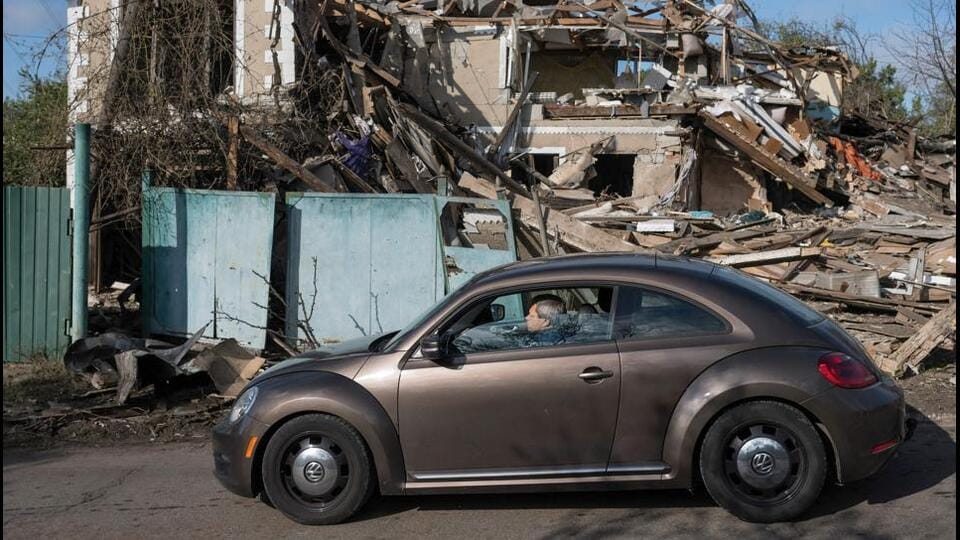
Such warnings come in the context of increased Russian grey-zone aggression, including covert kinetic actions across the continent since mid-2026. The drone attack at the Leipzig/Halle airport in August is considered the most dangerous of such sabotage operations — one that could have led to mass casualties and, consequently, direct physical escalation.
In August, John Ratcliffe, chief of the Central Intelligence Agency (CIA) was in Moscow to allegedly warn Russia against any escalatory intent against the Baltic States. Signalling the severity of the situation, France held emergency national security talks in September, Germany is preparing its national health care system to absorb mass casualties and affording its intelligence agencies greater operational autonomy, the UK is urging citizens to stock up on food and other essentials, and the Polish armed forces remain on constant alert. Ukraine, for its part, is pressing ahead with a drone and sabotage campaign deep inside Russia and continues to stymie Russian advances on the eastern front.
Europe has been preparing for a wider war with Russia for the past four years, but something has shifted in the last two weeks. Russia’s conflict with Europe is on the cusp of major horizontal escalation, even if it doesn’t translate into direct NATO-Russia confrontation.
This raises the questions of “why now”, and “what follows”. The timing of such escalation fears is driven by developments within Russia, and inside Europe against the backdrop of a tectonic shift in Transatlantic relations since the Iran war.
In Russia, President Vladimir Putin is trapped in this war. Highly militarised, Russia’s economy is expected to grow at a mere 0.4% this year. It is in “berserk mode that can only exist for a very limited time,” according to Putin’s international development envoy Boris Titov.
Ukraine’s drone campaign against Russian defence and energy infrastructure, despite its seemingly performative nature, is hurting the Russian economy. But for Putin, who has little to show for success after five years of fighting, stopping the war to arrest economic decline is not an option.
That nearly a third of the high-ranking leadership in Russia’s defence ministry has been purged because of inter-elite paranoia, and newer military bureaucrats are being rewarded for executing larger, riskier operations, is a sign of the pressure Moscow is under.
This does not mean that Russia is exhausted enough to halt this war, but it is also not strong enough to withstand the current attrition rates. Despite “winning” the September parliamentary elections, Putin needs to show battlefield results that are nowhere close to forthcoming. Unsurprisingly, Putin’s avoidance of mass conscription till now, is making way for a more Stalinist approach: “Everything for the front, everything for victory”.
The age of European geopolitical innocence, if there ever was one, has also ended. The EU grew at 1.2% year-on-year in the second quarter of 2026 and its political will to fight Russia remains intact. The Polish foreign minister Radosław Sikorski’s statement that NATO will respond both defensively and offensively if attacked by Russia was full of intent. Over the last 18 months, Brussels has demonstrated that it has enough mettle to support Kyiv on its own and will not let Washington and Moscow decide the terms of war.
This determination, visible in the fine print of the agreement on America’s relationship with Greenland that respects the latter’s sovereignty, signals the emergent balance of power between Europe and America. Europe still needs America by its side but is a pushover no more. The US’s apparent defeat in the Iran war has not only given America’s adversaries a cause celebre but also empowered its allies to reshape American behaviour in Europe to better suit their ends.
The deeper, if underappreciated, problem is that the definition of a singular European strategic “end” is itself under stress. The rise of the far-Right across Europe is posing an intra-European challenge.
In France, the National Rally (RN) is expected to come to power in 2027. Known for its Euroscepticism, Russia ties, and anti-immigrant politics, its rise will complicate intra-EU conversations on economy, defence, and war. Even more potent than RN is the rise of Alternative for Germany (AfD). The AfD breached Germany’s postwar liberal firewall in the recent Saxony-Anhalt elections and is making a populist march to the Bundestag.
It wants to end Germany’s support for Ukraine and favours a loose “Europe of fatherlands” type common market over existing EU arrangements. The combination of the AfD’s rise and Germany’s ongoing rearmament at the national level i.e., outside a European framework (though its current leaders remain committed to the EU), is raising concern among its neighbours, especially France and Poland.
The spectre of simultaneous political fracture within Europe and heightened Russian hybrid warfare is what makes this moment perilous. It explains current European anxieties, and its attempt to exert unrelenting economic pressure on Russia, including supporting increased American tariffs against India, China, and others who buy Russian oil.
This brings us to the “what follows” question. India is sensibly invested in Europe and will ratify the Free Trade Agreement (FTA) with the EU soon. It also desires Europe to become a serious geopolitical actor with the requisite military muscle. Europe’s geopolitical revival aligns with India’s diversification strategy to balance China and manage America. India has equities on both sides of the Europe-Russia equation and is working hard to protect its people and supply chains.
Prime Minister Narendra Modi impressed upon Putin that this war must be ended, but India must remain clear-eyed about the quality of Europe’s geopolitical renaissance.
If Europe’s post-Cold War liberal political substructure collapses under its own weight, then New Delhi will need to reconsider its assumptions about the continent’s geopolitical cohesiveness. Even if the India-EU FTA outlasts such turbulence, it is India’s bilateral partnerships in Europe that will count for more, and for longer. Finally, India must plan for Russia after Putin.
There is no succession plan in sight, but the unthinkable scenario of a Putin-minus Russia can suddenly come true if this war escalates. Whatever happens to Europe, Russia has condemned its economy and society to intergenerational pain. The last thing India wants is to be caught off-guard by a rushed passing of the guard, or a chaotic power struggle in Moscow.
Avinash Paliwal teaches at SOAS University of London and is a Nonresident Scholar in the Carnegie South Asia Program, Washington D.C. The views expressed are personal


