E-Paper



Fight stubble fires, curb local pollutants
The authorities keep claiming incremental progress. The Delhi government says it has reduced air pollution by 25% in four years. Even Punjab concedes that stubble-burning is part of the problem and seeks central assistance to find a permanent solution in consultation with Delhi and Haryana.


As Delhi remains buried under a thick smog for over a week, the stakeholders continue with their blame game. This annual debate over a reasonably well-studied phenomenon is a convenient excuse for inaction. We all know what all factors contribute to Delhi’s seasonal choking and each of us has decided to do precious little about it unless the rest of us did their bit.
The authorities keep claiming incremental progress. The Delhi government says it has reduced air pollution by 25% in four years. Even Punjab concedes that stubble-burning is part of the problem and seeks central assistance to find a permanent solution in consultation with Delhi and Haryana.
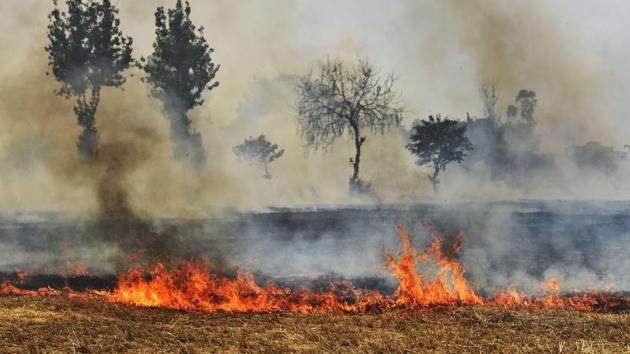
Delhi cannot force a consensus that should take care of stubble-burning, which has been responsible for up to 44% of the city’s air pollution this season. Stubble-burning is restricted to a couple of weeks in late October-early November when it darkens Delhi’s skies, pushing pollution to hazardous levels. But there is no stubble to burn in late December or January.
Yet, a joint study by IIT-Delhi, the University of California and the University of Illinois found that air pollution in Delhi and the National Capital Region report two distinct peak waves — one during late October and early November, and another comparatively milder one during late December and early January.
Last season, for example, Delhi’s air quality index entered the “severe” zone at 450 on December 23. Again, on January 3 this year, it saw another spike, touching 444. Clearly, there is a lot more to Delhi’s air pollution than stubble-burning and, if we stop fretting about what is beyond our control, we can certainly do a lot about other sources of pollution.
Contractors in Delhi and NCR towns make no effort to keep construction sites clean. The Graded Response Action Plan (Grap)—which is a year-long exercise to check polluting activities even when the air is “moderately” clean— starts with routine measures such as spraying water on unpaved roads, enforcing rules for dust control during construction activities and shutting down non-compliant sites. But enforcement teams get active only after winter alerts are sounded.
When the air pollution hits emergency levels, the Supreme Court-mandated Environment Pollution (Prevention and Control) Authority halts construction under Grap. But of what use are these tools-down periods when uncovered building materials and excavated soil dumps anyway keep blowing in the wind?
In the city’s industrial pockets, discarded plastics, metals and rubber that emanate poisonous gases are burnt routinely. If the air in your residential neighbourhood smells burnt, look out for a pyre of garbage or leaves in the vicinity. For sweepers who are supposed to carry garbage and garden waste to the community dumpsters or a composting pit, it is simply less work.
According to a 2018 study by TERI and Automotive Research Association of India, vehicle emissions contribute to 28% of Delhi’s air pollution. The odd-and-even number plate road space rationing plan exempts 7.3 million two-wheelers, many of which are more polluting than cars. Anyway, more cars than any other city still ply on Delhi roads even during the odd-even rationing.
To minimise exemptions and discourage private vehicles, the government needs to put a robust public transport system in place. But since the last odd-even drive in 2016, the city has added only 129 new buses.
Delhi decommissioned the polluting Badarpur thermal power plant last year. But several coal-fired plants operating within 300km of the NCR are unlikely to meet the emission standards even by the extended deadline this December and continue to pollute.
To give credit where it is due, the use of pet coke and furnace oil has been banned in city factories. Fuel stations now sell a cleaner BSVI diesel and petrol. The opening of the peripheral expressways has allowed trucks to bypass the city. Heavy vehicles entering Delhi pay a compensation fee, RFID tags prevent traffic pile-ups at borders, and more than 10-year-old diesel cars are banned. To breathe easy, though, Delhi still needs a 65% cut in pollution, says Centre Science and Environment, underlining enforcement and compliance as top priorities.
The fight against pollution demands tough measures. In the early 2000s, Delhi’s sooty air forced the city to switch to CNG. Setting up the world’s largest green public transport fleet was no mean feat. If Delhi is to survive, we must show that resolve again. Or we can try holding our breath, waiting for stubble-burning to stop someday.