
 E-Paper



How developing countries can upgrade to high-value manufacturing
While promoting vanilla manufacturing is most welcome in the short-run, developing nations need to recognise that R&D is a separate story


In an era of global value chain (GVC)-led manufacturing, developing countries often to welcome global lead firms through tax rebates and subsidies to produce domestically. This is a win-win as the country can cut down on imports, increase employment and hope for percolation of knowledge. In return, the lead firms get markets, local acceptance and access to resources at lower cost.
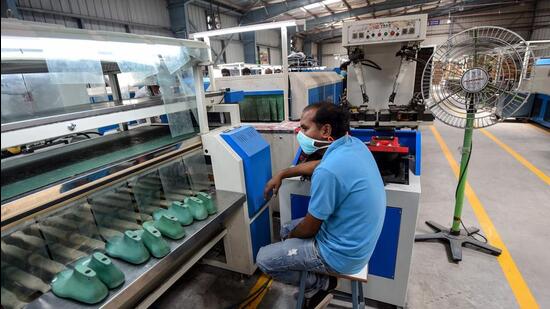
Barring exceptions, GVC principals generally offer downstream production to the local economy. While, critical and the most rewarding parts of the chain ---- technology, design and research inputs ---- are generally black boxed and mostly remain under the control of the lead firm.
The local GVC partners are at times, either not up to or given their limited role in the chain, do not have adequate incentive to learn or develop, let alone do research. Besides, regular upgradation of technology with superior utility per unit of output, negate any benefit that a more involved supply chain partner can derive through learning by doing.
Also, over time, as the lead firm gains control over the supply chain, or alternate supply chain emerges, a lead firm can further push its share, at the cost of its local partners.
Hence, from a long-term point, industrial policy that solely or mostly promotes production cannot move in the knowledge frontier. If this continues beyond a limit, it can push a developing nation into a “neo-colonial era”, the only difference being now it will specialise in low-value manufacturing, instead of shipping agricultural and mining products. This needs tweaking in policy, which some developed countries are following boldly.
While promoting vanilla manufacturing is most welcome in the short-run, developing nations need to recognise that R&D is a separate story. Its requirements for financing, HR and returns to capital are different. Developed countries have played a major role in promoting R&D by their lead firms by financing them and the centres of learning, especially in their formative stage. Unless a developing nation invests heavily in development and research and sets up an appropriate ecosystem, it runs the risk of becoming a permanent low-value, adding only a part of the GVC. The more one delays the process, the more difficult it will be to reverse it.
To upgrade to high-value manufacturing, one can implement the following:
Given a limited fund, be selective, not only in identifying the sectors but also choosing the appropriate product or the selective part of the value chain, where the country needs to excel. This will be a function of the comfort and confidence zone of lead country firms and also national priorities.
In the select areas, one need to create a formal network of lead firms, user industries/service providers, universities and research institutes, which will decide the areas of time bound interventions and allocate fund.
As in research-intensive countries, research level funding can go to universities in close collaboration with the ecosystem, the development part can be routed through individual or network of domestic lead firms, who coinvest and take support of other ecosystem players.
To ensure of not reinventing the wheel and keep a tab on the latest, a sectoral think-tank can be supported by installing knowledge gatekeeper in lead global clusters of select industry and also by supporting outright purchase of global firms, wherever warranted.
Create a unique independent and formal national coordination structure that has the necessary economic and political backing to promote the R&D industry of the country. The agency should host the sectoral think-tanks and promote an ease of doing R&D index to further woo global leaders.
Tamal Sarkar is senior advisor, Foundation for MSME Clusters
The views expressed are personal


