
 E-Paper



Imran Khan as Asim Munir’s ‘rock and a hard place’ problem
Imran Khan’s real problem is he doesn’t get on with Pakistan Army chief Asim Munir.

 Prefer HTon Google


I can’t claim Imran Khan is a friend but I’ve interviewed him on multiple occasions. In fact, in multiple locations — at a hotel in Delhi, at his home in Bani Gala near Islamabad, at his hospital in Lahore and at his in-laws’ estate outside London in Kingston. On each occasion, he was charming. You can’t help but get attracted to the man. Usually, he speaks in a blunt and forthright manner but never offensively and certainly not rudely. But he always makes his point and leaves you in no doubt of it.
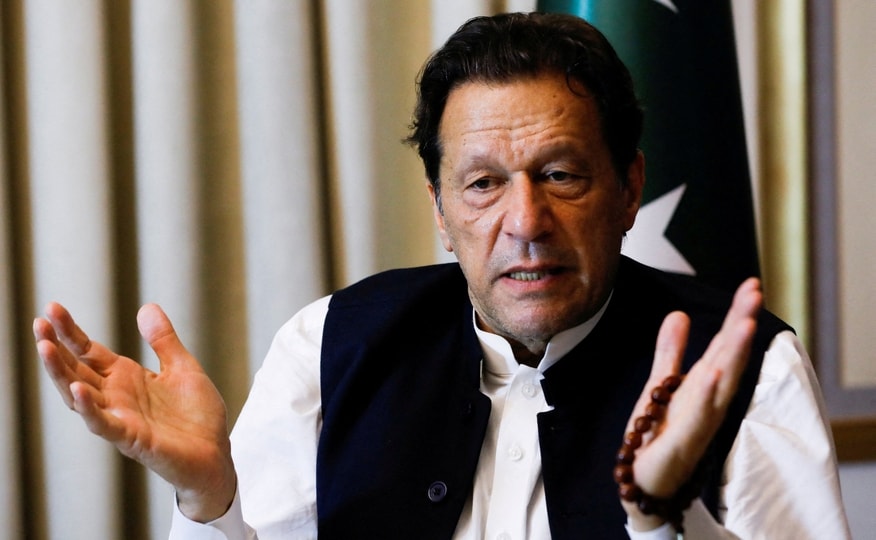
He also has a droll sense of humour. “Are you going to eat me up?”, he asked when I last interviewed him. “Certainly not,” I replied. “Why do you ask?” “Because you did it on all the earlier occasions.” He laughed loudly. “Doesn’t it give you indigestion?”
In those days, he wasn’t the most popular politician in Pakistan. Today, he undoubtedly is. He’s also been in jail for over three years and the Pakistan government seems determined to keep him there. The charges he faces, for which he’s been convicted, are trumped up. His real problem is he doesn’t get on with Pakistan army chief Asim Munir. When Imran Khan was Prime Minister, he had sacked Munir as director general of the Inter-Services Intelligence. Undoubtedly, Munir is getting his own back.
The major charges Khan faces are the Al-Qadir Trust case regarding land corruption, the Toshakhana case about illegally retaining and selling expensive State gifts, the Cipher case which is to do with sharing the contents of a classified diplomatic cable and inciting his supporters to attack military and government sites after his May 2023 arrest.
For three years, he has languished in jail, in a small cell, frequently in solitary confinement, usually denied meetings with his relatives and, often, his doctors. Not surprisingly, his health has suffered. His lawyers say he could have lost 80% vision in his right eye. Others say he has anxiety and blood pressure issues.
Also Read | Brian Lara demands ‘basic humanity’ for Imran Khan, issues emotional plea: ‘He’s not being cared for’
Last month, the Pakistan Supreme Court ordered Khan be moved to a private hospital for medical examination and treatment within two days and stay there till September 16.
It allowed him to meet his family once a week and speak to his sons by phone in London twice a week. Twenty four hours later, the government moved a review petition calling the order “discriminatory”. It claimed Khan is “a convict and has to be treated in accordance with the law like any other convict.” A day later, the Supreme Court registry returned the appeal deeming it incomplete.
This meant the government had no choice but to do as ordered by the court. It chose to act very differently. Instead, it took him to a State hospital late at night for just a couple of hours. Neither his family nor his personal doctor were present when he was examined. By daybreak, he was back in Adiala jail.
This is surely contempt of court. More importantly, is it a further indication that the government is determined “to eliminate” Khan? His two sons, Sulaiman and Kasim, believe he will not survive his imprisonment in solitary confinement unless he’s given proper medical treatment. Is that why it’s being denied?
Also Read | No solitary confinement, visits allowed: Imran Khan, wife Bushra Bibi get relief from Pakistani court
The mistreatment of Imran Khan can only add to his appeal and popularity. By its prejudicial behaviour the Pakistan government is enhancing his stature, not eroding it. Khan today is looked up to in a way he certainly wasn’t when he lost power in 2022.
If anything should happen to him, like Caesar’s ghost, Khan will become more powerful and more threatening to the government.
If Khan alive worries Munir and Pakistan PM Shehbaz Sharif, Khan dead could very well paralyse them. That they’re scared of his popularity and its consequences, is, perhaps, undeniable. Why then are they fuelling it with their inexplicable treatment?
I get the feeling they’re creating their own nemesis. If they bring it on themselves many in Pakistan, who may be too cautious to speak today, will say they deserved it. Such is the fate of military dictators and their puppet prime ministers.
Karan Thapar is the author of Devil’s Advocate: The Untold Story. The views expressed are personal


