
 E-Paper



India’s role in fostering convergence within G7
India’s contribution to the G7+ this year was vital in all matters, especially on the global challenges in health and digital technology.

 Prefer HTon Google


This year’s G7 Leaders’ Summit under the French Presidency had many reasons to go wrong. With multiple conflicts, disrupted maritime trade routes, an energy crisis, an epidemic outbreak, global macroeconomic imbalances, hindered aid patterns, and, more generally, a fragmented world, the stakes were high.
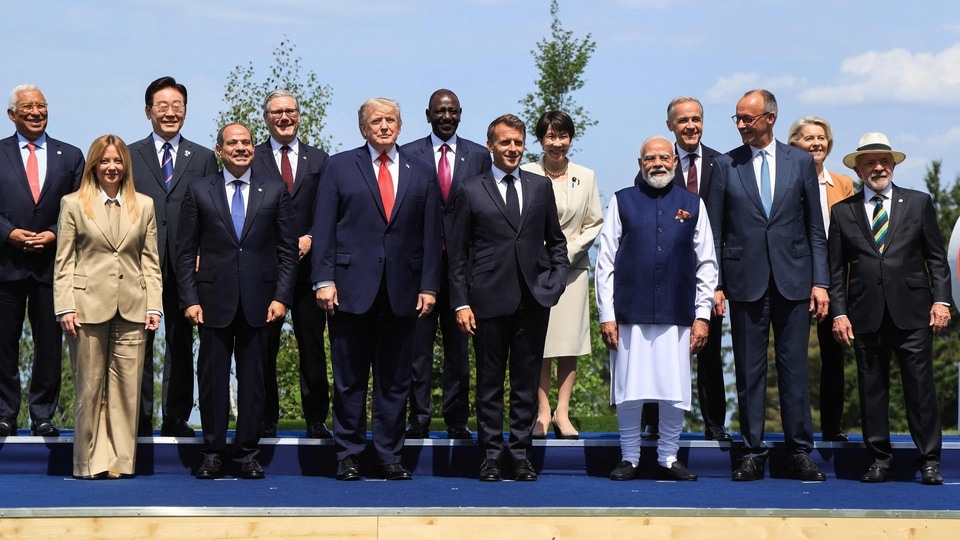
Yet, what unfolded in Evian-les-Bains, France, was a moment of rare convergence. Remarkable discussions enabled genuine cooperation between leaders and concrete commitments to address the major challenges of our times.
This success was the fruit of close coordination not only between G7 member States but also the indispensable G7+ partner countries, notably India, as well as Brazil, Egypt, Kenya, and South Korea. Ukraine, the UAE, and Qatar were also invited to the Leaders’ Summit to lend their insights. The French Presidency decided to mobilise the experience and vision of India and partner countries not only at the Leaders’ Summit but also, for the first time, throughout the preparatory process in the run-up to the Summit. India and France’s relationship with the G7 goes back a long way. India’s engagement with the G7 had started at Evian in 2003 at France’s invitation. Prime Minister Narendra Modi’s participation this year was India’s 13th and his seventh in a row since 2019, when France invited India to the G7 Biarritz Summit. India’s contribution to the G7+ this year was vital in all matters, especially on the global challenges in health and digital technology. In total, nine declarations were adopted unanimously by G7 leaders, and many received support from partner countries.
First, on Ukraine. The G7 showed strong convergence and resolve in supporting Ukraine’s territorial integrity and sovereignty, defence, and energy infrastructure, commending the country’s resilience and progress on the battlefield in recent months. The grouping emphasised the new momentum that could lead to a just and final end to this war of aggression.
Second, on West Asia — the deal between the US and Iran was welcomed, as it reaffirmed the right of passage through the Strait of Hormuz without restrictions or tolls. The summit also called for an immediate and robust ceasefire in Lebanon as a matter of absolute urgency. However, the situation has changed since and needs to be watched carefully.
Third, to tackle macro-economic imbalances, leaders defended a balanced, durable and resilient growth. They recognised that it is in everyone’s interest to cooperate and coordinate economic policies, while ensuring fair competition, protecting industries and jobs, and avoiding future trade wars and financial crises. The French Presidency prioritised constructive engagement with China, which participated in an unprecedented virtual convergence for the growth summit before the G7 Evian Summit, for the first time in 20 years.
Fourth, on digital technology and AI, following up on the India AI Impact Summit, G7+ leaders unanimously agreed to better protect children online. We plan to build a common platform for cooperation between democracies facing AI security risks to establish common standards. G7+ members will work with leading companies to accelerate the safe and beneficial deployment of AI for society.
Fifth, there was high reconvergence on health issues. G7 leaders and partner countries sent a message of support to populations affected with the Ebola virus and committed over one billion dollars in funding, in line with UN efforts. They also issued the first-ever G7 text on combatting cancer.
Sixth, leaders agreed on a profound change in philosophy in international partnerships. They reaffirmed the need for international solidarity, particularly for human development and the protection of the most vulnerable, while also developing tools to mobilise private financing. Finance in Common, implemented by the French Development Agency (AFD), will play a useful role towards this.
Seventh, leaders agreed to strengthen critical mineral value chains to reduce dependencies. A total of 195 concrete cooperation projects to the tune of €64 billion in joint investments were established to this end.
Eighth and ninth, on security issues, two statements on working together — to tackle, respectively, drug trafficking and migrant smuggling — were adopted, with a planned G7+ Ports Network to better coordinate efforts.
Several ministerial and working group meetings will take place in 2026 to further these different initiatives, in which India will have an important role to play. Both India, as BRICS chair, and the US, as G20 Chair, will be in key positions to take forward concrete initiatives on these global challenges at a time when coordination and constructive engagement is more important than ever.
Thierry Mathou is the French ambassador to India. The views expressed are personal


