
 E-Paper



Records shattered, promises unfulfilled
That’s the story of the battle against the climate crisis in 2023

 Prefer HTon Google


The year 2023 will go down as the year when we breached (albeit temporarily) the 2°C warming threshold for two consecutive days on November 17 and 18. Eighty-six days in the year recorded temperatures exceeding 1.5°C above pre-industrial levels till the end of November. This shows that we are on the brink of exceeding the targets for the global average temperature kept at “well below 2°C above pre-industrial levels”, which were set during the 2015 Conference of Parties (COP) in Paris.
Many ask me why the 1.5°C to 2°C rise in average global temperatures matters given that our daily temperature fluctuations are much higher. However, these two numbers are not comparable. Here, we are talking about increases in long-term average temperatures, and such increases in global temperature levels are akin to a body in a permanent state of fever. The science is unequivocal, the undisputed cause of global warming is the emission of greenhouse gases (GHG), including carbon dioxide (CO2) due to human activities. The way we produce electricity, travel, or grow our food causes emission of GHG, and hence, the main pathway to reduce global warming is to reduce emissions of such gases. Reducing emissions is called mitigation in scientific literature.
The impacts of a warmer world are already apparent, and every single human being has experienced the impacts of the climate crisis this year, either through extreme temperatures (heat waves in March and April all throughout South Asia), extreme rainfall events or droughts (including delayed and erratic monsoons in the Indian subcontinent this year), cyclonic disturbances (Cyclone Michaung hitting Chennai this December), or rapid melting of glaciers (destruction in Sikkim, including collapse of the 1,200 MW Teesta III dam due to a glacial lake outburst flood). Similar examples can be added from around the world. This was the year of broken climate records, and those who suffered the most are some of the poorest countries in the world.
But this year was also the year of broken promises for climate action by country after country. Finance is necessary to support climate action, which includes both mitigation and adaptation. While all countries have signed the Paris Agreement and pledged to keep global temperatures within 1.5°C by the end of this century, the mitigation actions that they have promised to undertake as a part of their nationally determined contributions (NDCs) take us to a 2.5-to-3-degree world by 2100 — a world too hot for us to thrive, and particularly so for those of us living in the tropics, where temperatures are already too high. The recently concluded COP28 in Dubai also did not manage to raise its ambition, even though, for the first time, it noted the role of fossil fuels and the need to transition away from them in its final declaration. At the heart of the lack of climate action in developing countries is a lack of finance and means of implementation. The main cause of the current climate crisis is the high historical emissions from now-rich countries, who benefited enormously from the burning of fossil fuels, yet those same rich countries now refuse to finance the much-needed transition away from fossil fuels in poorer countries. For example, the pledge of climate finance of $100 billion per year was never met, and now discussions are ongoing for a new quantified goal on finance to be in place in 2025. Developing countries like ours are willing to move to a low emissions pathway, as we know it is good for our long-term future, yet, given our developmental deficits (for example, poverty and food insecurity), doing away with fossil fuels without adequate financial support and technology transfer is not feasible.
The other part of climate action is adaptation. Here again, report after report this year, including the world’s most authoritative scientific report, the IPCC (where I led the section on adaptation), shows that while individuals, communities, and societies are adapting to higher temperatures and rainfall variability, there is a complete lack of institutional support, including investments in adaptation. For example, while our farmers are adjusting their cropping patterns and crop cycles in response to changing weather and climate patterns, they are doing so on a trial and error basis and without much help from the government, and these adaptations aren’t taking them far enough either. This is more or less the same the world over, and in the adaptation space, funding is even scarcer. Countries finally agreed on a Global Goal on Adaptation at COP28, and we hope we see more action, including funding, in this space in the years ahead. Adaptation is of paramount importance to developing countries.
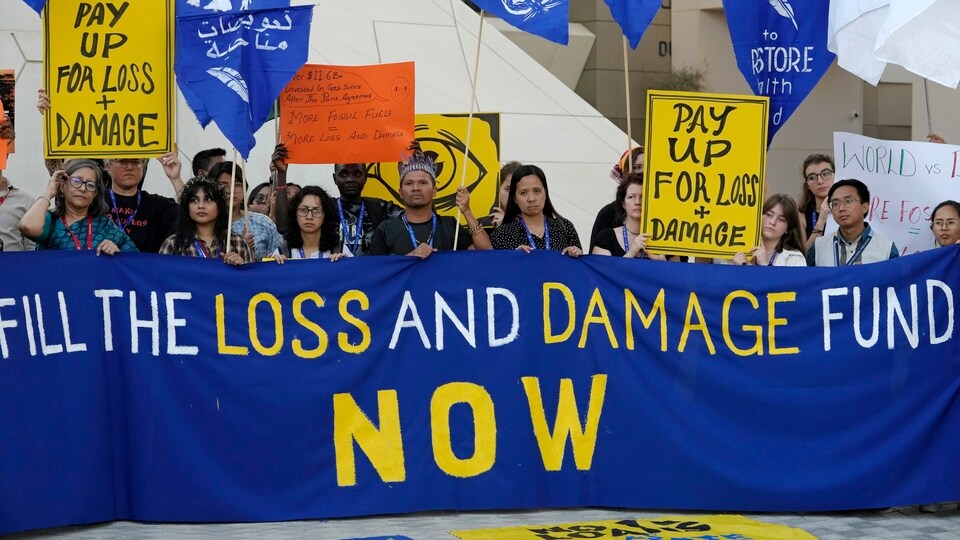
The most important highlight of 2023 was the operationalisation of the loss and damage fund. ’Loss and damage’ is the third wheel of climate action. When mitigation (reduction in GHG emissions) and adaptation are inadequate, as they are currently, then losses and damages happen. Examples include the destruction of lives, livelihoods, and property due to climate crisis-caused events such as extreme rainfall, floods, and drought. Intangible losses include loss of heritage and culture, which we see is happening particularly in the Himalayan region where melting ice and snow is forcing communities to relocate elsewhere and they are losing their traditional ways of life.
During COP27 in Egypt, countries agreed, after almost 20 years of demand from climate-vulnerable countries, to institute a loss and damage fund. One scientist from the Indian subcontinent, the recently deceased Saleemul Huq from Bangladesh, was a champion of this cause. In COP28 in Dubai, this fund was finally operationalised, and developed countries contributed almost $500 million to it, which remained a small and insignificant amount given the actual losses and damages that exceeded billions of dollars this year alone.
Finally, it may seem like we have no role to play in causing the climate crisis or contributing to its solution. This cannot be further from the truth. The top 1% to 10% of the population in terms of income causes 60% to 70% of GHG emissions due to their lifestyles. In the context of India, the urban middle class, like a lot of the readers reading this article, can decide to be much more intentional in the way they consume goods and services, travel, or make everyday decisions. It is possible to make small changes in our individual lifestyles (for example, buy less, recycle, compost, plant trees, and travel on trains or electric buses), while also demanding more climate action from our governments. The science is clear: We are headed towards a hotter future that will not allow our children and grandchildren to thrive unless we take action now.
Aditi Mukherji is director, CGIAR Climate Impact Platform. The views expressed are personal


