
 E-Paper



Scientifically Speaking | A new drug takes on one of cancer’s toughest targets
Around 80% of the time in cancer cells, the mutations occur at a single building block of KRAS located at position 12 of the protein. One little mistake causes so much damage

 Prefer HTon Google


How does a drug actually work after you swallow it? Most drugs are small chemical molecules that enter the bloodstream and then find their way to a biological target in your body. If you have taken an antibiotic, then the target is part of bacteria. If you have taken a pill for fever, headaches, or blood pressure, for example, the target is part of your own body.
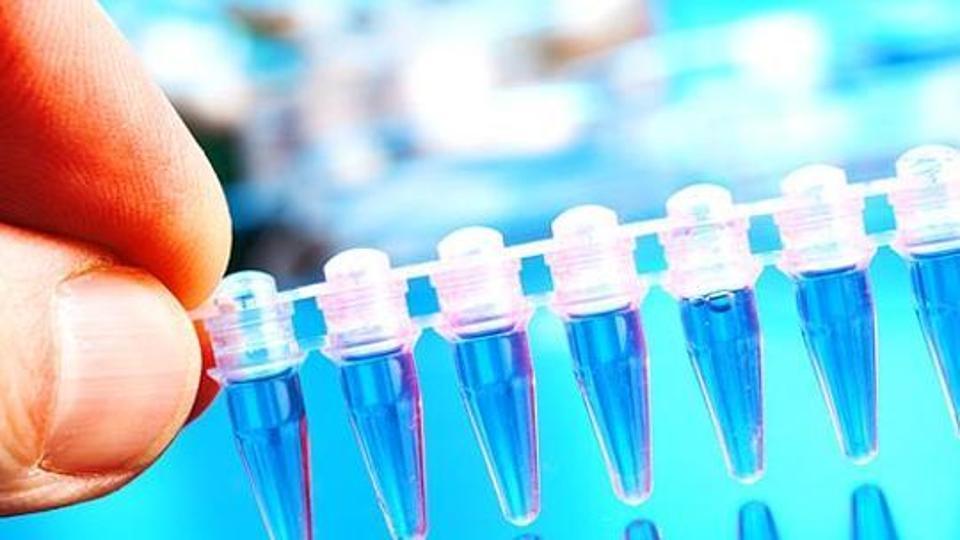
The targets of drugs are usually proteins. Proteins are biological machines that perform all kinds of jobs in the body. Sometimes proteins start doing weird things. Some of this can be attributed to small changes (mutations) in the blueprint of how they’re made. The blueprint that describes the configuration of a protein is a stretch of DNA called a gene.
How a protein works is determined by its shape. If a protein could be scaled up to the size of a person, then most drugs would typically be the size of a marble. What a drug does is that it zeroes in on an important part of the target protein where it can stick and then it modifies the way the protein works.
The first generation of drugs were created without any knowledge of the biology of how they attached to proteins; people just observed what happened when they tested them in animals and in people. The second generation of drugs contained changes to existing natural products isolated from plants and microbes that made them work even better. The newest generation of drugs targets proteins and tries to fit their shapes like small pieces of a puzzle.
Also Read | The boy who felt no pain
There is also a brute force approach in which a target is bombarded with a “library” of millions of already created small molecules to see what sticks, and then this candidate drug is tweaked while testing in human cells. All these processes can take decades, and most candidate drugs don’t make it to the market at all.
Your genome contains over 20,000 protein-creating genes. Some proteins are abnormal in diseased states. But around 85% proteins are considered “undruggable” because scientists haven’t been able to get any candidate drug to stick to them well. That leaves around 5,000 that are druggable. Fewer yet (roughly 2%) actually have a drug that works on them. So, currently there are only around 500 proteins in the body that are targets for drugs for human diseases. Considering the wide range of human diseases, this number is small. Most of these proteins belong to only five families categorised on what they look like and what they do.
Sometimes, when scientists come up against a pesky protein that they can’t get a drug to stick to, they try to find alternate targets. Other times, the stakes are too high, and they continue toiling away in hope of a breakthrough. RAS is one of these important proteins.
Mutations in RAS genes are found in a third of cancers. Of the RAS genes, one variant, KRAS, is the most mutated, and it is found in 20% of all cancers (particularly lung, pancreatic, and colorectal). These are dreadful diseases. I have witnessed close family members succumb to them.
RAS genes gives rise to proteins that are needed in healthy cells but are mutated in cancerous ones. Normally, KRAS helps cells to grow and divide; and protein turns “off” when it is supposed to. But when it is mutated in cancer cells, it is in a state of constant “on” causing uninhibited growth.
Also Read | There’s more to losing weight than counting calories
Around 80% of the time in cancer cells, the mutations occur at a single building block of KRAS located at position 12 of the protein. One little mistake causes so much damage.
KRAS is an obvious target for a drug, but it is also a minefield for failures. KRAS has a slippery surface so drug candidates don’t stick to it easily. And the compound it normally reacts with works better than drugs we can make in the lab. In addition, because KRAS is essential in normal cells, a drug should take out only the mutated version in cancer cells. No wonder KRAS was considered an “undruggable” protein for over three decades.
But finally, on May 28, the United States Food and Drug Administration accelerated the approval of the first KRAS-targeting drug, sotorasib, for non-small cell lung cancer. The drug targets the G12C mutation commonly found in lung cancer caused by cigarette smoke.
The masterstroke to cracking KRAS came from the lab of Kevan Shokat at the University of California, San Francisco and it was published in Nature in 2013. The brilliant idea was to design a drug that could stick to the 12C building block found in a mutated protein (but not in the normal version). The drug gets into a small pocket in the mutant and permanently locks it in the “off” position.
In other cancers, there is often a different mutation in KRAS that will require different drugs, but this truly is a landmark study. Other KRAS drugs are expected to enter clinical trials very shortly too.
Apart from RAS, there are other cancer proteins such as Myc (associated with ovarian cancer) which currently doesn’t have an easy spot a drug can stick too. Given resources and ingenuity, it too may one day succumb to drugs.
What successfully getting drugs to work against KRAS demonstrates is that though there are protein targets that are difficult, there should be none that we should dismiss outright as “undruggable”.
Anirban Mahapatra, a microbiologist by training, is the author of COVID-19: Separating Fact From Fiction
The views expressed are personal


