Scientifically Speaking | Where have all the insects gone?
Insects may have declined by 75% in the past 50 years. And they are continuing to disappear in a manner detrimental to human welfare and to the environment of the planet
Three months ago, the world lost EO Wilson, one of the world’s leading biologists. Wilson was an expert on sociobiology and ants, and a champion of biodiversity. In 2016, Wilson wrote the book, Half Earth: The Struggle to Save the Rest of Life. The book has served as a rallying cry for conservationists to preserve more of the planet. It is unfortunate but true that a human-driven sixth mass extinction is occurring on earth right now. It is possible that the earth contains tens of millions of different species of plants and animals of which, one million or more are faced with extinction.
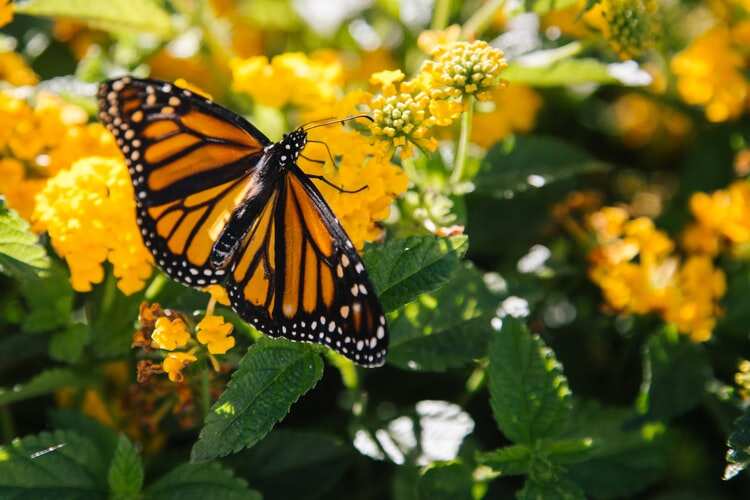
Populations of the monarch butterfly are collapsing in North America. (Unsplash)
When most people think of preserving animals, they think of large animals like tigers and pandas. When they imagine bringing back extinct species, they think of mammoths or perhaps some species of dinosaur. Insects do not captivate the imagination of most people in positive ways.
It is a shame because of the 2.5 million species that have been characterised on the planet, around 40% are insects. Around 400,000 beetle species have been described, but that might only be a fraction of those that exist. There may, in fact, be a new species of beetle waiting to be discovered in your garden.
Most of us who live in urban environments do not think of insects in a positive light, but rather as squishy or creepy creatures that bite us, spread disease, ruin our food, and eat through the wood in our homes. But these negative associations hide the fact that we rely on insects to survive. In his new book, Silent Earth: Averting the Insect Apocalypse, entomologist Dave Goulson, sounds the alarm on a catastrophe that most of us are unaware of.
The numbers are shocking. Insects may have declined by 75% in the past 50 years. And they are continuing to disappear in a manner that is detrimental to human welfare and to the environment of the planet we inhabit. Goulson writes “we need insects to pollinate our crops, recycle dung, leaves and corpses, keep the soil healthy, control pests, and much, much more. Many larger animals such as birds, fish and frogs rely on insects for food. Wildflowers rely on them for pollination. As insects become more scarce, our world will slowly grind to a halt, for it cannot function without them.”
Goulson catalogues some of the sobering losses. Populations of the monarch butterfly are collapsing in North America. Bees are being decimated in Europe and North America. In parts of China, there are no insect pollinators left. Goulson has also witnessed farmers in Bengal hand pollinating squash plants in the absence of insect visitors. If the present seems grim, in the absence of concerted efforts to preserve wild ecosystems and limiting the use of pesticides, things will only get worse.
Around 87% of plants rely on animals for pollination, and in most cases those animals are insects. Without insects, the world would lose a sizeable number of colourful flowers and important crop plants. There would be no chilli peppers, cucumbers, pumpkins, coffee, tomatoes, or chocolate, for example.
Goulson offers an analogy shared by biologist Paul Ehrlich, who compares an ecological community to an airplane and an individual species to a rivet on its wings. Since there are many insect species in an ecosystem, we can imagine that they are like many rivets that keep an airplane afloat. We don’t know what all of the rivets do for the airplane, but removing many of them will invariably lead to catastrophic failure – something we face with the wholesale decimation of insect species.
We do not know how many millions of insect species there actually are on the planet. In many cases, we know of declining insect numbers due to their effects on populations of larger animals that feed on them, such as birds.
What choices do we have then? We can broaden awareness of the problem of insect loss, reduce indiscriminate use of pesticides, and grow urban gardens that are inviting to insects. We can also inculcate in younger generations an appreciation of the environment and the need to be good stewards of the planet we share and all its species. Bugs have been around for hundreds of millions of years and they’re cool.
But even these measures have limitations. Wilson understood that we can’t save what we don’t know. He proposed legally safeguarding half of the planet’s land and oceans. Building on this goal, many organizations have proposed protecting at least 30% of the planet by 2030. It is an ambitious target in the face of population growth, the decimation of natural ecosystems, and climate-exacerbated catastrophes such as wildfires and coral-reef destruction.
But as Wilson wrote, “We are stewards of the living world. We’ve learned enough to accept this simple and easy to use moral precept: do no further harm.”
Anirban Mahapatra, a scientist by training, is the author of COVID-19: Separating Fact From Fiction

 E-Paper