
 E-Paper



Terms of Trade | The larger implications of ‘nationalisation’ of class struggle in India
The roots of BJP’s dominance in Indian politics need to be located in welfare replacing every other kind of class politics on the ground.

 Prefer HTon Google


As absurd as this question sounds, it is worth asking at a time when India is in the middle of holding its general elections.
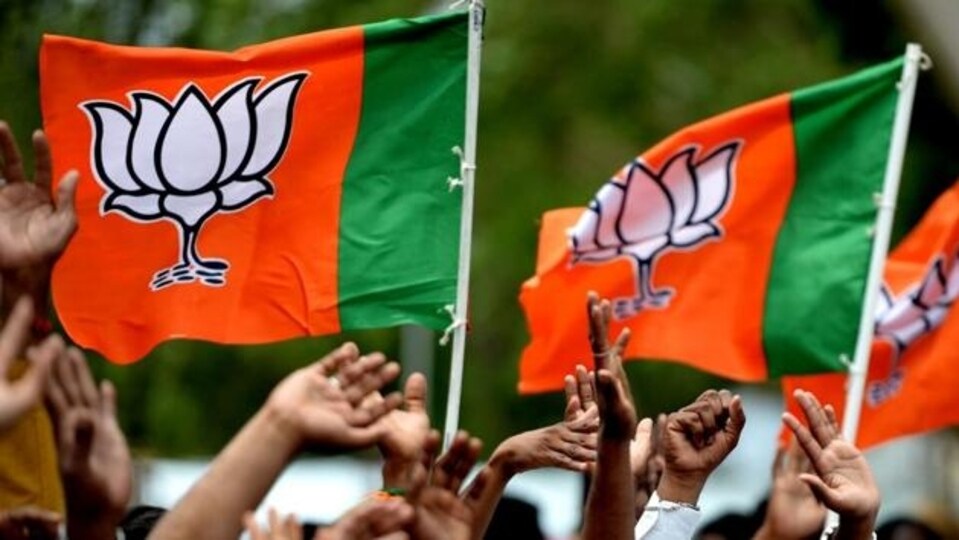
It is by now a well-accepted fact that personalised and politically weaponised welfare delivery has been absolutely critical to the rise in the Bhartiya Janata Party’s (BJP) fortunes in the post-2014 period. By using a triumvirate of direct benefit transfers to significantly reduce intermediary stage leakages, putting Narendra Modi’s personal stamp on welfare provisions and ensuring that the party’s grass root organisations convert beneficiaries of such programmes into loyalists, the BJP has built a formidable support base among hundreds of millions of poor voters in the country.
No matter what metric one takes, it is difficult to disagree with the fact that India has seen a significant increase in the number of welfare beneficiaries in the last decade.
The Congress, which is still the main opposition party in the country, has been criticising the BJP and the Modi government on the ground that it has not been giving enough to the poor. Its major promises in these elections include significantly larger cash and other welfare transfers for the poor than what the BJP is currently giving and a promise to do away with the 50% cap on SC-ST-OBC reservations, primarily to benefit Other Backward Classes (OBCs).
Congress’s critics are arguing that by committing itself to such promises, the grand old party is encouraging what can only be described as subversive tendencies for the larger economic interests of India. To be fair, they have a point by the Congress’s own admission. It was no less than Manmohan Singh, the chief architect of Congress’s post-1991 economic policies and prime minister between 2004-2014, who put it bluntly in 2012 that the proverbial welfare coat must be cut according to the fiscal cloth’s length when he said that ‘money does not grow on trees’.
Let us set aside the question of how the Congress and the BJP will perform in these elections. There is a more interesting question to be asked about a larger political economy consensus in India.
Should politics for poor people only be restricted to welfare transfers from the government? If yes, then does it have any larger political implications?
This is an important question in India because welfare has become the overarching consensus in the post-2004 period in Indian politics. It is based on the perceived wisdom that the Atal Bihari Vajpayee-led National Democratic Alliance (NDA) government lost the 2004 polls because of a vulgar celebration of growth sans redistribution.
To be sure, the Narendra Modi government has made a fundamental change to the welfare push of the government by shifting the balance in favour of asset transfers from the United Progressive Alliance’s (UPA) focus on income-generating schemes. This change, however, has not done away with the centrality of welfare in the political appeal and narrative of the government.
Why is this question even worth asking? Let us take a brief digression to try and answer this. Here are some stylised facts about politics across parties in India in the past few decades.
One, the average wealth of political representatives is getting increasingly bigger than that of the average voter. A similar process can be seen in electioneering-related expenses as well.
Two, the political capital of the executive is getting increasingly identified with that of its head, namely, the prime minister or the chief minister and their bureaucracy-controlled offices. In fact, one can argue that the legislative at large is pretty much becoming irrelevant in terms of its function of keeping a check on the executive. The centralisation of the national executive under the Narendra Modi government was merely a scaling up of this model from the state to the centre. Modi’s Gujarat, to be sure, was not the only state which had perfected this model.
One and two, when read together, suggest that a large number of people who are coming to the legislature are doing it to enter some sort of a privileged club rather than have an organic interaction with politics and policy making. What matters more is perhaps their organic relationship with the head of the executive and the party controlling it.
The third and the most important change in politics is the almost complete marginalisation of leaders championing bread-and-butter issues of the poor people barring ones requiring direct fiscal intervention from the state. It is almost impossible to find a young politician who has come from the ranks of bodies such as trade unions and similar associations representing the partisan interests of a particular class.
Sure, one can argue that bodies such as trade unions have lost their salience with privatisation and fall in the clout of public sector companies. However, a question must be asked why we have not seen leaders from occupations such as the Mahatma Gandhi Rural Employment Guarantee Scheme (MGNREGS), which employs millions of workers across the country and is, in many ways, a daily class struggle between the poorest of poor workers, contractors, government officials and local politicians.
The MGNREGS movement perhaps does not even have an MLA in the country from its ranks. Similarly, why have we not seen a rising intervention of gig economy workers in politics whose numbers run into millions and who are constantly dealing with non-transparent and often unfair working conditions?
The marginalisation of every other form of class politics apart from welfare can very well be described as the nationalisation of class struggle in India.
Is there a larger implication of working-class leaders or those invested in politics increasingly being pushed out of politics? This is where the political economy utility of ‘let welfare be the be all and end all of politics and governance in India’ becomes obvious. As long as the welfare net is being expanded and made more efficient, how does it matter if patricians, both of old and new vintage, have completely pushed out the plebians from representative politics in India, we are told subtly?
If poor people have been pushed out of politics, who will the underclass fall back on if it needs support in its struggle against what can be an issue of class conflict outside the purview of fiscal intervention? While class mobilisation of the old-school variety has become difficult in terms of praxis, it would be delusional to argue that the poor do not have grievances against the rich anymore.
The exploitation of migrant labour by contractors, employers and even dwelling owners in places where the former has very little political agency, the plight of workers in poorly regulated and completely unsafe manufacturing units or exploitative conditions of workers in the relatively small-sized service sector units including in education are some such examples.
Such workers often realise that most of the time, representative politics has been captured by local actors who benefit from such exploitative relations on the ground.
The absence of plebians from the legislative also helps India’s political economy bury some of the more uncomfortable questions, which are in some ways a zero-sum game, especially for the well-off sections of the society. The pervasive consumer bias in shifting the terms of trade in food markets against farmers is one such example. There is not even one political party which argues against price suppression in food markets at the national level except for making the unrealistic demand for Minimum Support Prices for all crops.
To be sure, none of the factors mentioned above rule out a transactional relationship between poor voters and political parties or politicians, especially during elections. The customary seizures of cash and other provisions during elections are the proverbial tip of the iceberg of this problem.
Also, one should never lose sight of the fact that the Indian state has allowed a certain kind of freedom to its underclass which is not common in some of the most successful emerging market economies. The biggest of these is the lack of any migration control in India unlike what exists in countries such as China.
Ironical as it sounds, this freedom has played one of the biggest roles in making the poor disinterested in any other politics than welfare in their native places.
What is the relevance of discussing all this in the middle of an election cycle? The atrophying of class from local politics does not mean that politics is operating in a vacuum apart from the welfare game. This is where the BJP and its ideological fellow travellers enjoy the biggest advantage. What has replaced class from the day-to-day political discourse is the so-called cultural nationalism of the BJP in large parts of the country. This campaign is, in many ways, independent of the BJP’s elected representatives, thanks to the ideological investment of the Rashtriya Swayamsevak Sangh (RSS) and its affiliates, whose organisational outreach has expanded manifold in the last ten years of the Modi government.
In pockets which are dominated by religious minorities, one can see a similar growth in assertion of the minority identity. To be sure, there are competing extra-economic regional narratives which still challenge the BJP, especially in non-Hindi-speaking states. However, it is difficult to scale them up to take on the BJP's national dominance.
Deprived of elected representatives who have organic contact with the masses beyond the transactional realpolitik interactions, most opposition parties including the Congress find themselves paralysed to take the BJP head on ideological issues.
This ideological weakness and the associated electoral vulnerability of the opposition is making it increasingly unattractive to the ranks of the local materially rooted elite for whom politics is anyway primarily a handmaiden for protecting their personal fortunes.
Also, the near bipartisan capture of vested interests in local politics also means that political actors will be vulnerable to a ruling party unleashing law enforcement agencies of the state.
For the poor, the shifting loyalties of such leaders are just another part of the transactional game which is played in the realm of realpolitik rather than an actual political-ideological struggle. The poor, after all, have a much better idea of the political dealing of such actors from their lived experience.
They know very well that the transactional behaviour of such leaders vis-à-vis the poor will not change irrespective of the political party they go to. Of course, there can be a local conflict when the transactional interests of more than one such influential actor collide with each other.
Many well-meaning liberal voices, who do not need welfare or such transactional relationships in their daily lives, are scandalised at such ideological promiscuity and try and explain it with a growing moral turpitude among the masses. The logical corollary of such a thesis is that politics is comparable to a metaphysical contest between the good and bad-hearted.
Would it not be a better question to ask whether this moral turpitude has crept into a vacuum which was left by the destruction of class politics in the realm of realpolitik struggle in India?
The starkest example of this political transformation in India is West Bengal, where almost the entire (Hindu) rank and file of the Communist Party of India (Marxist) has shifted allegiance to the BJP after the former’s collapse as a result of completely messing up its class-base even though none of its top leaders have switched camps.
Roshan Kishore, HT's Data and Political Economy Editor, writes a weekly column on the state of the country's economy and its political fall out, and vice-versa


