
 E-Paper



The case for a climate risk budget for India
We need to be ready for the fiscal impact of monsoon extremes and plan ahead every time

 Prefer HTon Google


This year’s southwest monsoon has been a monsoon of contrasts. It has been uneven across time and space, weak in many districts, and extreme in short bursts elsewhere. June ended with all-India rainfall at 40% below normal. A few intense spells in July and August narrowed the seasonal deficit sharply. But by late August, all-India rainfall was still about 14% below normal.
That all-India figure masks much sharper regional deficits. In fact, states such as Bihar and Andhra Pradesh are facing deficits of around 40%. This means that large parts of India can remain rain-deficient even when a few regions receive extreme rain. A seasonal deficit and a local flood can happen in the same monsoon, even in the same week.
Also Read | World heritage in the age of climate crisis
A super El Niño is evolving rapidly and could become the strongest we have recorded, adding further to this risk. An El Niño generally weakens the monsoon winds and increases the chance of below-normal rainfall. However, a weak monsoon does not mean weak weather risk. In a warming climate, the atmosphere and oceans carry more heat and moisture. When conditions become favourable, this moisture is often released as intense rain over a short period.
Over the Western Ghats, some locations received more than 1,000 mm of rain in just two days. Umargam in Gujarat recorded 1,064 mm in 24 hours, the third-highest daily rainfall ever recorded in India. To put this in perspective, 1,000 mm of rain means 1,000 litres of water falling on every square metre. On a 100 m² roof, that is about 100,000 litres, or 10 large water tankers. If drains are blocked, wetlands are lost, slopes are cut or floodplains are occupied, such extreme rain can quickly turn into floods and landslides.
Also Read | As super El Nino strengthens, study suggests that climate change is intensifying El Ninos
While the extreme rainfall we are witnessing is linked to global warming driven by increased greenhouse gas emissions, the floods, landslides, and destruction that follow are often shaped by what we do locally. Land-use change, hill-cutting, wetland loss, floodplain encroachment, and infrastructure built without proper environmental and climate assessment convert heavy rain into physical and economic damage. The climate crisis loads the system with heavier rain. Poor planning decides how much of that rain becomes a disaster.
India must build infrastructure with the future climate in mind. Expressways, airports, ports, hill roads, bridges, tunnels, drainage systems, reservoirs, schools and hospitals are built to last several decades. They should not be designed solely on past rainfall records and flood lines. Data on increasing extreme rainfall and future projections must inform their design, approval, and financing.
The agriculture and water risks are equally serious. Paddy, pulses, cotton, soybean, maize and oilseeds are sensitive to rainfall timing and distribution. By the end of June, kharif sowing was about 25% below last year because of delayed rains. July rainfall allowed farmers to catch up substantially, but newly planted cotton, soybean, maize and pulses remain vulnerable to another prolonged dry spell.
Also Read | Climate-resilient ageing: Missing dimension in climate response
There is a positive side though. Forecasts, district crop advisories, reservoir monitoring and contingency plans have improved. Farmers in rain-fed regions can be advised to shift to short-duration and less water-intensive crops. States can repair ponds, check-dams, and water-harvesting structures before the season worsens. Local governments can desilt drains before intense rain arrives. But these should not remain temporary responses to one difficult monsoon. They should be built into the way India budgets.
India needs a climate risk budget. Much of India’s adaptation will be decided through ordinary public budgets, through how governments spend on agriculture, water, health, roads, housing, energy, schools, drainage and disaster management. The transformation that we need is from climate finance to public budgeting, and from post-disaster spending to pre-disaster fiscal planning. India already spends on relief, compensation, reconstruction, crop losses and damaged infrastructure. This is necessary, but not enough. If the same districts repeatedly face heatwaves, floods, droughts, landslides, lightning, water stress or crop losses, prevention should be funded before losses occur.
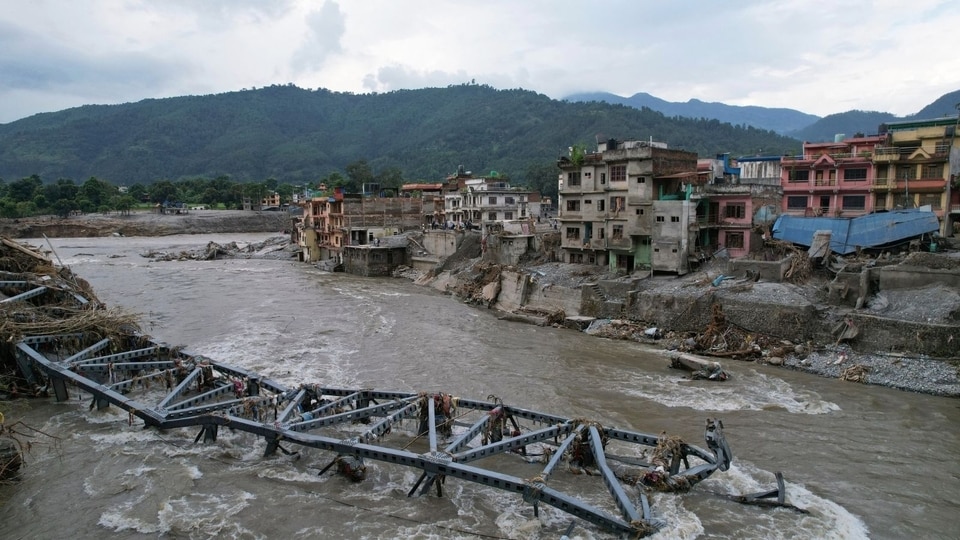
UN secretary-general António Guterres recently called for better preparation before disasters strike and for pre-arranged finance to become the norm rather than the exception. He warned that climate disasters should not become fiscal disasters. The recent Nepal-Tibet disaster shows how quickly this can happen. After a catastrophic flood destroyed roads, bridges and power projects, Nepal has estimated reconstruction costs of $4-5 billion. That warning applies directly to India.
The 16th Finance Commission has already moved in this direction. For 2026–31, it has recommended ₹2 lakh crore for State Disaster Response and Mitigation Funds, including ₹40,880 crore for mitigation. Importantly, 30% of state allocations are based on a Disaster Risk Index combining hazard, exposure and vulnerability, and preparedness and capacity-building are explicitly treated as pre-disaster activities under mitigation. A climate risk budget should extend this logic beyond disaster funds into mainstream public investment.
A climate risk budget should have the following simple parts. First, every Union and state budget should include a climate risk statement identifying the main district-level risks for the year. Second, major public investments should be screened for current and future climate risk. District and municipal budgets should have flexible funds for preventive action. Forecasts, risk maps and climate projections should be linked to spending and accountability.
India should not wait for every weak monsoon, major flood or landslide or severe heatwave to become an emergency before finding money. We should budget the risk before we pay for the loss. As we do with our lives, families and homes, we need to insure the economy.


