
 E-Paper



The riddle of judicial relief for Imran Khan
Pakistan’s muzzled judiciary suddenly finding its voice and giving Khan relief signals that there is more to this than meets the eye.

 Prefer HTon Google


Pakistan’s top court ordered former Prime Minister (PM) Imran Khan’s transfer to a private hospital amid concerns about his health. Khan, 73, who was ousted in 2022 and has been imprisoned since August 2023 on what are largely believed to be politically driven convictions, is reported to have lost significant vision in his right eye. Pakistan’s Supreme Court cited Khan’s fundamental right, while ordering the authorities to ensure his health and safety. A federal minister promised to implement the order in letter and spirit, while another said they will seek Khan’s treatment at a public hospital.
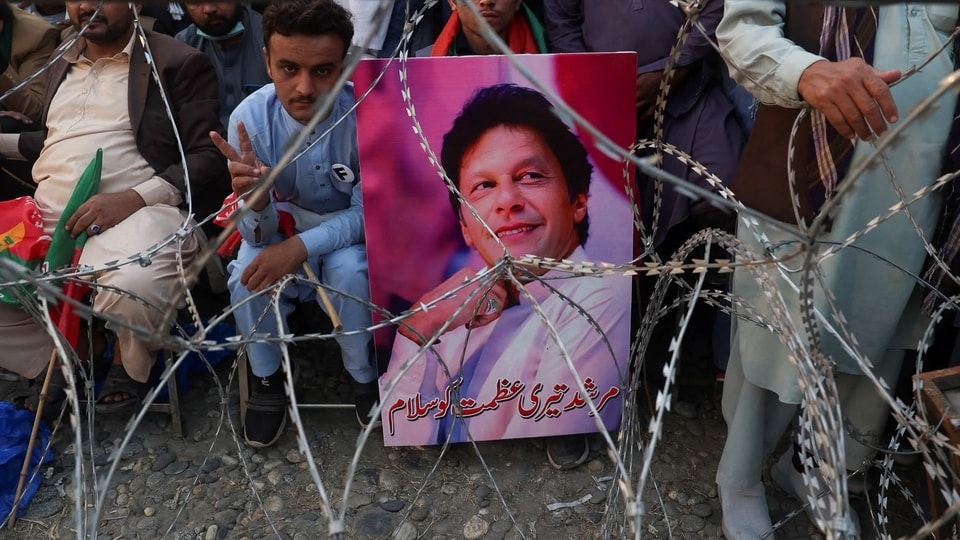
Khan’s arrest after falling out with the military establishment sparked unprecedented protests and attacks on military installations. His party, Pakistan Tehreek-e-Insaf (PTI), was stripped of its election symbol, the cricket bat, ahead of the 2024 election, and its candidates were forced to contest as independents. Yet, they emerged as the single- largest bloc in the country’s parliament and retained power in Khyber Pakhtunkhwa province.
Also Read | Why Imran Khan was sent back to jail after check up at a 'different' hospital
The order in Khan’s favour following years of sweeping crackdown on PTI came against the backdrop of fresh talk about rethinking the 18th Constitutional Amendment, which was passed in 2010 to devolve greater powers to provinces. It left the federal government with only 48% of the national budget.
Reports suggested Pakistan’s powerful army chief Asim Munir, widely seen as a de facto ruler, has been unable to get his civilian allies in the government on board to scrap the amendment. The allies are not forthcoming, despite ganging up against Khan for their return to power with the military’s support. They expanded Munir’s powers through the 27th Constitutional Amendment to further marginalise Khan, who remains popular.
The 27th Amendment granted the army chief lifelong legal immunity and limited the Supreme Court’s independence. President Asif Ali Zardari, whose signature enshrined the amendment in Pakistan’s Constitution, is the main champion of the 18th Amendment. His Pakistan People’s Party (PPP) has been among its main beneficiaries.
Also Read | Imran Khan back in jail, just hours after he was taken to a hospital
The PPP has ruled Sindh, the country’s second-largest province, for 18 years. It has expanded its patronage networks with greater fiscal space in a province whose capital, Karachi, is Pakistan’s economic engine.
The Sharifs, Zardari’s rivals-turned-allies, were also pleased to see the back of Khan as he wrested power from them in the political heartland of Punjab in 2018. The Sharifs invested heavily in infrastructure, with a network of motorways a visible symbol of their developmental politics.
The 18th Amendment is critical to the Sharifs in Punjab, where Nawaz Sharif’s daughter, Maryam, is the chief minister. Maryam is being groomed for a bigger role, with Lahore’s infrastructure development as a model.
The civilian allies allowed the passage of the 27th Amendment without much debate, undermining the Supreme Court’s remit, weakening the check on executive power, and the essence of what they claim to champion—democracy. They elevated Munir to the post of chief of defence forces, in charge of the army, the navy, and the air force, and granted him lifelong immunity from criminal prosecution for short-term goals.
The military is now entrenched more than before. There is no guarantee that it will not fall back upon its musical chairs policy. Khan’s opponents accused the military of bringing him to power. Khan initially maintained he was on the same page with the military. Like Nawaz Sharif and Benazir Bhutto, he later accused the military of forcing him out of power.
Khan’s falling out with the military followed a pattern since the 1960s, beginning with Zulfikar Ali Bhutto, who was made military ruler Ayub Khan’s foreign minister at 35. As the PM, Bhutto chose Zia-ul-Haq as army chief, superseding seven generals. Bhutto was executed following a questionable trial after Zia deposed him in 1977.
In the 1980s, Zia mentored Sharif before the military cut short his first term as prime minister in 1993. Sharif chose Pervez Musharraf, superseding two officers. Musharraf would depose and jail Sharif.
Sharif accused army chief Qamar Javed Bajwa of pressuring the judiciary to convict him of corruption and disqualify him in 2017. Four years earlier, Sharif had come to power and appointed Bajwa, superseding four officers. Sharif accused Bajwa of installing Imran Khan. Khan then blamed Bajwa for his removal.
Also Read | Imran Khan's party seeks contempt action over jailed leader's hospital move
The Nawaz Sharif-led government’s inability to allocate more funds is believed to have been among the reasons for its falling out with Bajwa. The 18th Amendment left the federal government with fewer resources. Bajwa spoke publicly against it, equating it with Sheikh Mujibur Rahman’s six points for greater autonomy before Pakistan split in 1971.
Imran Khan was the first PM elected since the 18th Amendment came into effect in 2015. He felt the financial pinch, with debt service taking roughly 30% of the federal budget. Defence spending was raised by 18% this year.
The 18th Amendment has curtailed the role of the federal government, which is effectively run by the military. Imran Khan is believed to be amenable to repealing it. The Supreme Court’s relief for Khan is significant in this context. It came months after the passage of the 27th Amendment, which greatly undermined the independence of the judiciary years after it clashed with Musharraf and forced him to step down. In 2019, the Supreme Court allowed a special court to try and convict Musharraf despite the military’s opposition. It suspended Bajwa’s extension, forcing Khan’s government to legislate. In 2012, the court ordered criminal proceedings against former army chief Aslam Beg and retired lieutenant general Asad Durrani for illegally financing a campaign to influence the 1990 election.
The 27th Amendment was a major blow to an occasionally assertive and activist judiciary. The muzzled judiciary suddenly finding its voice and giving Imran Khan relief signals that there is more to this than meets the eye.
The views expressed are personal


