
 E-Paper



Tremors in Washington, aftershocks in New Delhi
DOGE’s dismantling of the American State has significant costs for the US and will resonate beyond national borders. India too should brace for the impact

 Prefer HTon Google


Strap: DOGE’s dismantling of the American State has significant costs for the US and will resonate beyond national borders. India too should brace for the impact
Donald Trump has been president for scarcely one month, but one can be excused for feeling as if it’s been a year — or even a lifetime. The deluge from Washington has been fast and furious. On foreign policy, Trump has signalled a new era of American “manifest destiny”, in which territorial expansion is the ultimate objective. Economically, Trump 2.0 has transformed America’s growing nativist inclinations into a national obsession. And on the domestic front, Trump has sought to redefine birthright citizenship, declare English as the country’s official language, and eliminate “transsexual” identity.
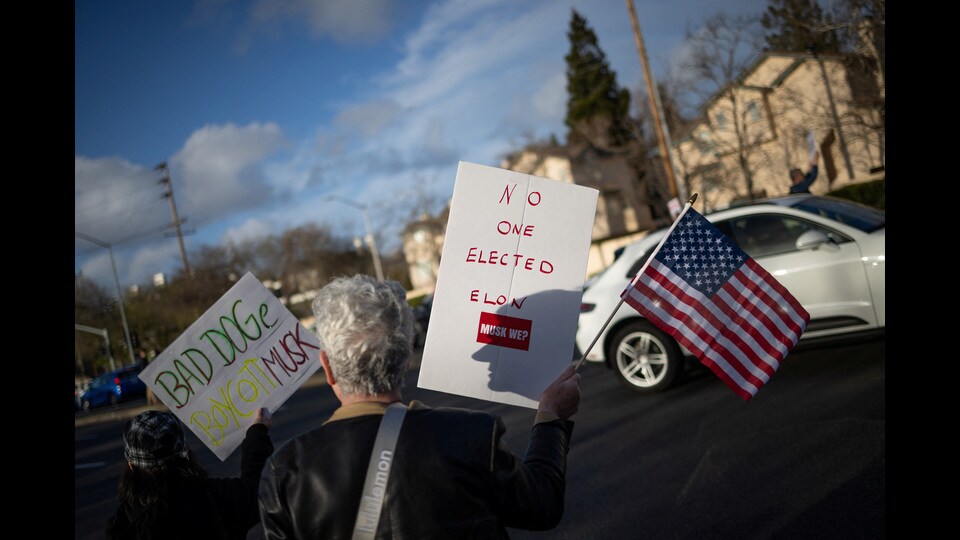
These changes cover only the most headline-grabbing of Trump’s early moves. But arguably no initiative has been as bold, controversial, or disruptive as the Elon Musk helmed Department of Government Efficiency (DOGE). In a cunning display of bureaucratic manoeuvering, Musk and his allies commandeered the United States Digital Service (USDS) — an executive branch unit which provides information technology consulting services to federal agencies — allowing them to burrow into sensitive personnel and payment systems.
DOGE — advertised as a strike force targeting wasteful spending, streamlining government regulation, and extracting cost savings for taxpayers — has attracted many admirers in India. Hardly a day goes by without a columnist wistfully lamenting that India lacks a DOGE counterpart.
India, like the US, could certainly use a bureaucratic upgrade. The recent past is littered with thoughtful blueprints for rewiring the operations of the Indian State, from the 2002 report of the National Commission to Review the Working of the Constitution to the 15 volumes of the Second Administrative Reforms Commission. But Indian reformers should not conflate their desire to eliminate the vestiges of the Licence Raj with DOGE’s bureaucratic machinations. This is because DOGE does not seek to revamp the American State — it seeks to dismantle it. This defenestration carries significant costs for the US, but the resulting shockwaves will also reverberate in India.
Shortly after Trump’s first inauguration, “America First” evangelist Stephen Bannon proclaimed that the new administration was locked in an epic struggle to deconstruct the administrative State. But lacking a clear playbook or cadre of loyal personnel, Trump’s attempts to disassemble the administrative State proceeded in piecemeal fashion, stymied by the courts, the civil service, and his team’s own dilettantism. To borrow a phrase coined by legal scholar Benjamin Wittes, the malevolence of Trump 1.0 was mitigated by the administration’s incompetence.
In their four years in exile, Trump hardliners fleshed out a far-reaching plan to overhaul the bureaucracy. For instance, a key chapter of the “America First Agenda” published by the pro-Trump America First Institute is titled “Dismantle the Administrative State,” one of several sections listed under the heading, “Fight Government Corruption by Draining the Swamp.” Similarly, the infamous Project 2025 manifesto, “Mandate for Leadership: The Conservative Promise,” is dotted with promises to disassemble the administrative State in an effort to “return self-governance to the American people.”
The quest to deconstruct the modern administrative State is built on several interconnected premises which now guide DOGE’s frenetic makeover of the federal bureaucracy.
The first is that the legislature’s power has been usurped by unaccountable federal agencies, to which Congress has imprudently delegated its authority. The second is that the executive has been weakened from within, with agencies staffed by career bureaucrats exercising vast regulatory power absent presidential control. The third premise is that the federal government is awash in wasteful spending and needs to be drastically cut to size.
Each of these assumptions rests on wobbly empirical evidence and a host of internal contradictions. If Congress’ power has been usurped, DOGE’s takeover of federal payment systems does not suggest a return to Congressional primacy over the purse strings.
While conservatives have long decried the surfeit of executive orders issued by Democratic presidents, Trump signed more executive orders in his first term (220) than Biden (162), and he is on track to shatter all records, with 76 issued in just his first month alone. Furthermore, the controversial “unitary executive theory”— which holds that the President has unfettered authority over the entirety of the executive branch — runs counter to the founders’ own vision of an American republic in which the executive was subject to a web of institutional checks and balances. Even the so-called war on “waste, fraud, and abuse” rings hollow. For all its claims of transparency, DOGE’s occasional missives are replete with misstatements. This is how a social media post about an alleged $21 million US Agency for International Development (USAID) grant to support voter turnout in India went from fiction to fact overnight. If protecting the people’s money were truly paramount, how does one explain Trump’s unprecedented firing of 17 inspectors general tasked with oversight and accountability? As for government bloat, the federal government employs around three million people, comprising a small (less than 2%) and declining share of the civilian workforce. To be sure, anyone who has experienced the US government up close knows there is scope for belt-tightening. But unceremoniously firing thousands of employees and cutting programmes based on keyword searches suggests the use of a sledgehammer in place of a scalpel.
The dismantling of the administrative State, hollowing out of the civil service, and concentration of power in the hands of the executive will have deleterious consequences for America, but they will not stop at the water’s edge. Rather than cheering on DOGE’s impetuous exercise, India should heed the warning lights flashing red.
First, just as the US has viewed India as the lynchpin in its Indo-Pacific strategy, the latter has seen the former as a key partner in supporting its aspirations to be a leading power. A US government with diminished diplomatic capacity, staffed by loyalists with little domain expertise, and that is unable or unwilling to show up in the region is not a force multiplier for India’s own ambitions.
Second, India relies on the US functioning as a reliable global public goods provider. However imperfect, the US efforts to prevent pandemics, protect shipping lanes, and address environmental concerns help to secure the global commons. But DOGE has deep-sixed USAID, undermined the National Oceanic and Atmospheric Administration, and made draconian cuts to the National Institutes of Health.
Finally, the US is home to the most prosperous segment of the Indian diaspora. The success of the five million-strong Indian American community has redounded to India’s benefit through startups and venture capital, through labour mobility and remittances, and by bringing the two governments closer together. The devaluing of scientific research, threats to legal immigration, and the impending fallout for universities is especially bad news for the diaspora.
The ultimate lesson from 2024 — the so-called “Year of Elections” — is that voters are primed for change. There’s no denying that governments, especially in the West, are suffering a crisis of credibility. But America is in danger of swapping out apprehensions about a failure to deliver with anxieties about a genuine incapacity to deliver. Amidst this churn, Indians should not be celebrating but sounding the alarm. Above all, they should be bracing for impact.
Milan Vaishnav is senior fellow and director of the South Asia program at the Carnegie Endowment for International Peace in Washington, D.C. The views expressed are personal


