The future of the India-United States (US) relationship is in its past.
If the US has to look to its west to succeed in the Indo-Pacific, India has to extend its Act East policy to the American west coast to ensure its place on the global stage. (PTI)
At the turn of the 20th century, as Devesh Kapur, Sanjoy Chakravorty and Nirvikar Singh have chronicled in their excellent book, The Other One Percent: Indians in America, there were 2,031 Indians in America. Then, three groups began arriving. Former soldiers and policemen who had served the British Empire in China and the Far East made their way to Canada and the US. Young men from Punjab then began trickling in, first constructing railway lines in the Pacific Northwest and then branching off into agriculture. They settled in the stretch from Vancouver through Seattle and Portland to San Francisco. And then students began coming, primarily to the University of California Berkeley, Stanford, and University of Washington in Seattle.
These were small numbers. But if it was America’s west coast that was the first home of Indians in the early 20th century, it is the same region that will define the India-US relationship in the middle of the 21st century. The politics and policies of Washington DC will, of course, shape State-to-State ties, as will the power of the financial capital in New York. But the strategic, technological-economic, and diaspora dimensions of bilateral ties are all playing out on the west coast.
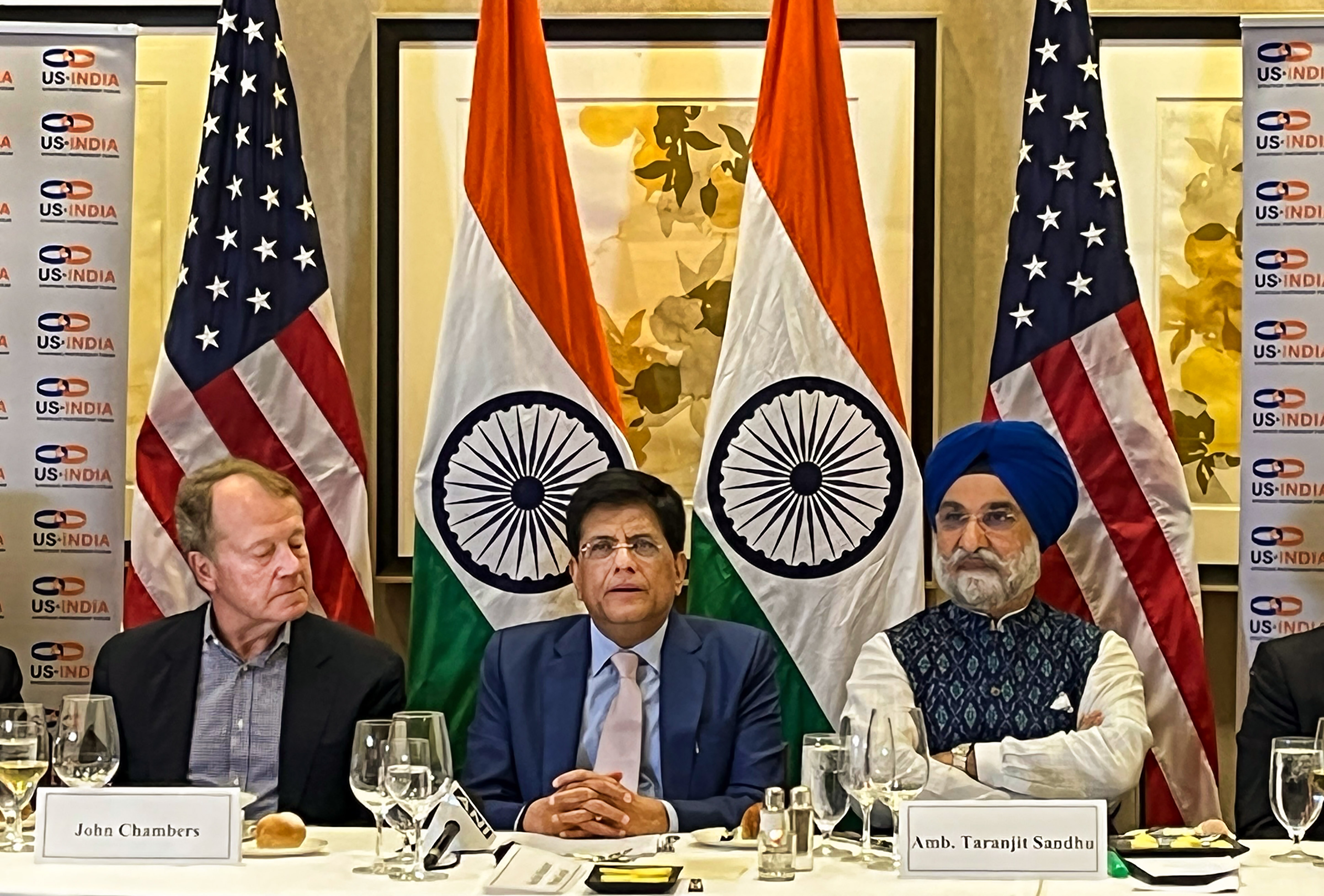
The Government of India knows it. Three senior ministers — Rajnath Singh, Nirmala Sitharaman, and Piyush Goyal — have travelled to the region just this year. And their portfolios — defence, finance and commerce, respectively — offer a clue about what’s driving ties.
The strategic story is straightforward. If the future of global geopolitics lies in the Indo-Pacific, the US’s claims of being an Indo-Pacific power come from its western geography. From the ongoing geopolitical contest in the South Pacific Islands to the almost inevitable future clash over Taiwan, the US will have to bring the power of its west coast into play to preserve its dominance. If 20th century history changed due to Pearl Harbour, Hawaii, as the home of the Indo-Pacific command, will once again play a key role in determining the military balance in Asia in this century.
The choice of Los Angeles (LA) for the first in-person Indo-Pacific Economic Framework (IPEF) ministerial last week was no coincidence, but a clear American signal that Pacific-facing cities will play a key role in expanding its economic footprint in Asia. LA port channels 40% of imports into the US. China accounts for the lion’s share at the moment. But if IPEF — or indeed, America’s Indo-Pacific strategy itself — is to succeed, the complexion of trade at LA port has to change.
How India deepens its ties with the command in Hawaii, and with the Pacific-facing cities on the coast, will help shape its military and trade ties with America.
Add to it the tech-economy-knowledge story.
Notwithstanding the debate over Big Tech, Silicon Valley will continue to remain the hub of global innovation and wealth creation. The Californian and Indian economies are almost the same size at the moment. If our start-up ecosystem has to succeed; if we want investments to keep flowing in; if we want jobs to be created in the digital economy; if we want to leverage the power of our data without comprising sovereignty and privacy; and if we want to become a part of strategic tech sectors – from participating in the semiconductor manufacturing supply chain to building synergies in biotech – deepening collaboration with companies and venture funds in the Valley is a necessary part of the script. As India gets serious about international knowledge partnerships, especially in science, technology, engineering and mathematics (STEM), west coast institutions will play a key role. All of this is already happening organically — and will only grow.
And that is where the power of the diaspora comes in: 1.5 million Indians and Indian-Americans live on the west coast, with 800,000 in California. The story of Indian chief executives in some of the biggest tech firms (Microsoft, Alphabet, Adobe, IBM, Twitter, Micron, Vimeo) is too well known to be recounted, but the contribution of Indian engineering institutions to the talent pool in the Valley is at every level. At a meeting with investors at the Four Seasons Silicon Valley Hotel in Palo Alto, Goyal joked that as a chartered accountant, he was out of place in a room full of proud Indian Institutes of Technology alumni.
There is no point in having unrealistic expectations from the Indian workforce serving American capitalism. But their presence adds to India’s soft power. It gives India a foothold in boardrooms discussing where to invest beyond China. An intangible sense of loyalty and affection, and tangible networks back home, help in shaping decisions that help India. And as Indian-Americans rise in politics (three of the four desis in the US Congress come from the west coast, as does the vice-president), and as Indian-American donors become big players in both parties, a supportive constituency is only growing.
If the US has to look to its west to succeed in the Indo-Pacific, India has to extend its Act East policy to the American west coast to ensure its place on the global stage. It is here that the west and the east will meet to take on the China challenge.
Prashant Jha is the Washington DC-based US correspondent of Hindustan Times. He is also the editor of HT Premium. Jha has earlier served as editor-views and national political editor/bureau chief of the paper. He is the author of How the BJP Wins: Inside India's Greatest Election Machine and Battles of the New Republic: A Contemporary History of Nepal.Read More

 E-Paper