
 E-Paper



Women at forest frontline break stereotypes, barriers
Kaziranga’s women foresters ensured safe passage of its animals and undertook rescue and release of stranded one during the devastating 2024 floods

 Prefer HTon Google


As the successor to the Imperial Forest Service that was created in 1865, the Indian Forest Service (IFS) became a central service in 1966. While the semi-uniformed forest department was primarily oriented towards living and working in remote locations, the entry of women into the service happened much later, with the induction of three women officers in 1980. It required only minor amendments (with a relaxation on physical criteria), and there has been no turning back since. The cadre strength of women in the IFS has grown from a mere handful to over 350 serving officers today.
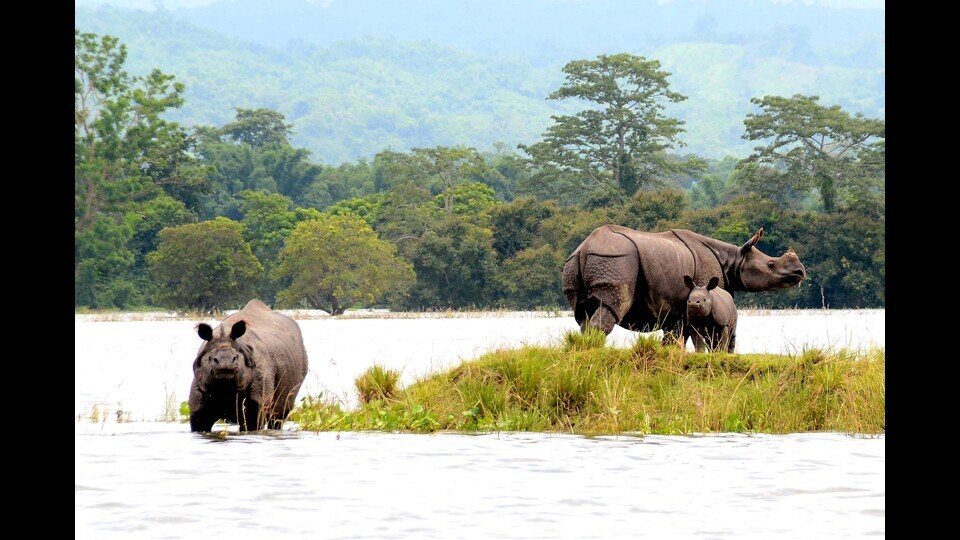
I first came across women foresters while working in Kaziranga, a Unesco World Heritage Site that is home to the largest population of the greater one-horned rhinoceros. Over 300 women forest guards, officers, and forest battalion constables were recruited as part of a mass enrolment drive by Assam government in 2023. Mostly from rural backgrounds, they had their baptism by fire during the three months of rigorous training that involved learning how to wield the weapons such as automatic guns and how to use, which is a different art altogether. The women were toughened mentally and physically to endure the hardships of a “jungle posting”.
Then came the challenge of housing them. Anti-poaching camps are key to the Kaziranga model of conservation. Unless there is the exigency of a great flood, the camps are manned at all times. There are 233 anti-poaching camps in Kaziranga, the highest in terms of area coverage. The camps are basic and largely meant to house only individual men without families. Bathing area, toilets and improvised kitchens were a few pre-requisites for housing the frontline women. All-women camps were established, but the real challenge came with breaking the mind-set of peers and superiors. Will the women be up for the challenge of living in the forests?
The women showed they were more than up for it. In July 2024, Kaziranga saw the most devastating floods since 1991. On July 2, 2024, the wild animals started leaving the park in search of higher grounds. It was also a time when humans, including rural communities, were at distress and anti-poaching camps were cut-off from the outside world. Rations, including drinking water, were meagre and precious, and the frontline had to remain mentally and physically fit to prevent any personal illness.
The National Highway 715, located along the southern boundary of the park, became the war-zone. The women frontline regulated traffic speed, ensured safe passage of wild animals in the nine designated corridors, undertook rescue and release of stranded wild animals and continued with anti-poaching duties alongside their male peers. As a result of the collaborative efforts, 2024 recorded the lowest ever wildlife mortality (two hog deer) from road-kills and other anthropogenic causes. Local communities, student volunteers, and the civil society contributed equally to the flood-time management. After 35 gruelling days, a total of 180 stranded animals were rescued; 148 of these could be successfully released back into the wild -- one of the best showing so far.
Prime Minister Narendra Modi, during his maiden visit to Kaziranga on March 9, 2024, had met the women frontline and named them Van Durgas (goddesses of the forests). Today, they have broken the societal and cultural barriers and the stereotype that remote forests and tough postings are meant only for men. They proved that combating dreaded poachers or caring for wild animals can be done equally well and easily by women if they are trained well. Women bring additional skills of effective communication, greater connect to rural communities, and a sincerity and dedication. If nature does not differentiate, why must we?
Sonali Ghosh is field director, Kaziranga National Park and Tiger Reserve. The views expressed are personal


