
 E-Paper



Women at the forefront, again
The young women protesters know that a broken education system threatens freedom and the promise of a different life.

 Prefer HTon Google


Anoosheh says she knows exactly why she spent 15 to 16 hours a day at the Jantar Mantar protest. The class 12 student moved from Uttar Pradesh to the capital two years ago to study and attend coaching classes for NEET, the national-level entrance exam for undergraduate medical school.
Staying at a paying guest accommodation away from family, the daughter of government school teachers, like so many students of her generation, grew up with the idea that education was the key to a better life, that hard work would not go unrewarded and that merit would lead to financial security, autonomy and dignity.
For many young people today, that promise has turned out to be increasingly hollow.
Over half of India’s graduates are unemployed, according to the government’s Periodic Labour Force Survey. So, education does not guarantee a job. A degree does not always open doors to opportunity. And clearing a tough competitive exam to get admission into a coveted course is a gamble where those who cheat game the system.
Nobody knows just how many papers from how many exams have been leaked. Some sources put it at 152 papers affecting 7.5 crore students since 2014.
When a paper is leaked, as NEET was in May this year, the exams are cancelled and every student who has slogged for years, sacrificing sleep, family time and a social life, must take them again. Not everybody has the means or the will to go through the grind again. This year, around two lakh fewer students took the re-exam.
“I don’t want to be back here next year. I want my future to be secure,” says Anoosheh.
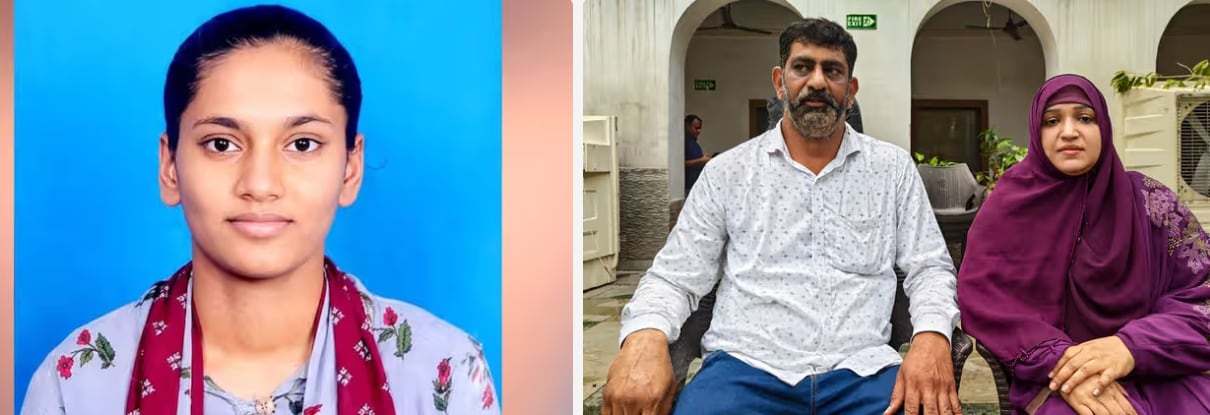
On May 3 after completing her NEET paper, 19-year-old Sana Sheikh called her father to tell him she had aced the exam. Then, hope came undone when the exam was invalidated because of cheating. “I’m sorry,” she scribbled on a piece of paper before hanging herself in her room.
Sana is one of at least 21 students who died by suicide this year, reports M.N. Parth for PARI (People’s Archive of Rural India).
The cost of a broken exam system can be especially high for women. At a time when higher education is seen as the key to economic independence, a cancelled exam or delayed recruitment shrinks a window of opportunity. Parents are happy to let daughters study for as long as they wish. Then the pressure to get married and “settle down” begins.
Living away from home at college is also for many women a time of freedom to explore and experience new ideas and friendships. It’s this freedom that Rameesha, a class 12 student who plans to sit for NEET next year, looks forward to. “Becoming a doctor is my key to freedom and independence—even from my parents who are supportive,” says the 17-year-old who volunteered at the protest site’s medical tent.
Women lead
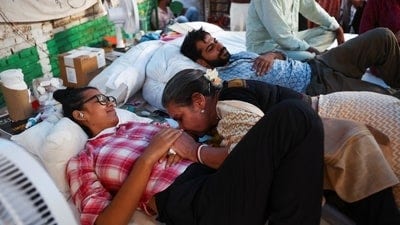
Neha Bora, president of AISA and a PhD student at JNU, who fasted alongside Sonam Wangchuk and two other student leaders, Manish Kumar and Aameen Amitoj has emerged as one of the movement’s prominent women leaders. She has spoken about what it means to be on a hunger strike for 23 days. “Times of great repression are also times of new definitions of resistance and that is what is being done by the people of this country,” she told journalist Aman Sethi in an interview for Open Democracy.
Women have been an integral part of movements and protests since Gandhiji’s 1930 Dandi March. They were there at the Chipko movement, the famous non-violent forest conservation effort of the early 1970s. And in the mid-1980s, the Narmada Bachao Andolan counted Medha Patkar among its leaders.
It was the daadis of Shaheen Bagh who occupied the streets through the winter of December 2019 to March 2020 to protest against the Citizenship (Amendment) Act. In Manipur, angry mothers weary of ethnic conflict continue to march.
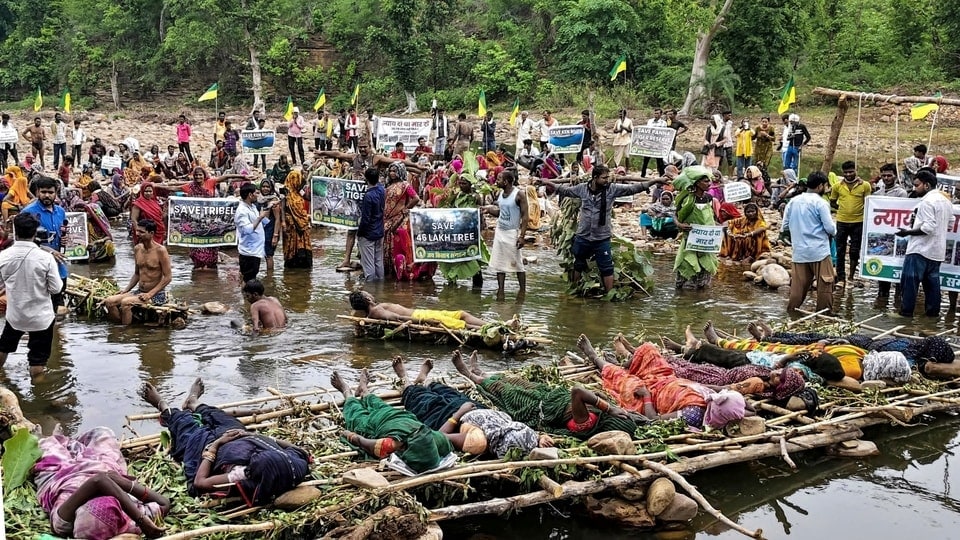
Even as I type this, tribal women and men are lying on mock funeral pyres and standing in waist-deep water to protest against a mega project to transfer surplus water from the river Ken in Madhya Pradesh to the river Betwa in Uttar Pradesh’s drought-prone Bundelkhand region that will result in mass displacement.
Memories persist too of the spontaneous protest by angry citizens in the aftermath of the gang-rape and subsequent death of a physiotherapy student on December 16, 2012. Like the Jantar Mantar protest, the then Congress-led UPA government’s initial response was tear gas and water cannons. Then, it set up an independent and credible commission and changed the law.
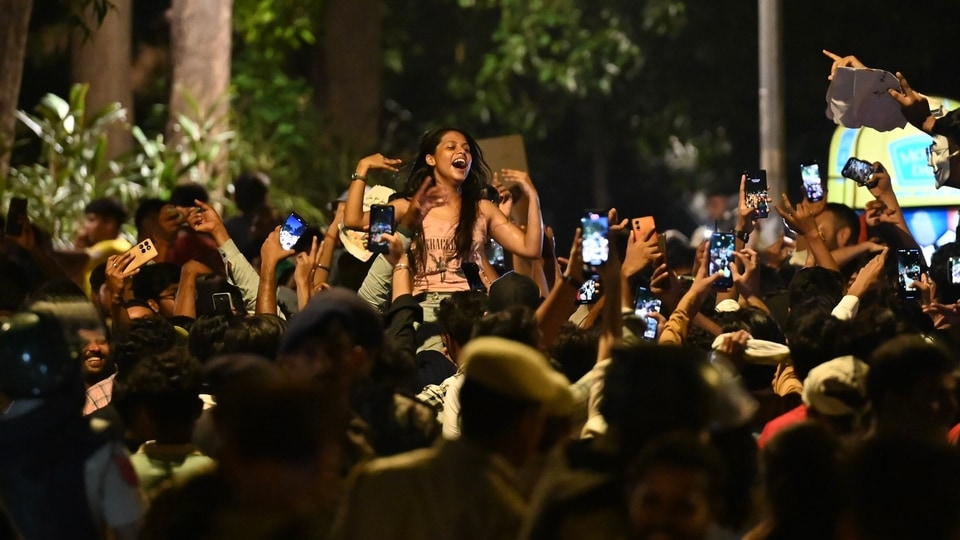
Many women at the 36-day long Jantar Mantar protest were children then. Now, there’s an air of festivity and joy as the groups walk around making videos. K says she’s here with her friends to “change the education system” but doesn’t want me to use her name because her father doesn’t know she’s at the protest. His concern is her safety but she and her friends also tell me what so many others do—they feel safe in that huge, pressing crowd.
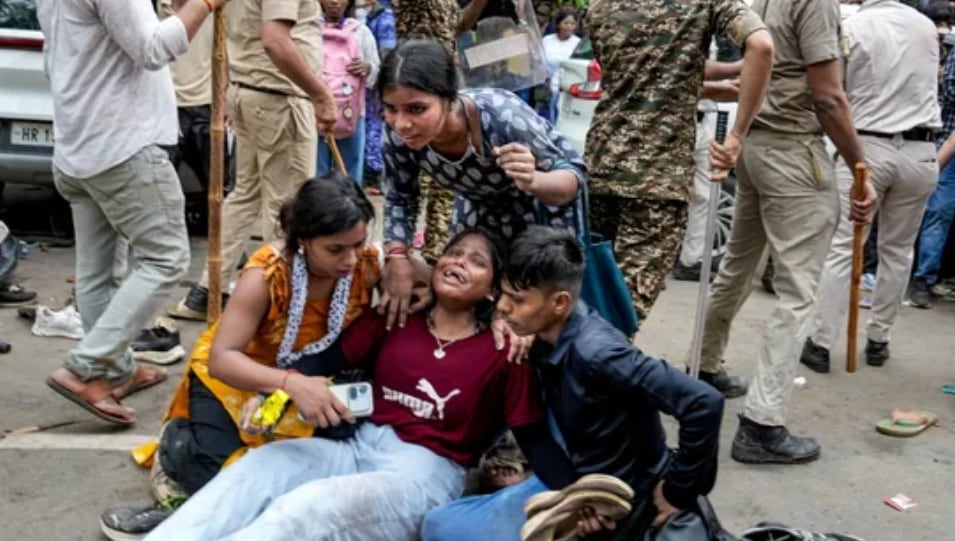
Ironically, the only time women said they felt unsafe was when confronted by police armed with batons and shields. Kaneez from Ladakh was caught in the crowd when on July 20 police began raining their lathis on the protesters. Caught in the panic, she took a blow to her leg and shows me where she fractured her ankle. Undeterred she stayed at Jantar Mantar.
As news that the protest had been called off after the government had conceded to the students’ demands, including the resignation of Dharmendra Pradhan, the education minister, broke on Saturday afternoon, tens of thousands of people, men, women and children, began arriving at Jantar Mantar for a spontaneous street celebration.
One small group of women knew their work of feeding the protestors and volunteers had to continue—for at least one more night. With paneer rolls, fruit and packets of chaach, GatherSisters had been delivering meals to Jantar Mantar through rain and chaos.
Now, 400 vegetable burgers were ready to go. The protest had officially ended but the volunteers were still working, still managing the crowd, still sweeping, still collecting garbage.
“They were working and so were we,” says one of the women of the group who didn’t want to be credited individually. “If they could stay till the end, so could we.” It’s only after the burgers had been delivered and distributed that they joined the others.
The protests was over. It was time to dance.


