

 E-Paper


Photos: Indonesia aims to make the world’s most polluted river drinkable
Long before Indonesia's Citarum river hits the sea on the eastern shores of Jakarta Bay, the river turns into a toxic cocktail the colour of coffee as it picks up a pungent stew of garbage from factories and homes along its 300-km stretch. Often labelled as the world’s most polluted, the government is now spearheading a new campaign to make the water in Indonesia's most strategic river basin drinkable by 2025.
1 / 10
 View Photos in a new improved layout
Updated on Mar 03, 2018 11:58 am IST
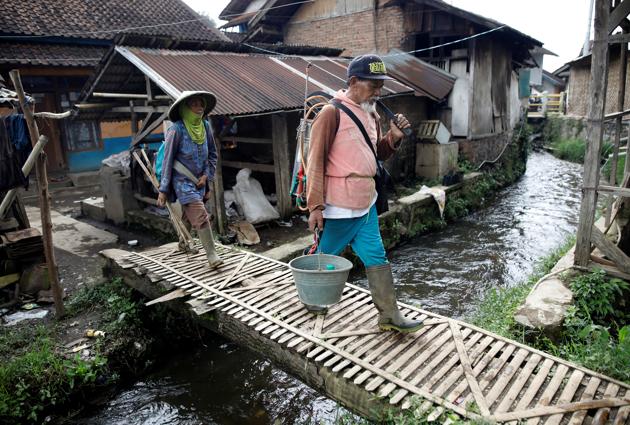
Farmers walk over a stream near Cisanti Lake, the source of the Citarum river, in the mountains south of Bandung, Indonesia. As it burbles past terraced rice paddies and quiet farming villages in the highlands towards the sea its charm swiftly evaporates as the Citarum, often labelled the world’s most polluted, descends past crowded factories and homes that dump a pungent stew of garbage, waste and sewage into its 300-km stretch. (Darren Whiteside / REUTERS)
2 / 10
 View Photos in a new improved layout
Updated on Mar 03, 2018 11:58 am IST
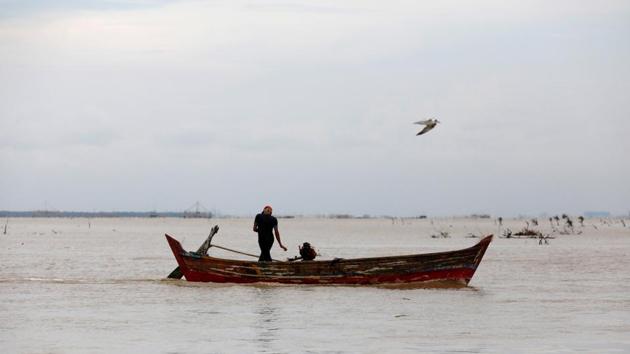
Residents along catchment towns say the Citarum’s water looks a coffee brown, mixed with waste and sometimes smells like ointment. 28 million people depend on the river’s waters, which supply Jakarta, support 400,000 hectares of rice paddies, sustain fish farms and fill reservoirs that generate about 2 gigawatts of hydropower. (Darren Whiteside / REUTERS)
3 / 10
 View Photos in a new improved layout
Updated on Mar 03, 2018 11:58 am IST
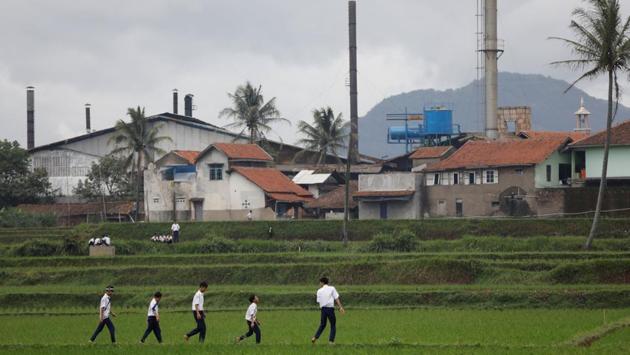
Students walk through rice fields located in Majalaya, a town densely populated with textile factories. Among the river’s worst polluters are dozens of textile factories in Majalaya that dump chemical waste, Arif Havas Oegroseno, a deputy minister who coordinates maritime affairs told Reuters. (Darren Whiteside / REUTERS)
4 / 10
 View Photos in a new improved layout
Updated on Mar 03, 2018 11:58 am IST
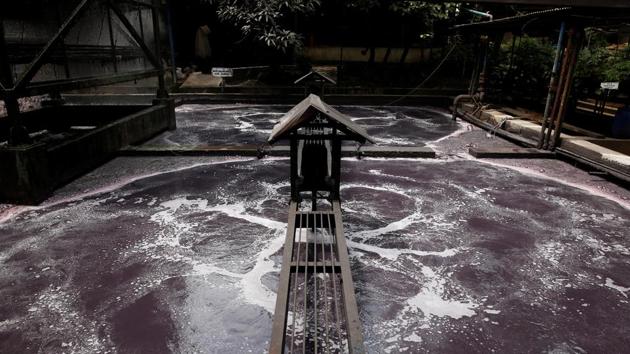
Waste water at a textile factory is treated before being released into a stream that joins the Citarum. Oegroseno says the factories throw the dyed water into the smaller streams that meet the river. These streams are often white, sometimes black, red, blue or yellow after the colour of the dyes. (Darren Whiteside / REUTERS)
5 / 10
 View Photos in a new improved layout
Updated on Mar 03, 2018 11:58 am IST
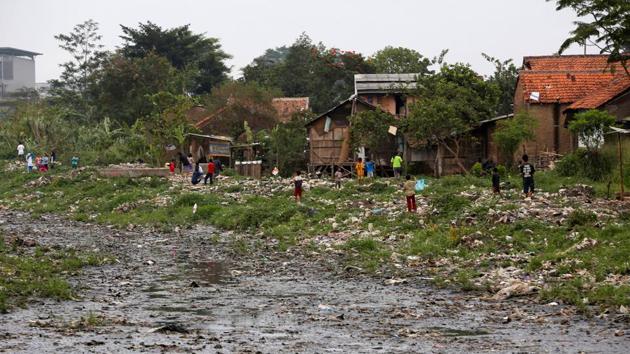
Children play along an old section of the Citarum south of Bandung. His ministry is spearheading a new campaign to achieve President Joko Widodo’s ambition of making the water in Indonesia’s most strategic river basin drinkable by 2025. Long before it hits the sea on the eastern shores of Jakarta Bay, the river turns into a toxic cocktail the colour of coffee. (Darren Whiteside / REUTERS)
6 / 10
 View Photos in a new improved layout
Updated on Mar 03, 2018 11:58 am IST
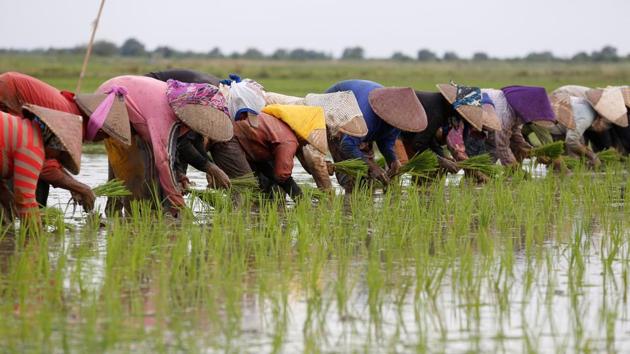
Children fly kites and play beside piles of floating trash in some parts of the river, but others avoid it as being a mere garbage dump. Yet further downstream, women in conical hats work in fields irrigated by the river. (Darren Whiteside / REUTERS)
7 / 10
 View Photos in a new improved layout
Updated on Mar 03, 2018 11:58 am IST
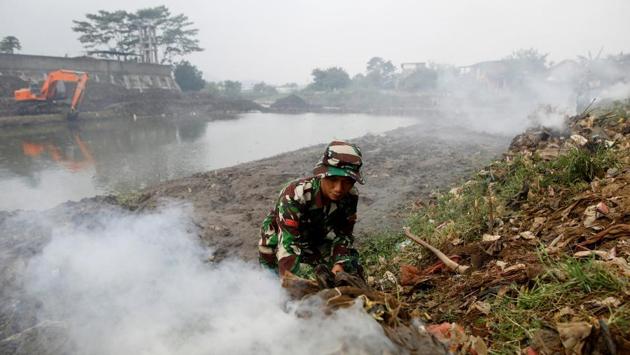
Hundreds of soldiers were recently posted along the river to retrieve garbage, which gets burned as part of the ambitious programme backed by more than 10 ministries, local government, community groups, the police and the military. (Darren Whiteside / REUTERS)
8 / 10
 View Photos in a new improved layout
Updated on Mar 03, 2018 11:58 am IST
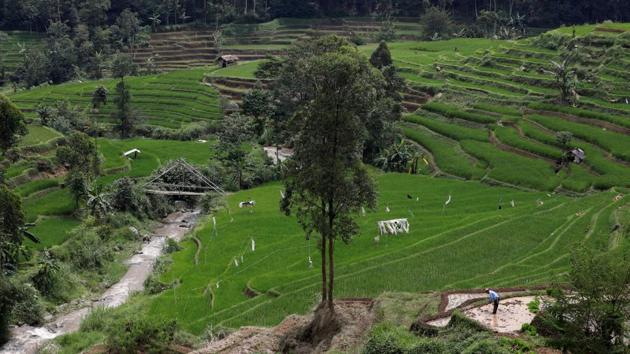
A farmer works in a rice paddy near a stream that feeds the Citarum. Green groups blame the failure previous clean-up efforts on a lack of monitoring and difficulties enforcing regulations. The key to keeping the river clean will be educating people and toughening enforcement of environmental controls, said Oegroseno, who vows to shut polluting factories and make them fund clean-ups. (Darren Whiteside / REUTERS)
9 / 10
 View Photos in a new improved layout
Updated on Mar 03, 2018 11:58 am IST
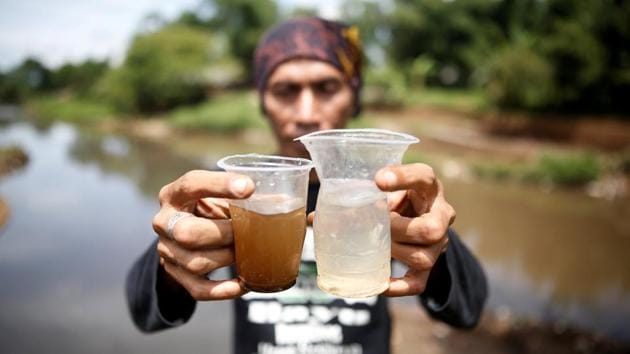
Activist Deni Riswandani holds up water from the Citarum river (R) and from a tributary which runs through an area with textile factories (L), where the two meet near Majalaya. He estimates 1,500 industries dump 280 tonnes of chemical waste in the river each day, but said that even with evidence it was tough to enforce environmental rules. (Darren Whiteside / REUTERS)
10 / 10
 View Photos in a new improved layout
Updated on Mar 03, 2018 11:58 am IST