

 E-Paper


Photos: A peek into the world’s largest graveyard for ships in Alang
According to the Ship Recycling Industries Association India, the number of active shipyards have fallen to 50 this year from more than 100 in 2014. Being hit by the flood of cheap Chinese steel and new European Union environmental rules, the world’s biggest ship recycling centre of Alang in Gujarat is also on the verge of shutting down.
1 / 8

 View Photos in a new improved layout
Updated on Jun 03, 2018 02:33 pm IST
A worker carries a gas cylinder past decommissioned ships being dismantled at the Alang shipyard in the western state of Gujarat. Hit by a flood of cheap Chinese steel and new European Union environmental rules, more than half of the ship-breaking yards have shut in the past two years and the future of the trade in India and neighbours Bangladesh and Pakistan is bleak. (Amit Dave / REUTERS)
2 / 8
 View Photos in a new improved layout
Updated on Jun 03, 2018 02:33 pm IST
Workers wearing protective gear arrive to dismantle a decommissioned ship. The trade in Alang used to employ about 60,000 directly, with thousands more in spin-off businesses. But roads on the 11 km (7 mile) beach front that locals say used to buzz with people and trucks, now appear deserted and dozens of shops displaying everything from crockery to computers ripped out of ships are struggling to get supplies. (Amit Dave / REUTERS)
3 / 8
 View Photos in a new improved layout
Updated on Jun 03, 2018 02:33 pm IST
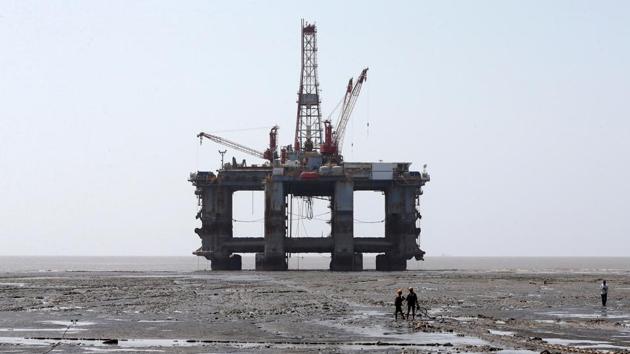
Workers pull a rope tied to a decommissioned oil rig to dismantle it. According to the Ship Recycling Industries Association India, the number of active yards in Alang have fallen to 50 this year from more than 100 in 2014 and the number of vessels beached also dropped to a six-year low of 275 last year. “China is selling below the price of recycled steel,” said Amit B. Padia, owner of Sagar Laxmi Ship Breakers. (Amit Dave / REUTERS)
4 / 8
 View Photos in a new improved layout
Updated on Jun 03, 2018 02:33 pm IST
In India, with a plunge in steel prices, ship owners are getting about $3.6 million less for the 25,000 tonnes of recoverable metal from a typical iron ore or coal carrying ship than just eight months ago. Following the figures, the situation is equally bad in Pakistan, “It has always been a cyclical business but people who have been in this industry tell me this is the worst in 30 years,” said Shoaib Sultan, the owner of Horizon Ship Recycling in Karachi. (Amit Dave / REUTERS)
5 / 8
 View Photos in a new improved layout
Updated on Jun 03, 2018 02:33 pm IST
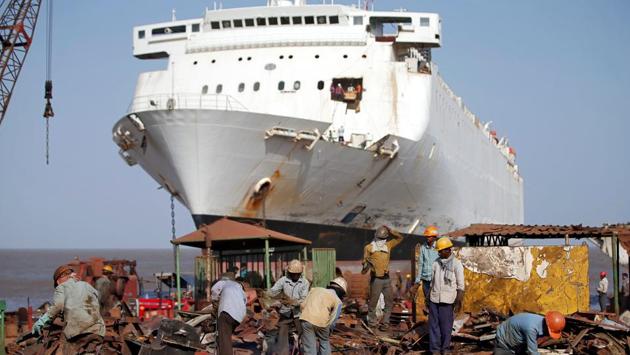
“People are running this business from their heart, not from their mind,” said Chintan Kalthia, whose company R.L. Kalthia Ship Breaking Pvt Ltd runs one of Alang’s more modern yards. “But this is my last ship. This business is dying,” he added. (Amit Dave / REUTERS)
6 / 8
 View Photos in a new improved layout
Updated on Jun 03, 2018 02:33 pm IST
Workers sort out metal scrap from a decommissioned ship at the shipyard. “Three years ago there were about 80 yards, now it’s down to 25. I think another 10-15 yards will go,” said Zahirul Islam, director of PHP Shipbreaking and Recycling Industries Ltd in Chittagong. (Amit Dave / REUTERS)
7 / 8
 View Photos in a new improved layout
Updated on Jun 03, 2018 02:33 pm IST
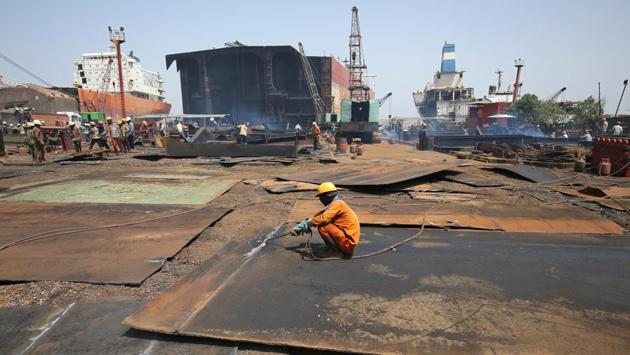
Ship breakers globally bought 25.2 million deadweight tonnes (dwt) of vessels upto early July, against 33.8 million dwt all of last year, with Bangladesh being the largest buyer, according to shipping services firm Clarkson. “Everyone thought prices will improve and bought a lot, but now they are sitting on huge inventories,” said Islam. “It will be a disaster in the coming months”, he adds. (Amit Dave / REUTERS)
8 / 8
 View Photos in a new improved layout
Updated on Jun 03, 2018 02:33 pm IST