
 E-Paper



Photos: Delhi’s air relents a notch from a ‘severe’ Monday
Delhi’s air quality deteriorated sharply on Monday to fall in the severe category for the second time within a week. The overall air quality index on Monday was registered in the severe category at 418, a drastic decline from a day before when the AQI was moderate at 171. Contrasting a foggy chill on Monday, the city began Tuesday with a sunny outlook, the air seemingly a notch clearer but still in the ‘very poor’ category when AQI is between 300 and 400.
Updated on: Nov 06, 2018 1:33 PM IST

Share via


Copy link

1/5

 View Photos in a new improved layout
Updated on Nov 06, 2018 1:33 PM
An early morning view off the Yamuna river on Tuesday, in New Delhi. The capital seemed choking on Monday as air quality deteriorated sharply compared to Sunday. A change in wind pattern had swept in smoke from farm fires in Punjab and Haryana, shrouding the national capital region (NCR) in a thick haze made of tiny particulate matter that can penetrate deep into the lungs and cause health problems. (Biplov Bhuyan / HT Photo)
2/5
 View Photos in a new improved layout
Updated on Nov 06, 2018 1:33 PM
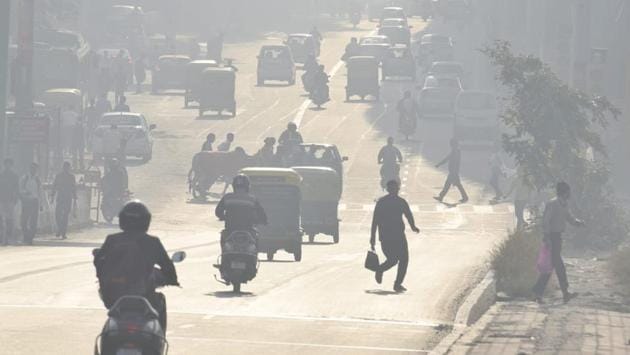
Smog still made its presence felt on Tuesday, seen here at Shadipur. Levels of PM2.5 had shot up nearly five times in 24 hours – a phenomenon not recorded in the three years since hourly monitoring began for the region. Sunday was the best November day since 2015. Scientists from government agencies said they expected pollution to increase but were taken aback by how fast it happened. (Sanchit Khanna / HT Photo)
3/5
 View Photos in a new improved layout
Updated on Nov 06, 2018 1:33 PM
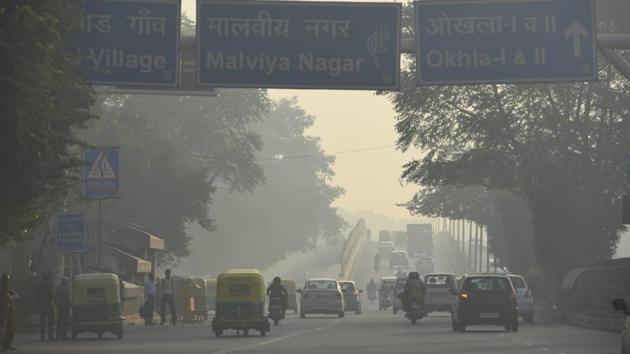
A view of heavy smog near Hauz Khas Metro station. The average Air Quality Index (AQI) value shot up from 171 on Sunday to 426 on Monday, settling in the ‘severe’ category. According to the System of Air Quality and Weather Forecasting And Research (Safar), at least 33% of the pollutants originated from fires in farms in Punjab and Haryana. (Amal KS / HT Photo)
4/5
 View Photos in a new improved layout
Updated on Nov 06, 2018 1:33 PM
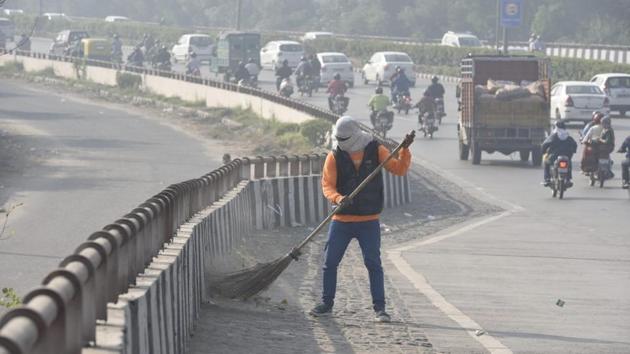
According to the India Meteorological Department, the shallow fog on Monday morning mixed with pollutants had lead to smog. On Tuesday, there was a slight drop in moisture in the morning, which was good for dispersion of pollutants. Forecasts however predict AQI climbing back up again from Wednesday. (Biplov Bhuyan / HT Photo)
5/5
 View Photos in a new improved layout
Updated on Nov 06, 2018 1:33 PM


