
 E-Paper



Photos: Kumbh Mela begins in Prayagraj
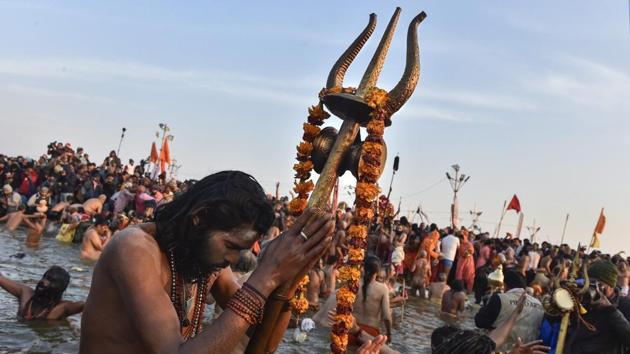
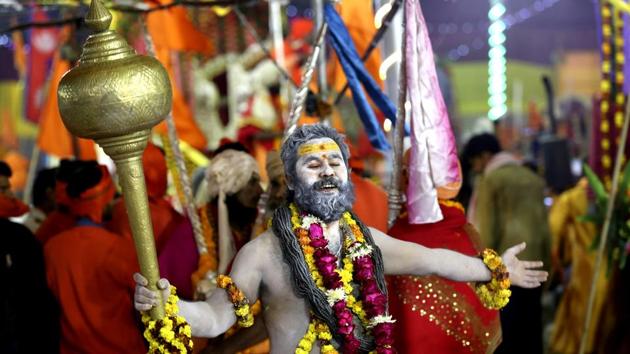
The first of a series of Shahi Snans took place before dawn on Tuesday in Prayagraj in Uttar Pradesh, led by a procession of sadhus on tractor chariots and on foot, singing, drumming and blowing horns. The first to bathe were the naked, naga sadhus, whose bodies were covered with ash, the bath marking the beginning of the Kumbh Mela and Makar Sankranti. Huge crowds followed them into the river. Over 120 million people are expected during the 50-day festival which culminates on Maha Shivratri on March 4
Updated on: Jan 15, 2019 1:20 PM IST


Share via


Copy link

1/12
 View Photos in a new improved layout
Updated on Jan 15, 2019 1:20 PM
Sadhus take a holy dip on Makar Sankranti day marking the beginning of the Kumbh Mela. At the break of dawn, chants of ‘Har Har Gange’ reached crescendo as lakhs of devotees, ascetics and religious leaders of various orders congregated at the Sangam in Prayagraj, Uttar Pradesh on Tuesday for a ritual dip, marking the beginning of the 2019 Kumbh Mela. (Ravi Choudhary / PTI)
2/12
 View Photos in a new improved layout
Updated on Jan 15, 2019 1:20 PM
Sadhus of 13 akharas (seven Shaiva, three Vaishnava, two Udasina, and one Sikh) who have traditionally participated in the Kumbh, the largest religious congregation in the world, were the first to take the holy bath known as ‘Shahi Snan’. They marched dancing and humming devotional songs, all the way to the confluence of the rivers Ganga, Yamuna and the mythical Saraswati. (Rajesh Kumar Singh / AP)
3/12
 View Photos in a new improved layout
Updated on Jan 15, 2019 1:20 PM
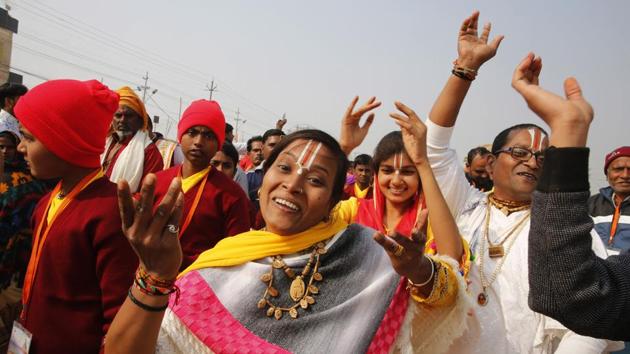
Over 12 crore people are expected to visit the Kumbh between now and Maha Shivratri on March 4, when the Mela will come to a close, for a holy dip at the Sangam. It was traditionally called ‘Ardh Kumbh’ as it takes place twice in 12 years, but the present Uttar Pradesh government recently renamed it ‘Kumbh’. (Rajesh Kumar Singh / AP)
4/12
 View Photos in a new improved layout
Updated on Jan 15, 2019 1:20 PM
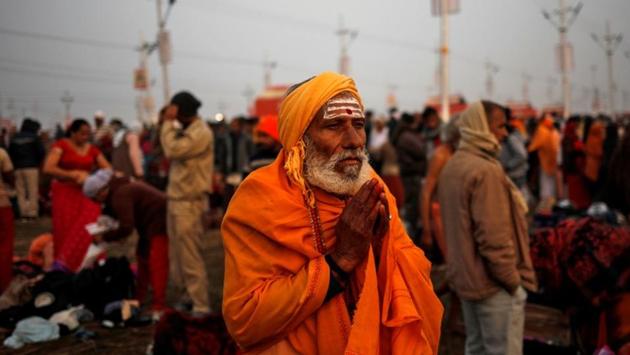
Naked, dread-locked holy men smeared in ash and sadhus clad in saffron robes wander the crowds, offering blessings to pilgrims who have travelled from every corner of India for the ritual dip. “All the Gods descend on this sacred place during this period. This is the most auspicious event for any human being,” 60-year-old Chandhans Pandey said to AFP. (Danish Siddiqui / REUTERS)
5/12
 View Photos in a new improved layout
Updated on Jan 15, 2019 1:20 PM
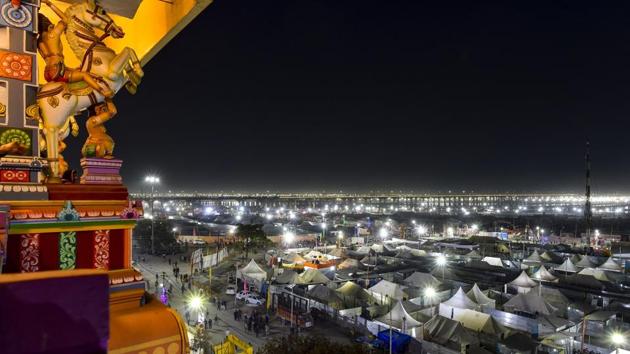
A tent city has sprung up along the river, pilgrims camped out across a 45-square kilometre zone specially earmarked for the Kumbh. For this year’s Kumbh the government shelled out an estimated 4.3 billion rupees --the budget supplying thousands of toilets and urinals, dormitories, hundreds of water stations, as well as police, hospitals, pharmacies and fire and ambulance services. (Ravi Choudhary / PTI)
6/12
 View Photos in a new improved layout
Updated on Jan 15, 2019 1:20 PM
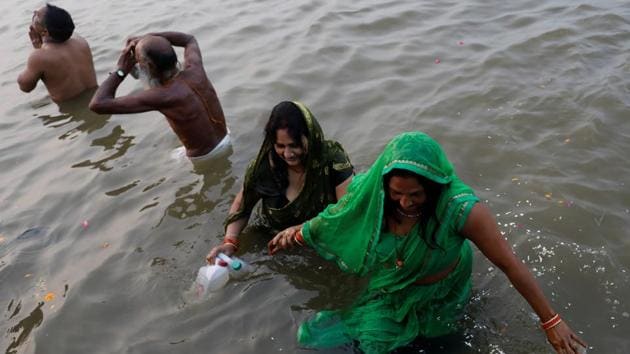
Devotees take a dip. Mela officials said around 35 lakh devotees took the holy dip on Monday. Bathing will take place at 35 ghats roughly stretched over an area of 5.5 km in the mela area. The Kumbh Mela is held every six years, while the Maha Kumbh takes place every 12 years. (Anushree Fadnavis / REUTERS)
7/12
 View Photos in a new improved layout
Updated on Jan 15, 2019 1:20 PM
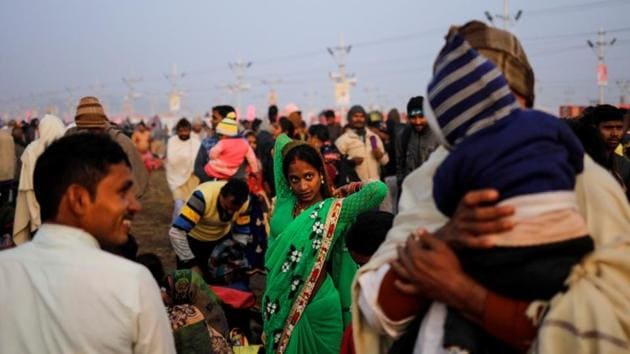
A devotee gets ready after taking a holy dip at Sangam. The production of any Kumbh is a gargantuan task, particularly in the low-lying parade grounds in Prayagraj where the ritual baths take place. Regular summertime floods leave organizers only 40 to 50 days to erect the temporary city, according to city commissioner Ashish Goel. (Danish Siddiqui / REUTERS)
8/12
 View Photos in a new improved layout
Updated on Jan 15, 2019 1:20 PM
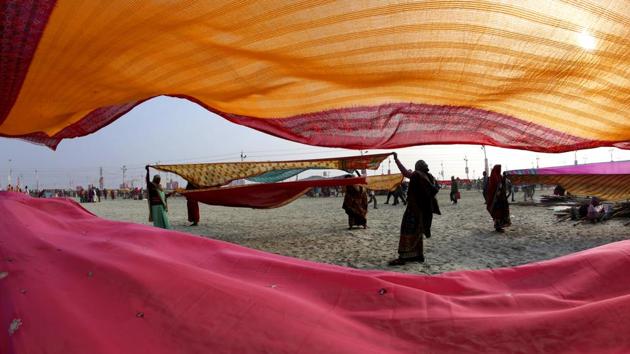
Devotees dry their clothes after taking spiritual-cleansing dips in the Sangam. Heavy security arrangements with police and paramilitary forces are in place at strategic places in Kumbh Mela grounds and other places in the city. Senior superintendent of police (SSP) Kumbh KP Singh said over 20,000 police, paramilitary and other personnel have been deployed. (Rajesh Kumar Singh / AP)
9/12
 View Photos in a new improved layout
Updated on Jan 15, 2019 1:20 PM
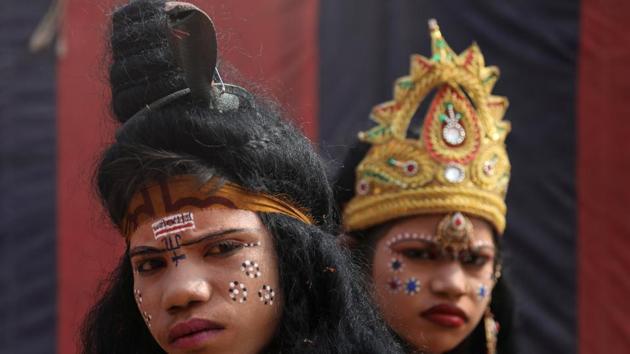
Children, dressed up as a Hindu God and Goddess, look on as they beg for alms during the Kumbh Mela. The streets of Prayagraj have become a canvas for artists with murals on various themes being painted. An area of 20 lakh sq.ft area, has been designated for street art projects under a Kumbh Mela Authority initiative called ‘Paint my city.’ (Anushree Fadnavis / REUTERS)
10/12
 View Photos in a new improved layout
Updated on Jan 15, 2019 1:20 PM
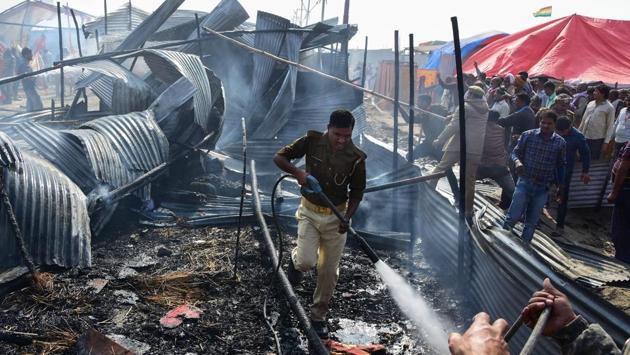
Earlier on Monday, a fire broke out in Sector 13 of the sprawling Kumbh complex due to an explosion in a cooking gas cylinder at the ‘Digambar Akhada’ camp, destroying a large part of the tented area but no loss of life was reported. (PTI)
11/12
 View Photos in a new improved layout
Updated on Jan 15, 2019 1:20 PM
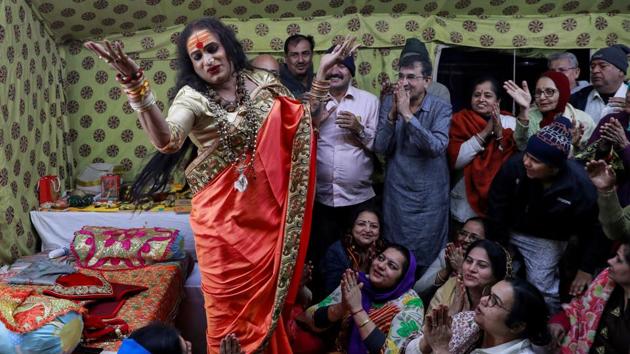
Lakshmi Narayan Tripathi, chief of the Kinnar Akhara for transgender people, sings among followers. The Kinnar Akhada on Sunday formally joined the Juna Akhada to participate in the Shahi Snan. “For us, this participation is about mainstream society accepting us. This is Akhada beyond sexuality. The creator is within us and once we perish we will go back to him. Our doors are open for all.” Tripathi told ANI. (Danish Siddiqui / REUTERS)
12/12
 View Photos in a new improved layout
Updated on Jan 15, 2019 1:20 PM


