

 E-Paper


Photos: The long road to the Naga peace talks explained
Various Naga groups are currently holding talks with the Indian government with hopes of finding an honorable solution to their demand for self-determination. The Indian government has ruled out the possibility of a separate constitution and a Naga flag as demanded by the NSCN (IM), the largest rebel group. Earlier in August, the government's interlocutor and Nagaland state Governor R.N. Ravi had said that the peace talks should be concluded by October 31 but the current situation indicates the dialogue could continue beyond that date.
1 / 8
 View Photos in a new improved layout
Updated on Oct 31, 2019 11:19 am IST
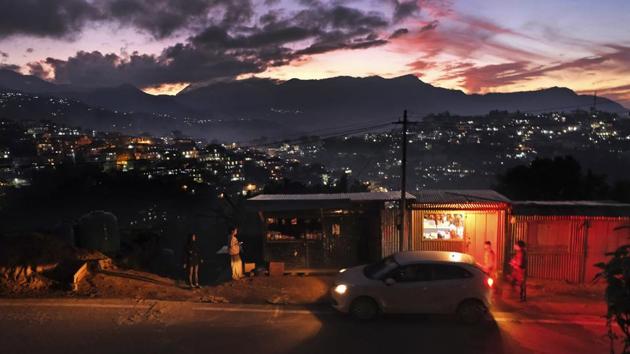
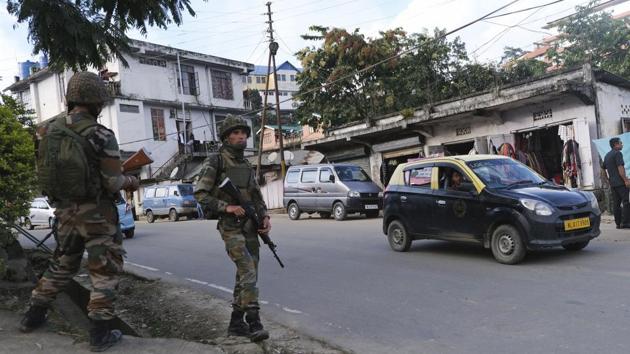
Pedestrians outside roadside shops at dusk in Kohima, Nagaland. Negotiations to finalise the Naga peace deal to end the seven-decade-old insurgency problem, remained stalled on Tuesday with the major insurgent group National Socialist Council of Nagalim (Isak-Muivah) refusing to back down from its demand of a separate flag and constitution amid indications the dialogue will continue beyond October 31 when it was expected to conclude. (Yirmiyan Arthur / AP)
2 / 8
 View Photos in a new improved layout
Updated on Oct 31, 2019 11:19 am IST
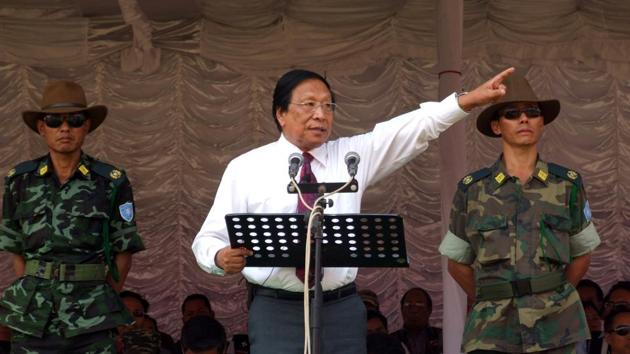
NSCN-IM and the outfit’s leader Thuingaleng Muivah in March 2017. A team of the NSCN(IM) led by its general secretary Muivah and the Centre’s interlocutor and now Nagaland Governor R N Ravi discussed possible ways to find an “honourable” solution to address the sticky issue of a separate flag and Constitution on Monday which has become the main bone of contention between the two sides. (HT Photo)
3 / 8
 View Photos in a new improved layout
Updated on Oct 31, 2019 11:19 am IST
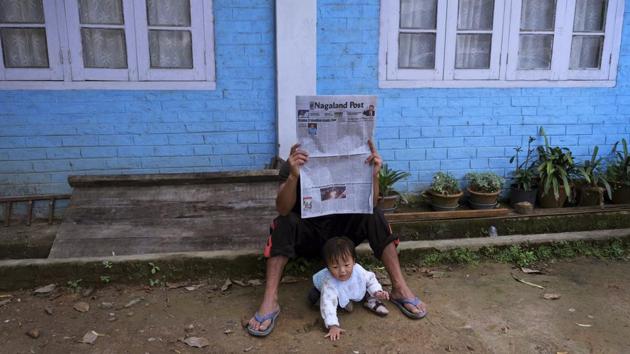
A man reads a newspaper carrying headlines of the peace talks in Kohima. The talks seek to settle disputes dating back to colonial times. The Nagas, an ethnic community comprising several tribes, demand a Greater Nagalim comprising Nagaland and parts of neighbouring states. Assertions of Naga nationalism continued post Indian independence, and statehood for Nagaland. Unresolved issues gave rise to decades of insurgency. (Yirmiyan Arthur / AP)
4 / 8
 View Photos in a new improved layout
Updated on Oct 31, 2019 11:19 am IST
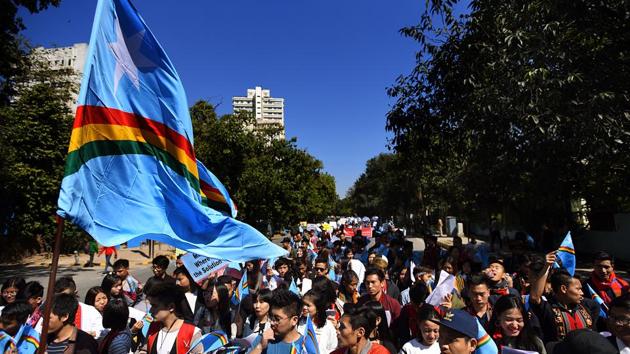
People rally with the Nagalim flag in New Delhi on February 23, 2019. Ravi, in a statement, said last week that a mutually agreed draft comprehensive settlement, including all the substantive issues and competencies, is ready for signing the final agreement but the NSCN(IM) had adopted a “procrastinating attitude” on issues which they were aware of the government of India’s position. (Amal KS / HT Archive)
5 / 8
 View Photos in a new improved layout
Updated on Oct 31, 2019 11:19 am IST
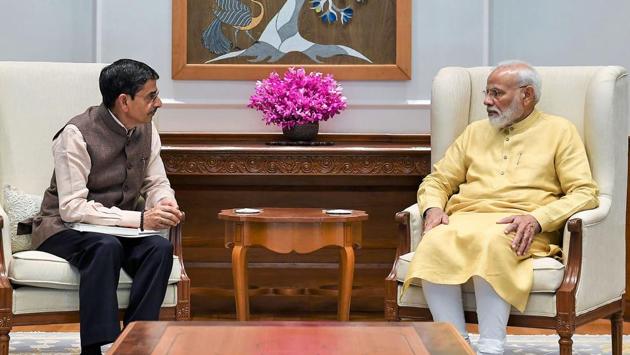
Prime Minister Narendra Modi meets with Nagaland governor R N Ravi, in New Delhi on October 10, 2019. Before the ongoing talks, a framework agreement was signed on August 3, 2015 by Muivah and Ravi in the presence of Prime Minister Modi. There were two other agreements between Naga groups and the Centre prior to 2015. (PTI)
6 / 8
 View Photos in a new improved layout
Updated on Oct 31, 2019 11:19 am IST
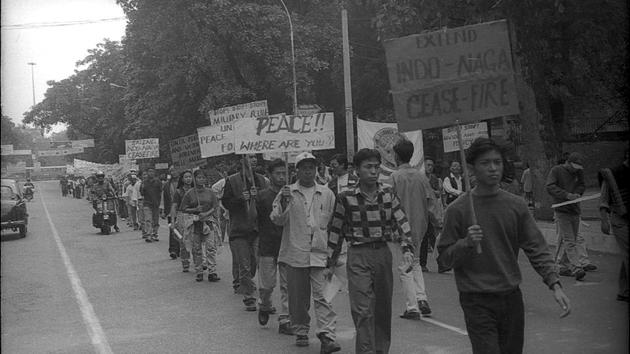
A Nagaland students’ demonstration in New Delhi on October 29, 1997. The 2015 framework agreement came after over 80 rounds of negotiations spanning 18 years, with the first breakthrough in 1997 when a ceasefire agreement was sealed after decades of insurgency. An agreement was made on no counter insurgency offensives against the NSCN(IM), who in turn would not attack Indian forces. (HC Tiwari / HT Archive)
7 / 8
 View Photos in a new improved layout
Updated on Oct 31, 2019 11:19 am IST
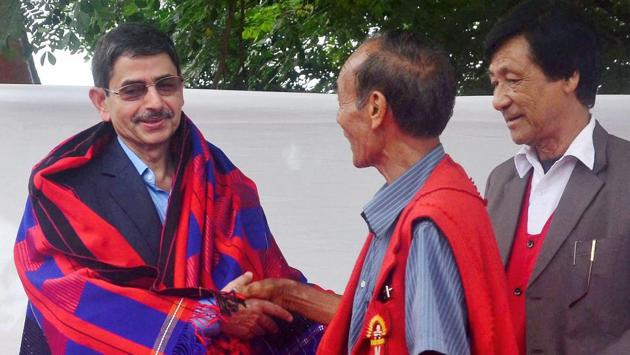
R N Ravi, interlocutor for Naga talks is presented with a traditional Shawl at a reception after his arrival to holds talks with Naga National Political Groups (NNPGs) at Dimapur in October 2017. That year, more Naga armed outfits under the banner of the NNPG joined talks. They have been holding separate talks with the Centre since 2017. Ravi is expected to hold dialogue with the NNPG in the coming days too. (PTI)
8 / 8
 View Photos in a new improved layout
Updated on Oct 31, 2019 11:19 am IST