

 E-Paper


Curse of the black gold
1 / 8

 View Photos in a new improved layout
Updated on Mar 01, 2015 11:27 am IST
The scale of water pollution is evident from the corrosion scene on the bed, banks and the surroundings of the river Kupli which flows into Assam from Meghalaya. (Arun Sharma/HT Photo)
2 / 8
 View Photos in a new improved layout
Updated on Mar 01, 2015 11:27 am IST
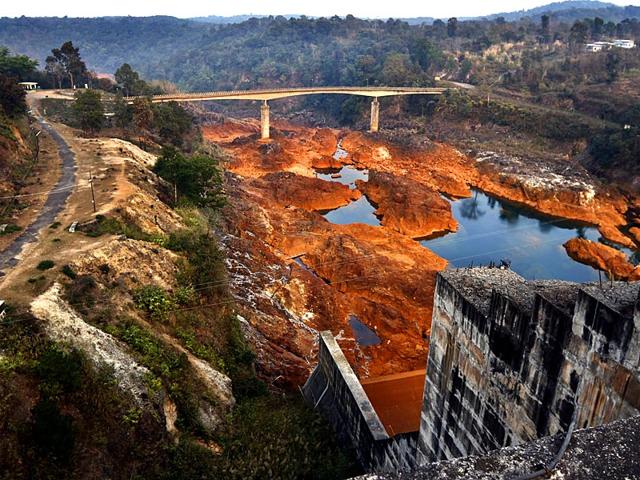
Hydroelectric dam on River Kupli that forms the border between Assam and Meghalaya. The acidic content in the water corrodes the under water parts of the hydroelectric dam. (Arun Sharma/HT Photo)
3 / 8
 View Photos in a new improved layout
Updated on Mar 01, 2015 11:27 am IST
With all the sources of water already polluted, especially in the Jaintia Hills, locals are force to purchase water for drinking and chores. (Arun Sharma/HT Photo)
4 / 8
 View Photos in a new improved layout
Updated on Mar 01, 2015 11:27 am IST
Migrant labourers from Assam, Bengal, Nepal and Bangladesh depend on the mining activities. With the coal ban in place many migrants have left while few remain working in the illegally operated mines. (Arun Sharma/HT Photo)
5 / 8
 View Photos in a new improved layout
Updated on Mar 01, 2015 11:27 am IST
Acid mine discharge from the coal stockpiles lying open in the depots flow into the streams and paddy fields during monsoon season causing the a widespread environmental pollution. (Arun Sharma/HT Photo)
6 / 8
 View Photos in a new improved layout
Updated on Mar 01, 2015 11:27 am IST
Ibina Sohbar alone supports her family of 20 from the money she earns from the coal mines and a patch of land which is rented out to other coal miners to stock their extracted coal. (Arun Sharma/ HT Photo)
7 / 8
 View Photos in a new improved layout
Updated on Mar 01, 2015 11:27 am IST
Over the past few decades coal has become lifeline in the states, directly or indirectly affecting many livelihoods. (Arun Sharma/ HT Photo)
8 / 8
 View Photos in a new improved layout
Updated on Mar 01, 2015 11:27 am IST