
 E-Paper



Photos: Brazil milks deadly snakes for their life-saving venom
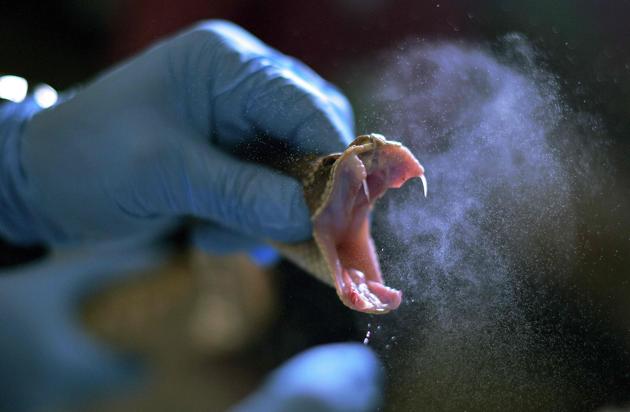
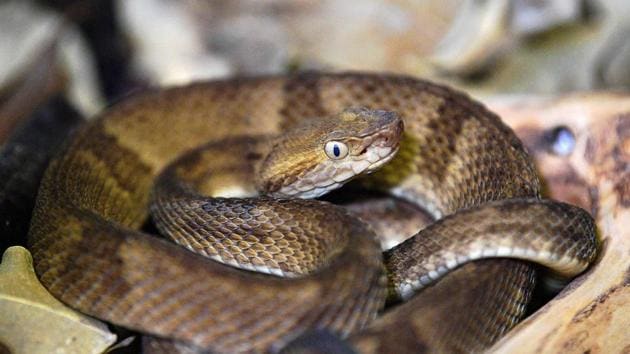
In Brazil, the Butantan Institute in Sao Paulo harvest the toxin from hundreds of snakes kept in captivity to produce antivenom and save the lives around Brazil where thousands of people are bitten every year. Figures show that nearly 29,000 people were bitten in 2018 and more than 100 died. Later, it is distributed by the health ministry to medical facilities across the country.
Updated on: Dec 11, 2019 9:55 AM IST


Share via


Copy link

1/9
 View Photos in a new improved layout
Updated on Dec 11, 2019 9:55 AM
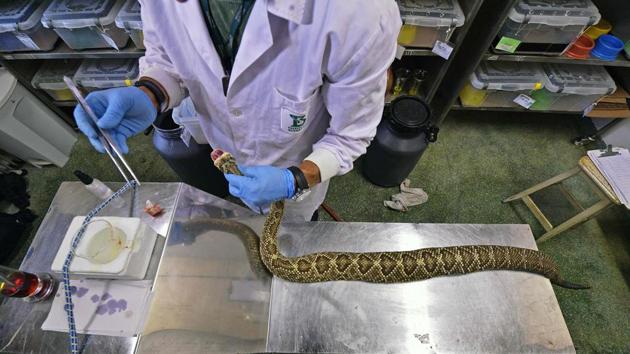
An expert extracts venom from a rattlesnake at the Butantan Institute -which supplies the Ministry of Health, with many snakes' venom for its distribution countrywide- in Sao Paulo, Brazil. Nearly 29,000 people were bitten in 2018 and more than 100 died, official figures show. (CARL DE SOUZA / AFP)
2/9
 View Photos in a new improved layout
Updated on Dec 11, 2019 9:55 AM
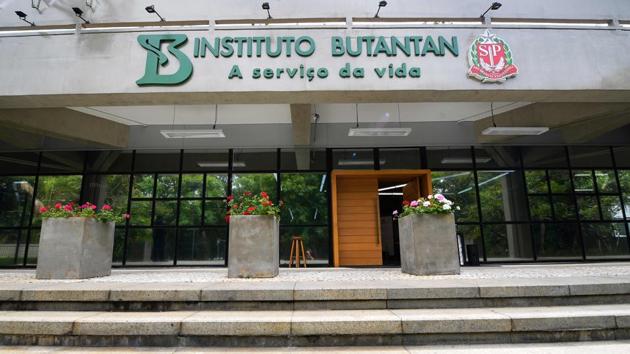
A view of the facade of the Butantan Institue in Sao Paulo, Brazil. De Souza and her colleagues at the Butantan Institute in Sao Paulo harvest the toxin from hundreds of snakes kept in captivity to produce antivenom. It is distributed by the health ministry to medical facilities across the country. Dozens of poisonous snake species, including the jararaca, thrive in Brazil’s hot and humid climate. (CARL DE SOUZA / AFP)
3/9
 View Photos in a new improved layout
Updated on Dec 11, 2019 9:55 AM
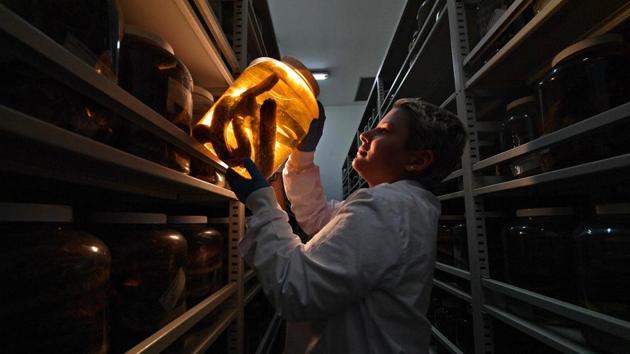
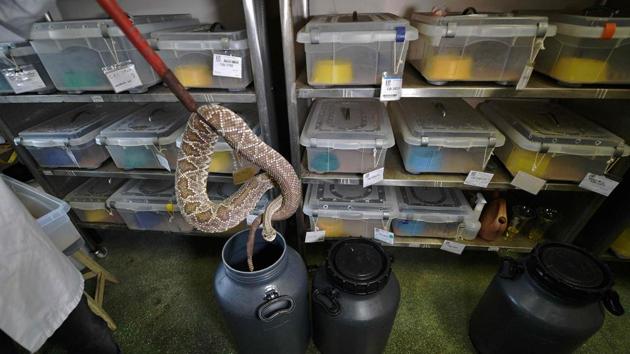
Brazilian expert Eliane Campos de Oliveira holds a jar with a preserved venomous snake at the Butantan Institue. Venom is extracted from each snake once a month in a delicate and potentially dangerous process. Using a hooked stick, de Souza carefully lifts one of the slithering creatures out of its plastic box and maneuvers it into a drum of carbon dioxide. Within minutes the reptile is asleep. (CARL DE SOUZA / AFP)
4/9
 View Photos in a new improved layout
Updated on Dec 11, 2019 9:55 AM
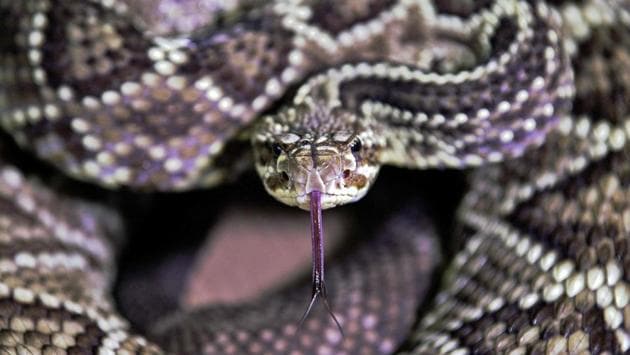
A rattlesnake is seen before extracting venom from it at the Butantan Institue. “It’s less stress for the animal,” de Souza explains. The snake is then placed on a stainless steel bench in the room where the temperature hovers around 27 degrees Celsius (80 degrees Fahrenheit). De Souza has a few minutes to safely extract venom before the snake begins to stir. “It’s important to have fear because when people have fear they are careful,” she says. (CARL DE SOUZA / AFP)
5/9
 View Photos in a new improved layout
Updated on Dec 11, 2019 9:55 AM
The snakes are fed a diet of rats and mice that are raised at the leafy institute and killed before being served up once a month. The antivenom is made by injecting small amounts of the poison into horses -- kept by Butantan on a farm -- to trigger an immune response that produces toxin-attacking antibodies. Blood is later extracted from the hoofed animals and the antibodies harvested to create a serum that will be administered to snakebite victims who might otherwise die. (CARL DE SOUZA / AFP)
6/9
 View Photos in a new improved layout
Updated on Dec 11, 2019 9:55 AM
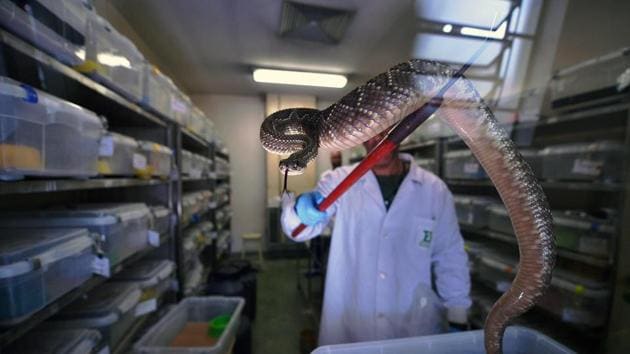
An expert holds a rattlesnake before extracting venom from it. There are now plans to sell the life-saving serum abroad to help relieve a global shortage, particularly in Africa. About 5.4 million people are estimated to be bitten by snakes every year, according to the World Health Organization (WHO). (CARL DE SOUZA / AFP)
7/9
 View Photos in a new improved layout
Updated on Dec 11, 2019 9:55 AM
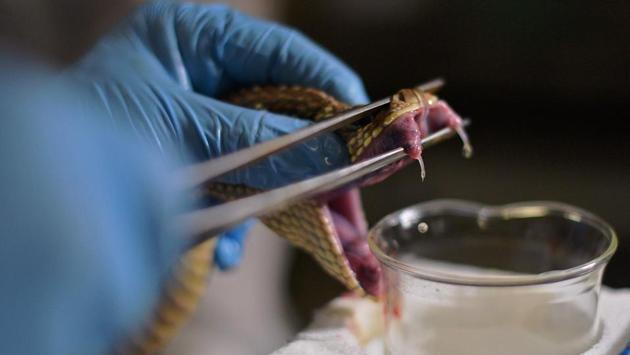
An expert extracts venom from a rattlesnake. Butantan project manager Fan Hui Wen, a Brazilian, says the institute currently makes all of the country’s antivenom -- around 250,000 10-15 milliliter vials per year. Brazil also donates small quantities of antivenom to several countries in Latin America. (CARL DE SOUZA / AFP)
8/9
 View Photos in a new improved layout
Updated on Dec 11, 2019 9:55 AM
An expert puts a rattlesnake into a pot of C02 to calm it before its venom extraction. Between 81,000 and 138,000 die, while many more suffer amputations and other permanent disabilities as a result of the toxin. To cut the number of deaths and injuries, WHO unveiled a plan earlier this year that includes boosting production of quality antivenoms. (CARL DE SOUZA / AFP)
9/9
 View Photos in a new improved layout
Updated on Dec 11, 2019 9:55 AM


