
 E-Paper


Is Delhi ready for annual air crisis?
Firecrackers and farm fires are within the control of the courts and the State. Yet, we keep relying on the weather for reprieve

 Prefer HTon Google


The Supreme Court spent Thursday’s hearing on firecrackers asking the right questions. A bench of justices MM Sundresh and PB Varale pulled up the Delhi government and the Commission for Air Quality Management for failing to enforce last year’s firecracker curbs. It demanded a record of inspections and seizures, and warned that orders without enforcement become “near mockery”. Yet it also held to its position that a ban is not the answer, and indicated it is likely to allow green firecrackers in Delhi-NCR on specified days around Diwali, which falls on November 8.
Science and recent history show that this is a lapse. And this year, the case against it is stronger than ever.
Start with the fields. Early reports from Punjab suggest that rains have slightly delayed the paddy harvest. A late harvest squeezes the window between cutting paddy and sowing wheat and more farmers clear their fields the quickest way they can, by setting the stubble alight. If the pattern holds, that smoke is likely to reach Delhi as more of a gush than a trickle.
Then the calendar. The first half of November has consistently been the worst stretch of Delhi’s year for air. Temperatures fall, winds drop, and the air holds on to whatever the city and its neighbours put into it. Last year, the court allowed green firecrackers in Delhi-NCR for a three-day window, the first such relaxation in years. Diwali fell in October, in warmer weather and with few farm fires, and Delhi still recorded its worst Diwali pollution peak since 2021.
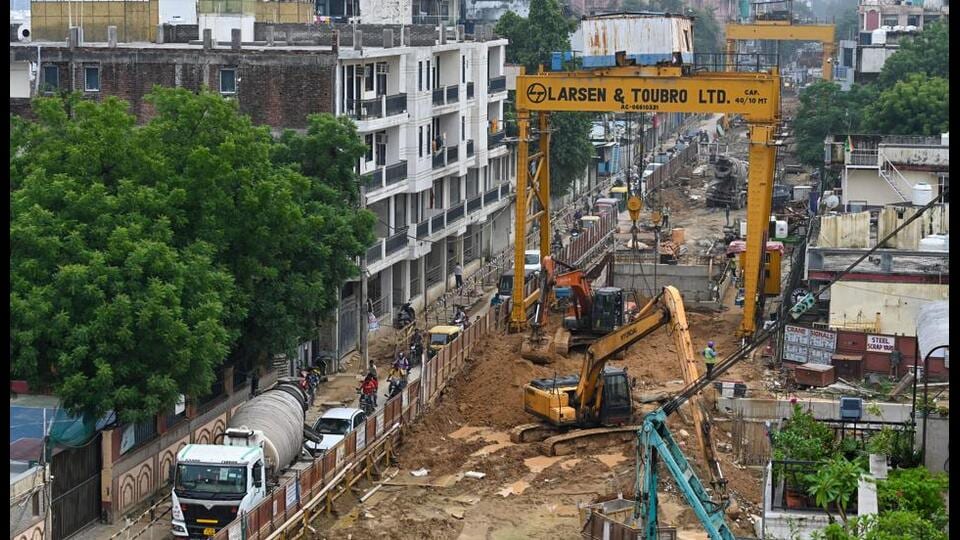
And the city itself. Delhi is dotted with large infrastructure projects, many of them exempted from construction curbs even under the strictest stage of the Graded Response Action Plan, as this newspaper reported this month. The Centre has now ordered all construction and demolition across NCR halted from November 5 to 20, though exemptions remain and it is not yet clear how many projects they will cover.
Together, these make for a perfect storm for another air crisis. Over the years, only one thing has reliably pulled Delhi out of a bad spell: the weather. A strong wind or a spell of rain has done more for the city’s air than any order or action plan, and no one can summon either. This week proved it: overnight rain has put Delhi on course for its cleanest October since records began in 2015.
Firecrackers are different. They are among the few sources of pollution that the state can stop with a single decision, as the Centre has just done with construction. By the most generous estimate, green firecrackers cut emissions by 30-40% per firecracker, so allowing them where none were permitted still leaves the city with more smoke. Last year’s markets showed how little the label means: conventional firecrackers passed off as green, boxes stamped “eco-friendly” with no certification, QR codes resold, and no laboratory in Delhi to test any of it. Similar sales have begun this year, as this newspaper documented this month.
To be sure, the court has reasons for its caution. It is wary of orders that people see as coercive, and it has weighed the livelihoods of those who make and sell firecrackers. But this week’s hearing showed that authorities could not police even last year’s three-day window, and there is little hope that this will improve.
The wind and the rain have always been Delhi’s only reprieve, and nobody has any say over them. Firecrackers, dust from construction projects, and farm fires are within the control of the courts and the State. The authorities now seem to have acted on construction. On firecrackers and farm fires, we still dither.


