
 E-Paper



Photos: Chile’s protest ‘front line’ -- heroes or vandals?
In Chile, since the civil unrest broke out on October 18, it has become increasingly polarized in its view of those leading the demonstrations against President Sebastian Pinera's government. For some, the protest movement has been the downfall of a country that was often described as a regional bastion of stability and prosperity but is now suffering from chaos inflicted by hooded anarchists and looters. For others, the mass demonstrations are a festival of rebirth.
Updated on: Dec 12, 2019 10:21 AM IST


Share via


Copy link

1/8
 View Photos in a new improved layout
Published on Dec 12, 2019 10:21 AM
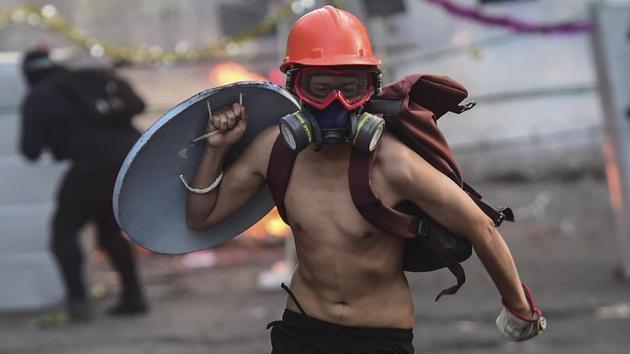
A demonstrator wearing a helmet runs with a makeshift shield during a protest against the government in Santiago. Armed with clubs and shields, the “frontline” youth of Chile’s two-month-long protest movement are seen as heroes by some -- and vandals by others. Since the civil unrest broke out on October 18, Chile has become increasingly polarized in its view of those leading the demonstrations against President Sebastian Pinera’s government. (Martin BERNETTI / AFP)
2/8
 View Photos in a new improved layout
Published on Dec 12, 2019 10:21 AM
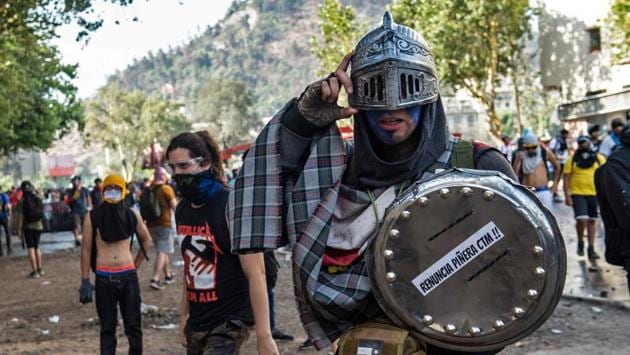
A demonstrator wearing a helmet uses a makeshift shield during a protest. For some, the protest movement has been the downfall of a country that was often described as a regional bastion of stability and prosperity but is now suffering from chaos inflicted by hooded anarchists and looters. For others, the mass demonstrations are a festival of rebirth. (Martin BERNETTI / AFP)
3/8
 View Photos in a new improved layout
Published on Dec 12, 2019 10:21 AM
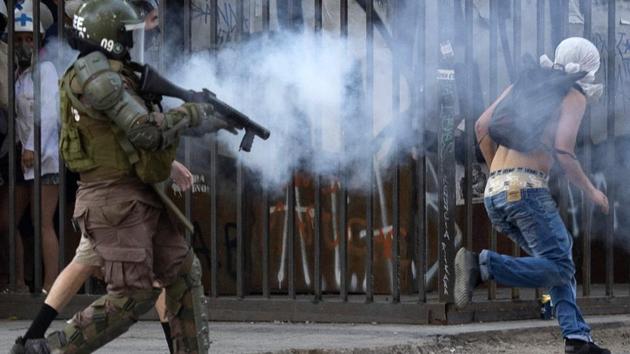
“We’re going to stay here until there are real solutions to the issues that have been raised since the beginning and which have made the government go crazy,” Matias, a masked 27-year-old, from behind a metal shield. He said he was neither an anarchist nor a thief, and not reckless or poor. Rather, he represents the protests’ middle-class university student contingent -- united by the same frustrations and resentment as their more violent peers. (Martin BERNETTI / AFP)
4/8
 View Photos in a new improved layout
Published on Dec 12, 2019 10:21 AM
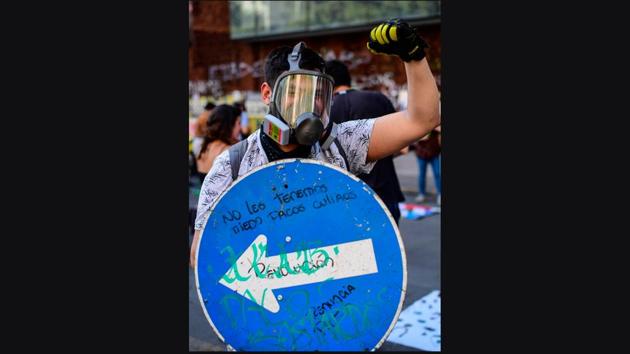
Surveys show that 70 to 85 percent of people support the movement. “The fact that we’re on the frontline allows for peaceful demonstrations because otherwise (the police) would be there” using tear gas to disperse protesters, said Matias, who is saddled with debt after quitting veterinary studies in his fourth year. He mixes baking soda in a bottle of water to wash his eyes against the effects of tear gas. (Martin BERNETTI / AFP)
5/8
 View Photos in a new improved layout
Published on Dec 12, 2019 10:21 AM
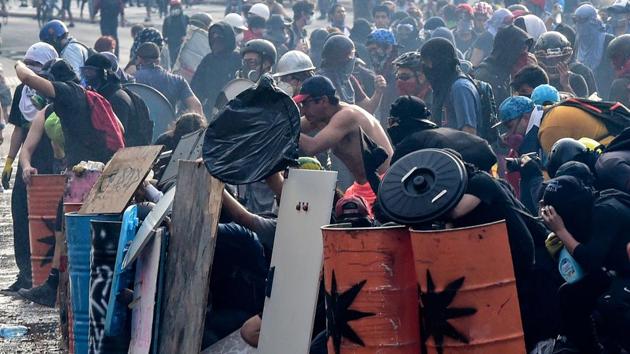
The youthful protest “front line” has situated itself two blocks from Plaza Italia, the historical epicenter of Chilean demonstrations, which is also the demographic border between the wealthy uptown and poor downtown. It was where a million people from all walks of life stood together to demand an end to social and economic inequality on October 25. “This situation has left all us Chileans perplexed,” Matias Fernandez, a sociologist and academic at Santiago’s Catholic University. (Martin BERNETTI / AFP)
6/8
 View Photos in a new improved layout
Published on Dec 12, 2019 10:21 AM
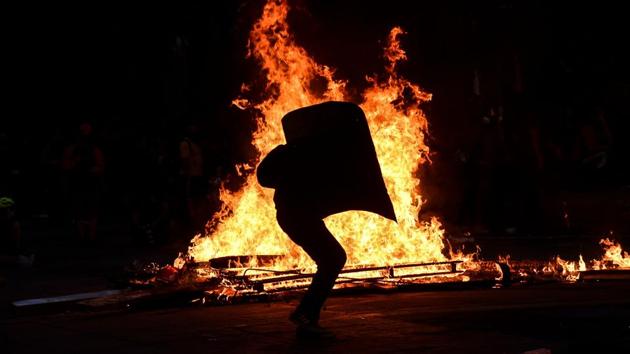
A demonstrator holds a shield in front of a bonfire during a protest. Attacks by masked protesters on police have a particular resonance in Chile, where leftist groups clashed with military dictator Augusto Pinochet’s security forces from 1973 to 1990, a period that has helped “romanticize” violent resistance of tyranny in the country. “However, the violence the country has seen since October 18 is unprecedented in democracy,” said Fernandez. (Martin BERNETTI / AFP)
7/8
 View Photos in a new improved layout
Published on Dec 12, 2019 10:21 AM
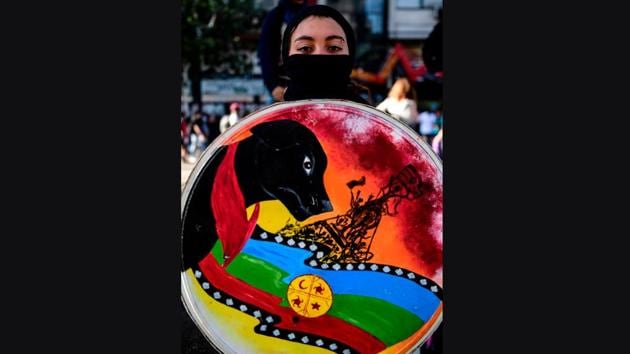
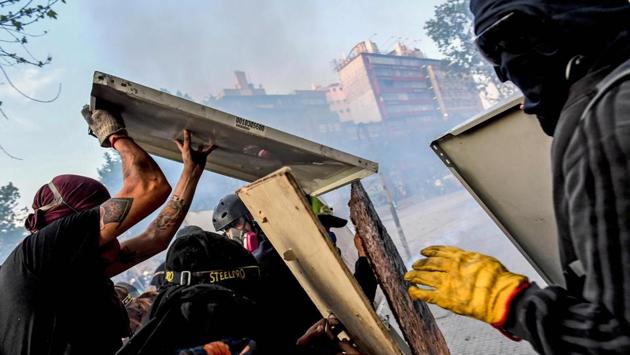
At the start of the protests, rioters used broken road signs, doors and pieces of chairs looted from restaurants as weapons, but the “front line” has since improved on the equipment its members use. In particular, they now wear goggles to protect against the rubber pellets fired by police, which have caused 350 serious eye injuries. (Martin BERNETTI / AFP)
8/8
 View Photos in a new improved layout
Published on Dec 12, 2019 10:21 AM


