
 E-Paper



Photos | Eye of the swarm:Experts take sting out of urban beekeeping
In Washington, urban beekeeping was only widely legalized in 2012 and now there are more than 400 hives at private homes, the National Arboretum and at the city's Franciscan monastery. The Swarm Squad is the best, last and only line of defense against a rise in swarms blamed in part on urban beekeeping. With populations in decline across the planet, environmentalists are especially worried about the fate of the honeybee, an insect that pollinates 70 out of the top 100 human food crops.
Updated on: Aug 21, 2019 10:33 AM IST

Share via


Copy link

1/7
 View Photos in a new improved layout
Published on Aug 21, 2019 10:33 AM
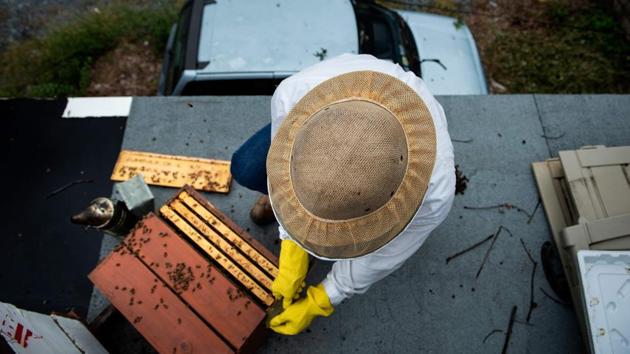
Urban beekeeper Del Voss opens his apiary while looking at beehives above his garage in Washington, DC. The Swarm Squad, Washington’s best, last and only line of defense against a rise in swarms blamed in part on urban beekeeping. With populations in decline across the planet, environmentalists are especially worried about the fate of the honeybee, an insect that pollinates 70 out of the top 100 human food crops. (Brendan Smialowski / AFP)
2/7
 View Photos in a new improved layout
Published on Aug 21, 2019 10:33 AM
Urban beekeeper Del Voss opens his apiary while looking at beehives above his garage. “A swarm of bees... really looks like a biblical event,” said Del Voss, one of about 100 amateur beekeepers in Washington. “It can really be terrifying for somebody.” (Brendan Smialowski / AFP)
3/7
 View Photos in a new improved layout
Published on Aug 21, 2019 10:33 AM
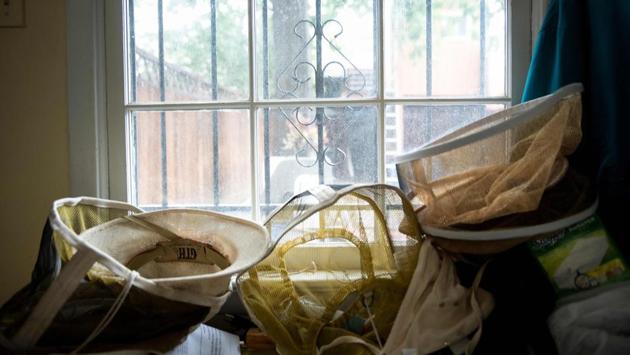
In 1947, there were about six million US honeybee hives but the figure dropped to 2.4 million in the following 60 years, thanks to pesticides, habitat destruction and other man-made threats, as well as parasitic mites. Apiarists have been leading the fightback, but the relocation of populations into cities has turned swarms from a strictly rural phenomenon into an alarming urban problem. (Brendan Smialowski / AFP)
4/7
 View Photos in a new improved layout
Published on Aug 21, 2019 10:33 AM
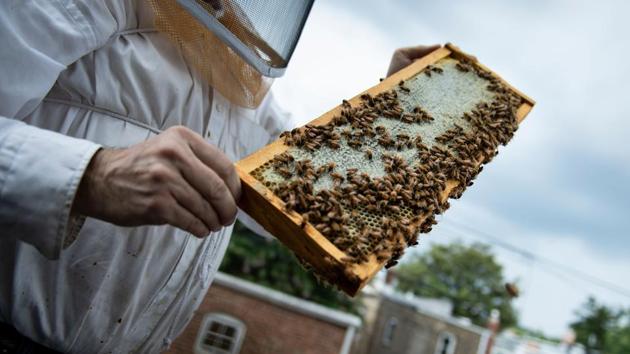
Hives typically house up to 70,000 bees. But healthy communities can grow too big, forcing half of the insects to fly off -- known as “swarming” -- in search of a place to build a new hive. When any of the dozens of members of Washington’s Swarm Squad get the call, they suit up in protective clothing, grab boxes and buckets, and head to the threat. Anyone tempted to deal with a swarm in a wall cavity at home should know that it’s not as simple as spraying it with pesticide. (Brendan Smialowski / AFP)
5/7
 View Photos in a new improved layout
Published on Aug 21, 2019 10:33 AM
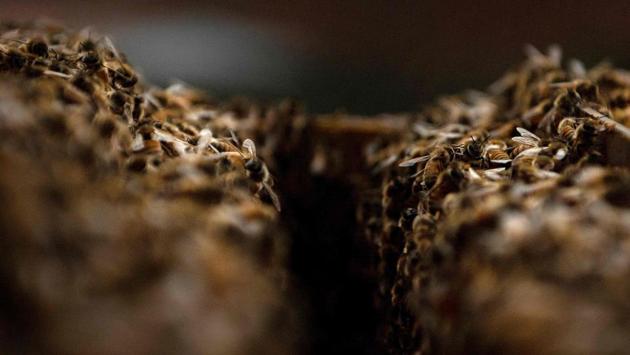
“If you did kill them, all that honey and wax is going to melt down and seep through your walls,” said Billy Mullinax, a patent researcher and member of the Swarm Squad, part of the DC Beekeepers Alliance non-profit. “So you’re still going to have to cut the wall out and get all that crap out anyway.” (Brendan Smialowski / AFP)
6/7
 View Photos in a new improved layout
Published on Aug 21, 2019 10:33 AM
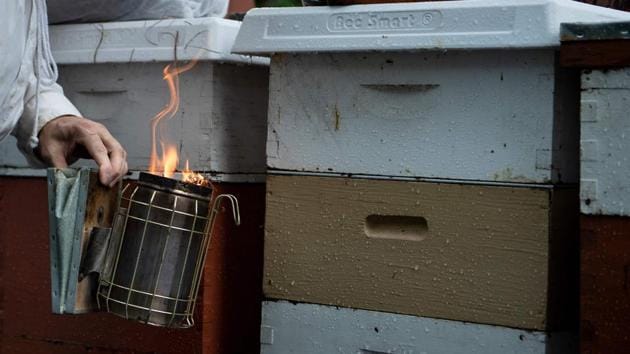
Jan Day, a friend of Voss’s, says she started keeping bees five years ago, and made sure to educate her neighbours. When her own hives finally swarmed, not only did her neighbours not panic, they were “psyched.” “Now they say, ‘I make sure to plant pollinator-friendly plants for your bees!’” she said. (Brendan Smialowski / AFP)
7/7
 View Photos in a new improved layout
Published on Aug 21, 2019 10:33 AM


