
 E-Paper



Photos: Haitian expats return home to make fish affordable
Two Haitian brothers have returned to their homeland to build a livelihood on Lake Azuei, a turbulent expanse of water that has often been cruel to those living along its shore, flooding homes in the border town of Fond Parisien and blocking a key highway into the Dominican Republic. Aided by Operation Blessing, their enterprise is promoting Tilapia fish in Haiti, a fast breeding alternative to the more common pink fish. Sustainable Tilapia farming restocks empty water bodies and also provides employment locally, stimulating the economy.
Updated on: May 08, 2018 2:21 PM IST

Share via


Copy link

1/12
 View Photos in a new improved layout
Updated on May 08, 2018 2:21 PM
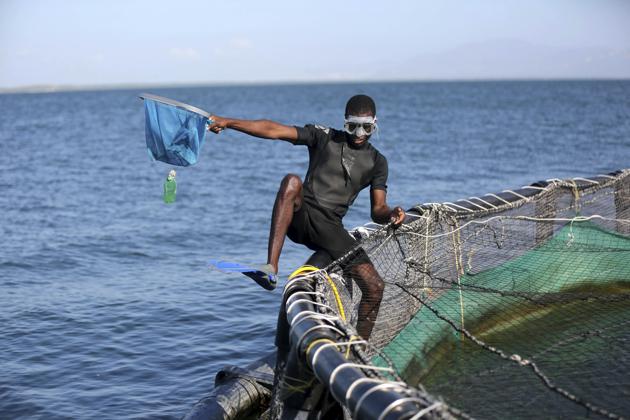
A Taino Aqua Fish worker cleans a large fish cage on Lake Azuei, a turbulent expanse of water that has often been cruel to those living along its shore, flooding homes in the border town of Fond Parisien, Haiti. Two Haitian brothers left jobs in the United States to come back and address a local concern for a lack of affordable fish. (Dieu Nalio Chery /AP)
2/12
 View Photos in a new improved layout
Updated on May 08, 2018 2:21 PM
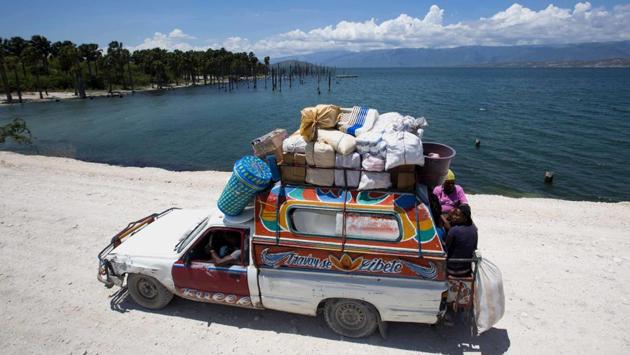
People ride in a loaded truck on the highway that leads to the Dominican Republic along Lake Azuei and is often blocked by flooding. Hans and Patrick Woolley left careers in online startups and hospital administration to invest in Haiti and try their luck at fish farming in the lake, less than an hour away from the capital of Port-au-Prince. (Dieu Nalio Chery /AP)
3/12
 View Photos in a new improved layout
Updated on May 08, 2018 2:21 PM
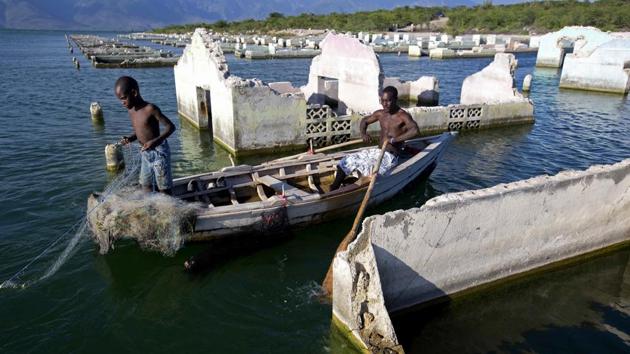
Fisherman Miguel Louis checks on his nets with his 12-year-old son Dabens Louis, working near the ghostly ruins of flooded homes sitting in the lake. "Even small fish are hard to find" said Louis. (Dieu Nalio Chery / AP)
4/12
 View Photos in a new improved layout
Updated on May 08, 2018 2:21 PM
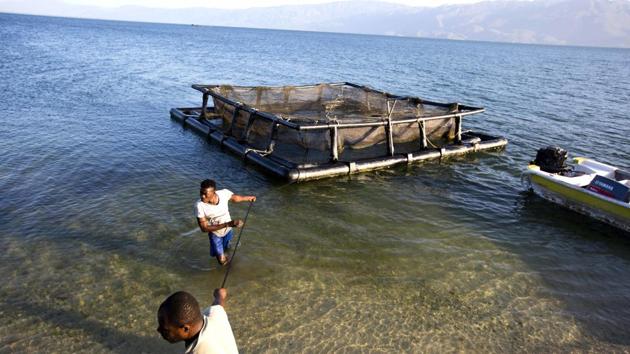
Fish farm workers pull in a cage of tilapia fish on Lake Azuei in Fond Parisien, Haiti. Opened in 2014, Taino Aqua Fish uses fish cages just below the lake’s surface to produce affordable Tilapia fish for Haitian markets. (Dieu Nalio Chery /AP)
5/12
 View Photos in a new improved layout
Updated on May 08, 2018 2:21 PM
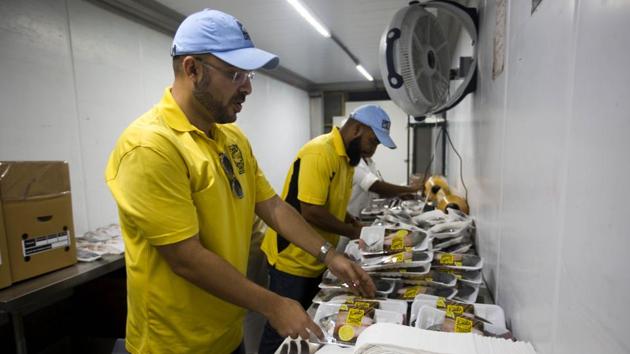
Hans Woolley, front, and his cousin Gilbert Woolley put stickers on packages of tilapia fish at their fish farm factory. The brothers started with 16 cages, building some out of PVC pipe and netting and repurposing others from Taiwan that were once used to raise tuna. They bought tilapia hatchlings from the aid group Operation Blessing. (Dieu Nalio Chery /AP)
6/12
 View Photos in a new improved layout
Updated on May 08, 2018 2:21 PM
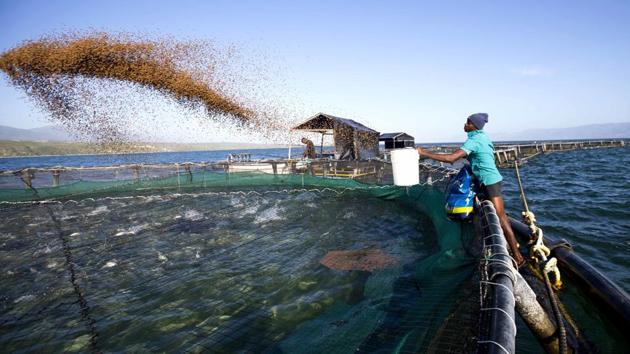
A Taino Aqua Fish worker throws food to tilapia fish being grown within a netted area in Lake Azuei Fond in Parisien, Haiti. Hatchlings are raised on a vegetable-based feed and are ready to sell after four months. (Dieu Nalio Chery /AP)
7/12
 View Photos in a new improved layout
Updated on May 08, 2018 2:21 PM
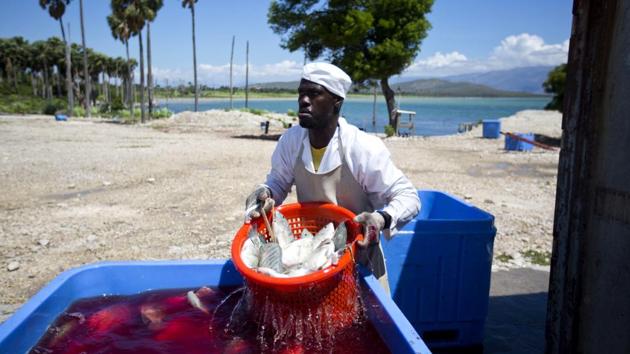
A Taino Aqua Fish worker strains freshly killed and gutted tilapia at the factory on the shore of Lake Azuei. Many residents form this border town long looked for jobs elsewhere in Haiti, or more often in the more prosperous Dominican Republic, but now people approach this fish company. (Dieu Nalio Chery / AP)
8/12
 View Photos in a new improved layout
Updated on May 08, 2018 2:21 PM
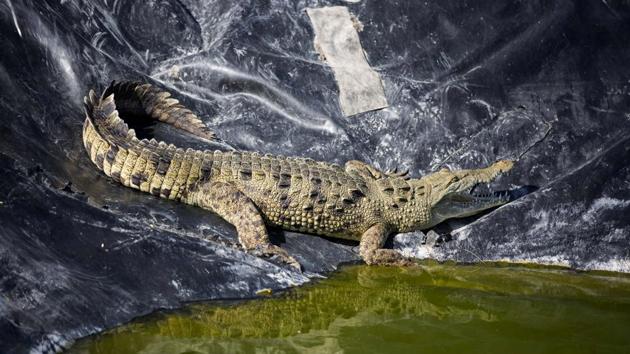
An alligator sunbathes in the water treatment area of the Taino Aqua Farm fish plant. The fish farm treats the water that gets bloody from the processing of its tilapia fish, before sending it to the town's sewage system. The alligator was acquired from a local fisherman and put here to isolate it, where workers feed it and give it fresh water. (Dieu Nalio Chery /AP)
9/12
 View Photos in a new improved layout
Updated on May 08, 2018 2:21 PM
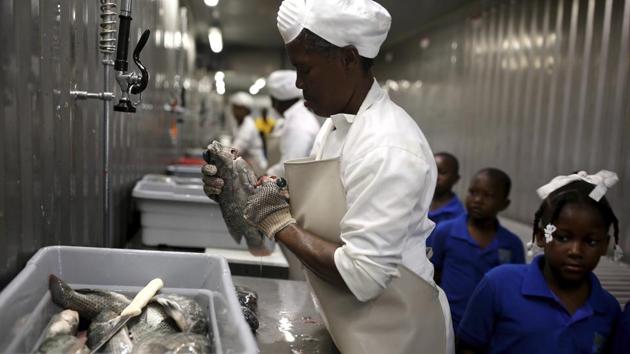
A Taino Aqua Fish worker cleans tilapia as children take a field trip of the farm’s facilities. One of the company’s goals is to make fish affordable for all Haitians. (Dieu Nalio Chery /AP)
10/12
 View Photos in a new improved layout
Updated on May 08, 2018 2:21 PM
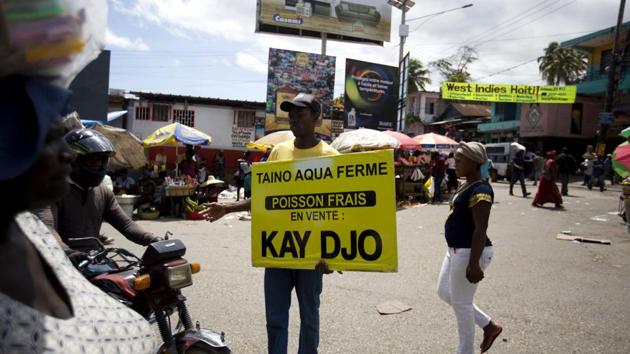
Taino Aqua Fish worker Bernard Pierre Emil advertises that their tilapia fish can be bought at a stall outside the Kay Djo supermarket in Petion-Ville, Haiti. Taino markets its crop, which can reach 20,000 pounds a week, to small, informal markets as well as supermarkets, hotels and restaurants. (Dieu Nalio Chery /AP)
11/12
 View Photos in a new improved layout
Updated on May 08, 2018 2:21 PM
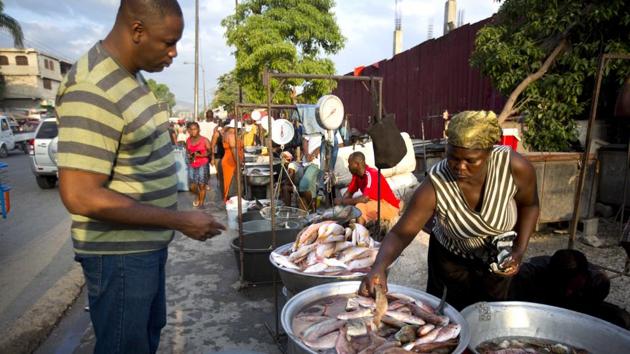
A fish vendor picks out fish for her client at the biggest fish market in Port-au-Prince, Haiti. The capital’s main fish market opens as early as 3am, selling local fish from all over the island’s coasts. “Fish is a luxury in Haiti, but we want to change that,” said Hans Wooley. (Dieu Nalio Chery /AP)
12/12
 View Photos in a new improved layout
Updated on May 08, 2018 2:21 PM


