
 E-Paper



Photos: Nurse cares for indigenous people in Amazonas’ coronavirus fight
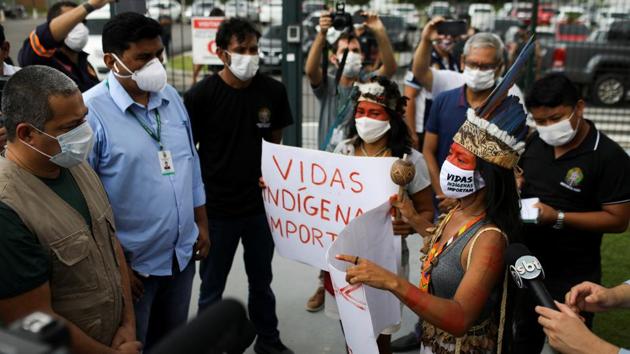
Vanderlecia Ortega dos Santos, a nurse from the Witoto tribe, an indigenous ethnic group has been on the frontline to provide essential care to her indigenous community of 700 families from the COVID-19 outbreak which has ravaged the Brazilian city of Manaus. Santos makes house calls in her community, tracking potential COVID-19 symptoms. She is also seen in protests wearing a facemask emblazoned with the phrase "Indigenous Lives Matter" -- to attract attention to her community amid the pandemic.
Updated on: May 10, 2020 11:09 AM IST


Share via


Copy link

1/8

 View Photos in a new improved layout
Updated on May 10, 2020 11:09 AM
Vanderlecia Ortega dos Santos, 32, a nurse from the Witoto tribe, puts on personal protective equipment (PPE), before leaving her home in Parque das Trios, during the coronavirus (COVID-19) outbreak in Taruma district, Manaus. Vanderlecia or Vanda as known to her neighbours, has volunteered to provide the only frontline care protecting her indigenous community of 700 families from the COVID-19 disease ravaging the Brazilian city of Manaus. (Bruno Kelly / REUTERS)
2/8
 View Photos in a new improved layout
Updated on May 10, 2020 11:09 AM
The ramshackle settlement of descendants from 35 different tribes, called Parque das Tribos, lacks plumbing and electricity in most homes. Ambulances regularly refuse to pick up the seriously ill because there is no public health clinic nearby. It is an uphill battle to fight the pandemic in these conditions. (Bruno Kelly / REUTERS)
3/8
 View Photos in a new improved layout
Updated on May 10, 2020 11:09 AM
Vanda (right) and artisan Natalina Martins Ricardo, 42, from the Bare Tribe, are seen wearing protective masks as they talk to a neighbour outside of his home, in Manaus. As the coronavirus pandemic has begun spreading across Brazil, indigenous people who live in and around cities have been caught in a dangerous limbo. The country’s indigenous health service, Sesai, focuses its resources on those living on tribal reservations. (Bruno Kelly / REUTERS)
4/8
 View Photos in a new improved layout
Updated on May 10, 2020 11:09 AM
Vanda embraces her niece Maria Eduarda Ribeiro Ortega, 4, at the former’s home. Sesai has reported 10 indigenous deaths from the pandemic on native lands, but indigenous umbrella organization Association of Brazil’s Indigenous Peoples (APIB) estimated this week it has taken the life of at least 18 indigenous Brazilians if fatalities in urban areas are counted, reported Reuters. (Bruno Kelly / REUTERS)
5/8
 View Photos in a new improved layout
Updated on May 10, 2020 11:09 AM
Vanda tends to medicinal plants that she is growing in her garden, as she talks to her niece Maria. “Our people are dying from this disease here and they are not being recognized as indigenous people by the state and Sesai,” Vanda told Reuters. (Bruno Kelly / REUTERS)
6/8
 View Photos in a new improved layout
Updated on May 10, 2020 11:09 AM
Vanda seen in her garden. Manaus, the state capital of Amazonas, which is suffering Brazil’s most deadly COVID-19 outbreak per capita, has seen the disease overwhelm hospitals, cemeteries, and the officials’ ability to tally the dead. (Bruno Kelly / REUTERS)
7/8
 View Photos in a new improved layout
Updated on May 10, 2020 11:09 AM
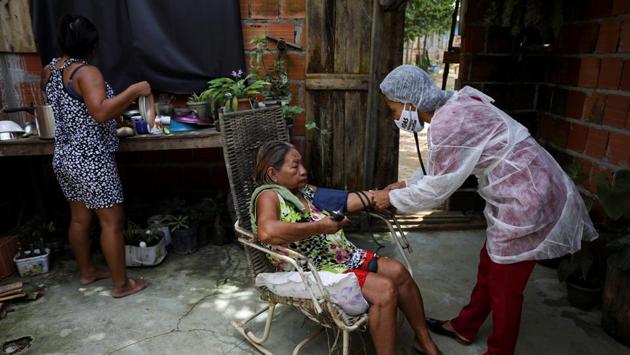
Vanda examines her patient Apolonia Antonia Martins Bare, in Manaus. Vanda was born in the river village of Amatura and moved down river ten years ago to Manaus, where she trained as a nurse technician. She works treating skin cancer patients at a clinic in the city. (Bruno Kelly / REUTERS)
8/8
 View Photos in a new improved layout
Updated on May 10, 2020 11:09 AM


