
 E-Paper



Photos: Pink ice in Italy’s Alps sparks climate crisis concerns
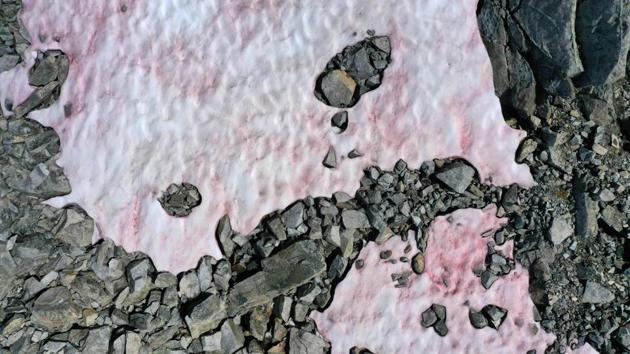
The mysterious appearance of pink ice on Presena glacier in the Italian Alps is being linked to the alga that is believed to accelerate the effects of climate crisis. The origin of the alga is debated; however, Biagio Di Mauro of Italy’s National Research Council believes the pink snow observed on parts of the Presena glacier is likely caused by the plant Ancylonema nordenskioeldii, also found in the ‘Dark-zone’ of Greenland where the ice is rapidly melting. The research continues to quantify other human factors that might be aiding the growth of these algae.
Updated on: Jul 8, 2020 7:16 PM IST


Share via


Copy link

1/6
 View Photos in a new improved layout
Updated on Jul 8, 2020 7:16 PM
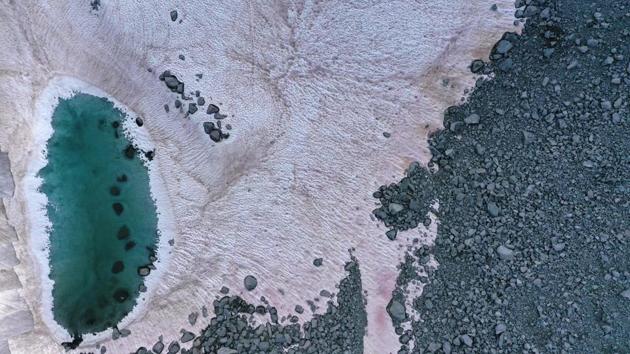
An aerial picture taken above the Presena glacier near Pellizzano shows pink coloured snow on July 03. Scientists in Italy are investigating this mysterious phenomenon which is being linked to the alga that is believed to accelerate the effects of climate change. (Miguel Medina / AFP)
2/6
 View Photos in a new improved layout
Updated on Jul 8, 2020 7:16 PM
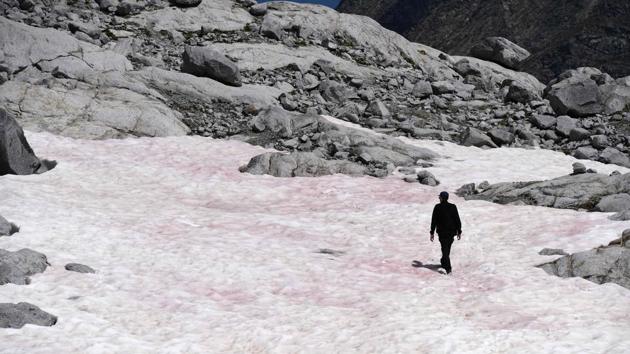
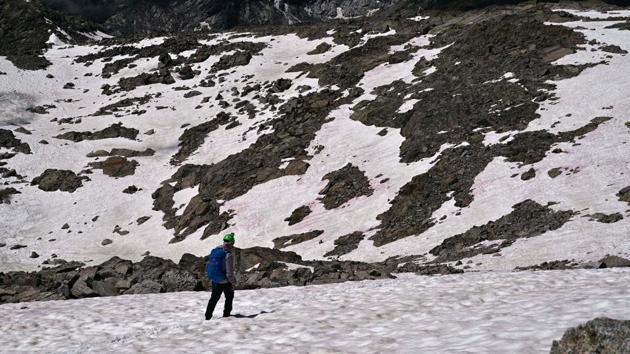
A man is seen walking on the pink coloured glacial ice on July 04. The origin of the alga is debated; however, Biagio Di Mauro of Italy’s National Research Council believes that the pink snow observed on parts of the Presena glacier is likely caused by the plant Ancylonema nordenskioeldii, also found in the ‘Dark-zone’ of Greenland where the ice is rapidly melting. (Miguel Medina / AFP)
3/6
 View Photos in a new improved layout
Updated on Jul 8, 2020 7:16 PM
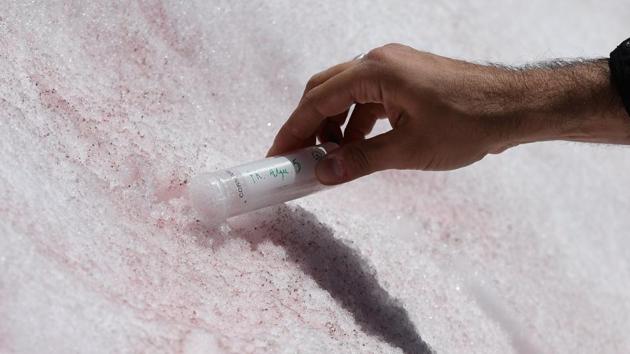
Di Mauro, who had previously studied the algae at the Morteratsch glacier in Switzerland told AFP that, “The alga is not dangerous, it is a natural phenomenon that occurs during the spring and summer periods in the middle latitudes but also at the Poles.” (Miguel Medina / AFP)
4/6
 View Photos in a new improved layout
Updated on Jul 8, 2020 7:16 PM
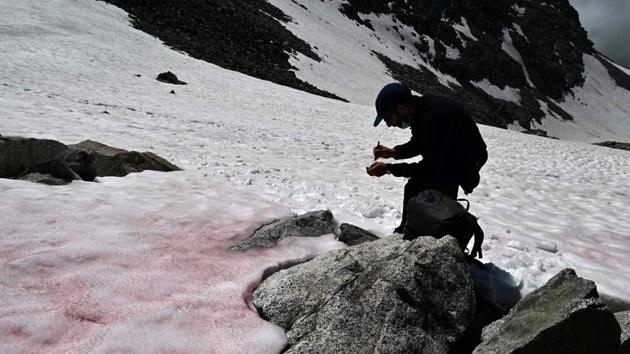
A researcher at CNR (National Research Council) takes samples of the pink snow. Normally ice reflects more than 80 percent of the sun’s radiation back into the atmosphere, but as algae appear, they darken the ice so that it absorbs the heat and melts more quickly. Melting ice gives them vital water and air meanwhile adding red hues to the white ice. (Miguel Medina / AFP)
5/6
 View Photos in a new improved layout
Updated on Jul 8, 2020 7:16 PM
An aerial picture of Passo Gavia at altitude 2,618 metres (8,590 feet). “Everything that darkens the snow causes it to melt because it accelerates the absorption of radiation,” said Di Mauro. (Miguel Medina / AFP)
6/6
 View Photos in a new improved layout
Updated on Jul 8, 2020 7:16 PM


