
 E-Paper



Photos: Pink Shuttle buses aid safe mobility for women in Kabul
The traditionally patriarchal attitudes of Afghanistan’s society are being challenged by women who are taking the steering wheel of their freedom in their own hands. Pink Shuttle, a pilot bus programme in the Afghan capital Kabul, is employing only women to ferry female passengers and their kids across the city. These female drivers continue to receive strange stares and comments from onlookers on the streets. In spite of all of this, the number of women drivers in the capital has been steadily growing.
Updated on: Nov 28, 2019 10:00 AM IST


Share via


Copy link

1/8

 View Photos in a new improved layout
Updated on Nov 28, 2019 10:00 AM
Fatima Mohammadi drives her car on the streets of Kabul. A first-of-its kind service called Pink Shuttle is helping women navigate the many challenges they face getting around Kabul, where a woeful lack of transport options is compounded by the risk of harassment on the streets. The service employs only women to ferry female passengers and their kids across the Afghan capital. (Wakil Kohsar / AFP)
2/8
 View Photos in a new improved layout
Updated on Nov 28, 2019 10:00 AM
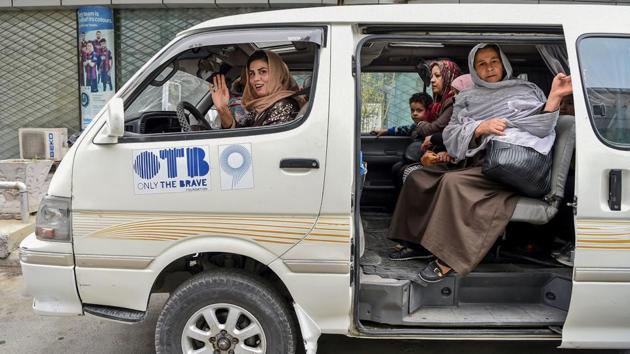
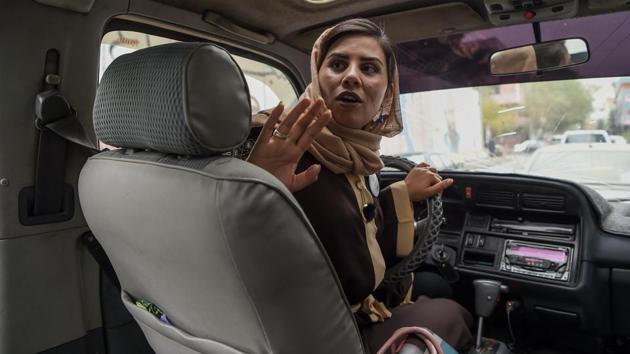
Razia Dalili gestures as she drives a mini-bus to carry women passengers. She is one of four drivers working for Pink Shuttle. “We have transportation problems for women. In fact, public transportation does not exist, especially for women in Kabul,” project coordinator Obaidullah Amiri said. He further added that the pilot project, which started in May and also receives backing from the US Agency for International Development (USAID), is set to be extended. (Wakil Kohsar / AFP)
3/8
 View Photos in a new improved layout
Updated on Nov 28, 2019 10:00 AM
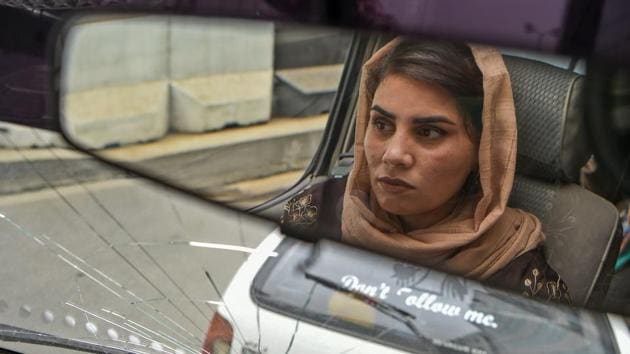
Dalili is reflected in the rear-view mirror as she waits for women passengers. According to Khan Mohammad Shinwaray, police chief at Kabul’s traffic department, the number of women drivers in the capital has been steadily growing, with 275 licences approved for the first half of the year. This is quite a jump: In the years between 2012 and 2016, just 1,189 women in total got licences in the city. (Wakil Kohsar / AFP)
4/8
 View Photos in a new improved layout
Updated on Nov 28, 2019 10:00 AM
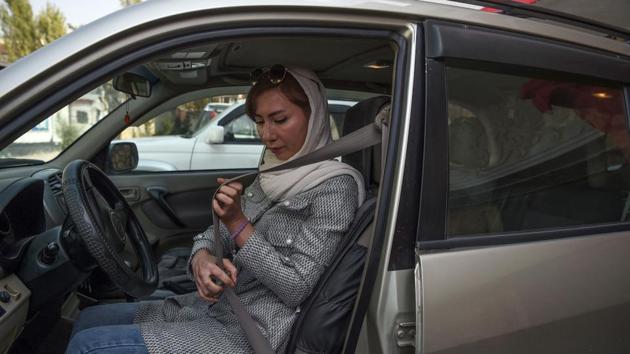
Mohammadi fastens her seatbelt before driving her car. The 31-year-old Kabul resident, who has been driving for about four years, said she appreciated the freedom of having a car but still deals with daily harassment on the road. “I usually don’t leave the windows of the car open,” she said. “Sometimes when another driver or passerby smiles or says ‘Well done,’ it feels like harassment.” (Wakil Kohsar / AFP)
5/8
 View Photos in a new improved layout
Updated on Nov 28, 2019 10:00 AM
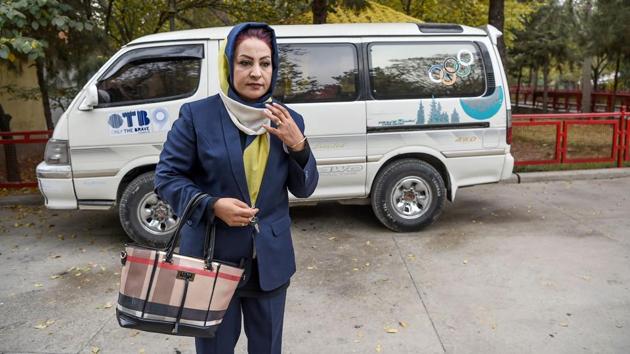
Parisa Haidary walks away from a mini-bus dropping off her women passengers in Kabul. The 36-year-old former beautician, who has also worked as a TV journalist, and other women drivers -- her colleagues -- were chosen from 100 candidates. “We get a lot of different reactions,” she said. “Some drivers block our way, others honk at us, some even drive alongside at the same speed when the road is clear.” (Wakil Kohsar / AFP)
6/8
 View Photos in a new improved layout
Updated on Nov 28, 2019 10:00 AM
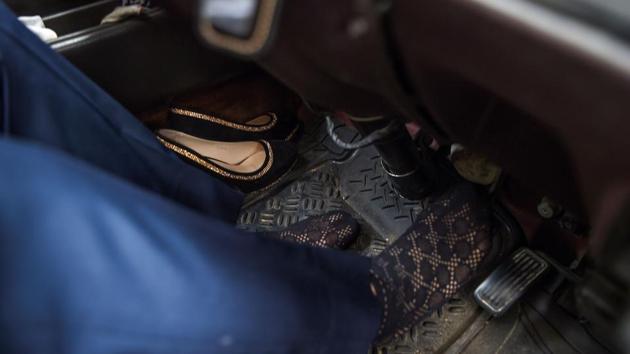
Haidary presses the accelerator with her shoes off while driving. Navigating Kabul’s traffic is no easy feat. Traffic can flow fast one moment, then suddenly grind to a complete standstill for hours. Road signs are non-existent. Congestion has only got worse in recent years as Kabul has been sliced into ever-smaller portions by security measures and entire streets and landmarks disappear behind towering blast walls. (Wakil Kohsar / AFP)
7/8
 View Photos in a new improved layout
Updated on Nov 28, 2019 10:00 AM
Dalili looks back as she talks to her passengers. When Taliban insurgents swept to power in 1996, women were forced to stay home, barred from most jobs, and deprived of their right to an education. After the militants were toppled in late 2001 and a US-backed government took over, gender equality was enshrined in the Afghan constitution, though discrimination remains rife. (Wakil Kohsar / AFP)
8/8
 View Photos in a new improved layout
Updated on Nov 28, 2019 10:00 AM


