E-Paper



Die another day: The politics and economics of Lula da Silva | Number Theory
On Monday, Lula joined an elite club of leaders who have bounced back to win a run-off after trailing in the first round

 Prefer HTon Google


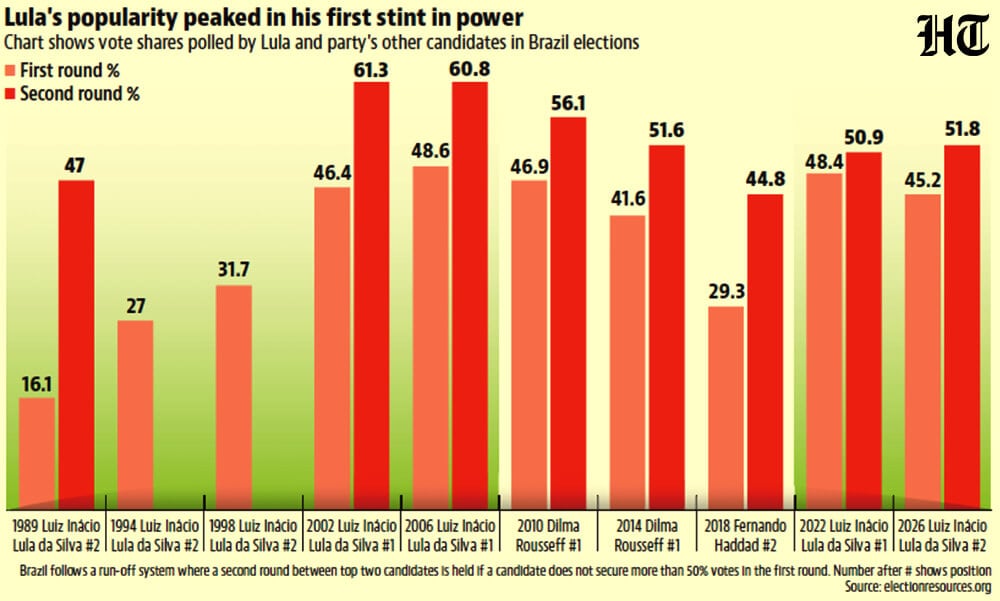
When the results of the first round of Brazil’s presidential elections were declared earlier this month, almost everyone thought it was finally curtains for Lula da Silva, the country’s 81-year-old left-leaning charismatic leader. He trailed Flávio Bolsonaro, the son of former president Jair Bolsonaro by about two percentage points. It looked like 2026 would be the first election since 2002 when Lula was on the ticket and lost . History will have to wait because it has been rewritten. On Monday, Lula joined an elite club of leaders who have bounced back to win a run-off after trailing in the first round. He will have the presidency, although with a more challenging legislative environment. What really explains Lula’s political success and its limits? Here are some numbers that matter.

 Lula’s political peak is behind him, but he matters a lot to his baseLula made 3 unsuccessful attempts at the presidency before he finally won it in 2002. His popular vote share almost tripled between the 1989 and 2002 elections. His political peak, as far as the first-round vote share is concerned, came in the 2006 election, which he almost matched in the 2022 election when he came out of a disqualification to contest again. What Lula managed in the 2026 elections, however, is a much better run-off performance than in 2022, despite doing badly in the first round. Most analysts read this as his success in getting his supporters who abstained in the first round to come out and vote to prevent a victory for the right-wing. Apathy turning into sympathy was the magic that helped Lula snatch victory from the jaws of defeat in this election.
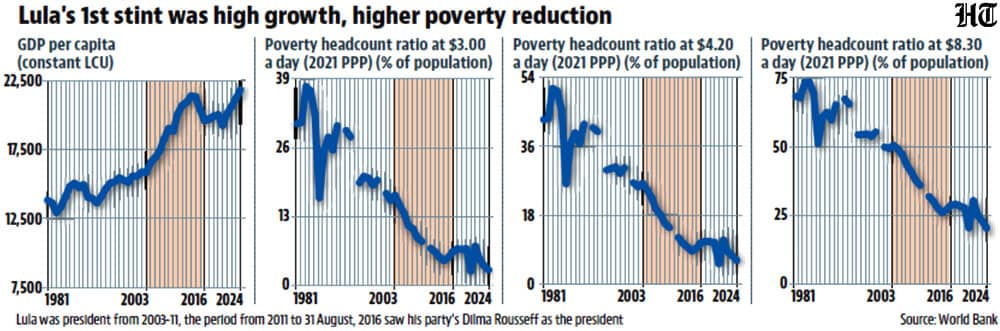
- Lula’s core base has been cultivated via social democracyWinning power for the first time in 2002 required Lula to moderate his radical rhetoric. However, once he had power and the fiscal wherewithal, he delivered on his promises to the poor. Bolsa Familia, the 2003 anti-poverty programme launched by Lula is the cornerstone of this political contract. That Brazil’s economy had a high growth phase in the early years of Lula’s rule also helped. What Lula could deliver in his early years was high growth in per capita incomes as well as a sharp reduction in poverty. It is this achievement which has given him, more than his party, a loyal support base.
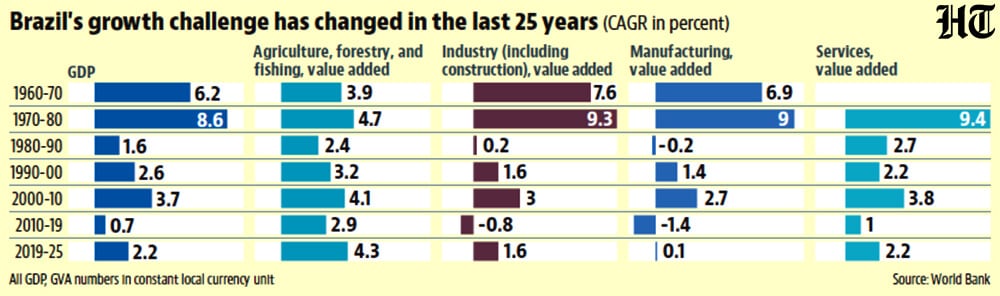
- Brazil’s economic challenges are now different than under Lula’s early yearsA long-term analysis of Brazil’s overall and sector-wise growth shows that the 2000s were the best period in Brazil’s democracy. Things went downhill in the 2010s when growth fell across sectors ; industry and manufacturing entered contraction mode. While the period from 2019 to 2025 has seen a revival in growth, it continues to elude manufacturing, although agriculture has grown at the fastest pace since the 1980s. Lula now needs to deliver on things such as remunerative employment rather than just removing backbreaking poverty, which he himself got rid of in his earlier stint in power. An article published in the Financial Times on October 20, which discussed the high growth in gig work including the ride-platform Uber in Brazil, spoke about a “vibecession” in Brazil—a situation “when strong economic indicators do not match how people feel about the economy.” Such economic challenges might have caused a small but critical number of Lula supporters to abstain in the first round of elections. The fact that Brazil’s fiscal situation, at least in terms of its debt-GDP ratio is now more precarious than it was in Lula’s early years—the debt-GDP ratio was just above 60% in the early 2010s and is expected to cross 100% in 2028 from its existing 95%-plus levels according to IMF data – will also constrain the greater welfare route to political legitimacy for Lula and his party.
- The fiscal and economic concerns, to be sure, would have existed even in case of a Bolsonaro victory. Even Bolsonaro Senior renamed Bolsa Família instead of abolishing it. What matters, as of now, is that Lula and his movement have survived their biggest scare in recent times. Their future will depend on how the new government navigates economic challenges without alienating its supporters.