
 E-Paper



Photos: US and China set to enter phase one of trade deal
China's trade surplus with the United States narrowed last year as the world's two biggest economies exchanged punitive tariffs in a bruising trade war, data showed Tuesday, just as the two prepare to sign a deal dialling down tensions. The huge difference in trade traffic is a key bone of contention for Donald Trump in a long-running stand-off that has seen him impose tariffs on goods worth hundreds of billions of dollars, triggering retaliation from Beijing and jolting the global economy. US and China trade representatives will end this years of intense bilateral negotiations with a “phase one” deal that promises billions of dollars’ worth of agricultural purchases and the beginning of reforms to China’s longstanding practice of forced technology transfer.
Updated on: Jan 15, 2020 3:33 PM IST


Share via


Copy link

1/7
 View Photos in a new improved layout
Updated on Jan 15, 2020 3:33 PM
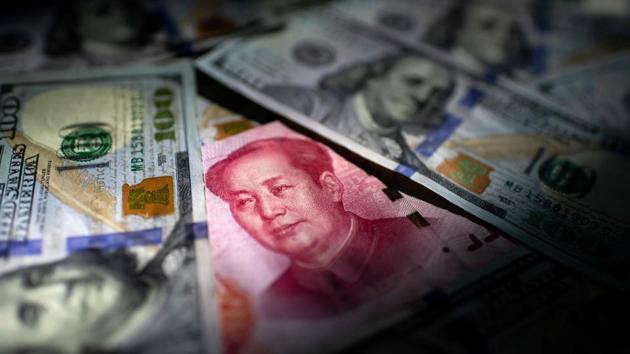
A photo illustration of a Chinese 100 yuan note (C) and US 100 notes. China’s trade surplus with the United States narrowed last year as the world’s two biggest economies exchanged punitive tariffs in a bruising trade war, data showed on Tuesday, just as the two prepared to sign a deal dialling down tensions. (Nicolas Asfouri / AFP)
2/7
 View Photos in a new improved layout
Updated on Jan 15, 2020 3:33 PM
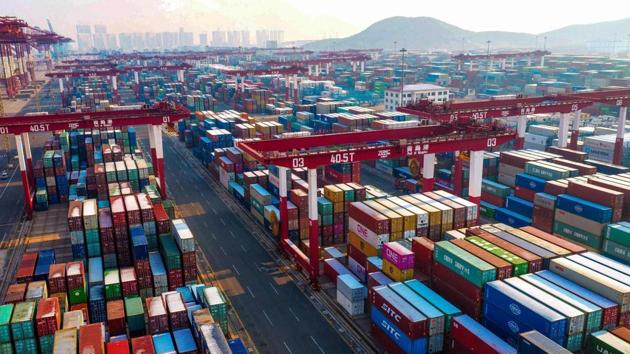
Containers are seen stacked at a port in Qingdao in China’s eastern Shandong province. The huge difference in trade traffic is a key bone of contention for Donald Trump in a long-running stand-off that has seen him impose tariffs on goods worth hundreds of billions of dollars, triggering retaliation from Beijing. (AFP)
3/7
 View Photos in a new improved layout
Updated on Jan 15, 2020 3:33 PM
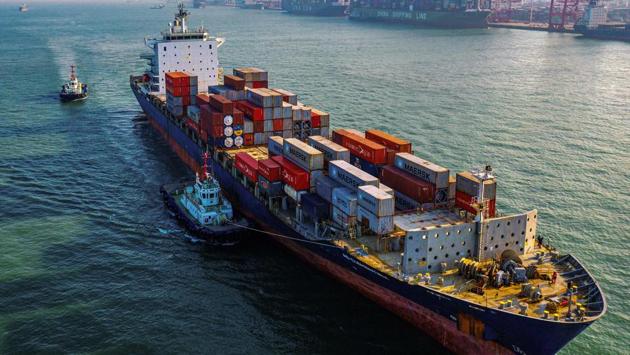
A cargo ship loaded with containers makes its way at a port in Qingdao. China’s surplus came in at around $295.8 billion in 2019, down 8.5% from the previous year’s record $323.3 billion, according to customs data. (AFP)
4/7
 View Photos in a new improved layout
Updated on Jan 15, 2020 3:33 PM
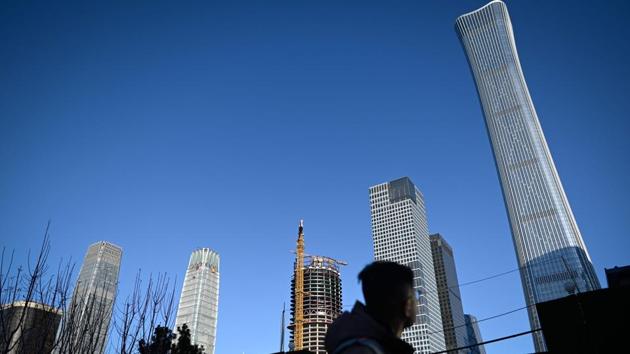
A man looks at buildings at a Central Business District(CBD) in Beijing. The Trump administration called off new tariffs on Chinese-made goods such as electronics that were to take effect last month. It also halved those imposed on September 1 on $120 billion worth of products. (Wang Zhao / AFP)
5/7
 View Photos in a new improved layout
Updated on Jan 15, 2020 3:33 PM
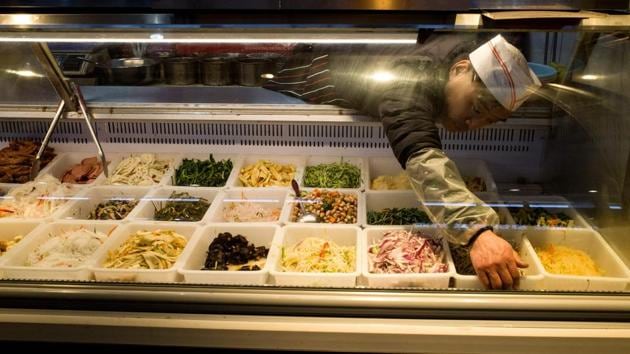
A worker arranges ingredients at an eatery in Beijing. At a news conference on Tuesday, spokesman for the customs administration Zou Zhiwu said that since November and December, Chinese imports from the US including of soybeans and pork have picked up. (Noel Celis / AFP)
6/7
 View Photos in a new improved layout
Updated on Jan 15, 2020 3:33 PM
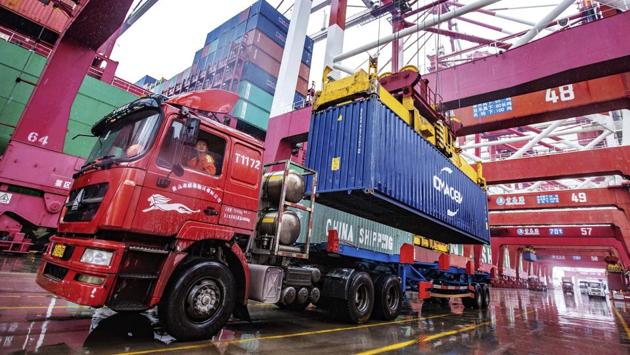
In a further sign of de-escalation, Washington on Tuesday removed the currency manipulator label it imposed on China in summer. (AP)
7/7
 View Photos in a new improved layout
Updated on Jan 15, 2020 3:33 PM


