

 E-Paper


Japan pulls nuclear plug
1 / 11

 View Photos in a new improved layout
Updated on May 05, 2012 11:54 pm IST
A protester holds a sign at a march appealing to the Japanese government to put an end to nuclear power in Tokyo. Japan shuts down its last working nuclear power reactor this weekend just over a year after a tsunami scarred the nation and if it survives the summer without major electricity shortages, producers fear the plants will stay offline for good. (Reuters)
2 / 11
 View Photos in a new improved layout
Updated on May 05, 2012 11:54 pm IST
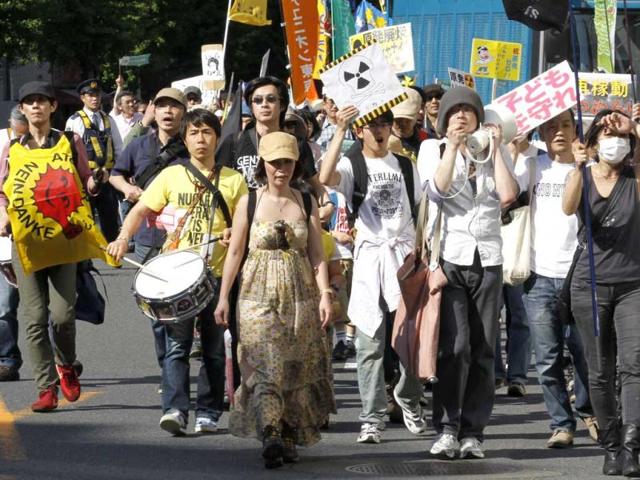
Protesters march at a rally appealing to the Japanese government to put an end to nuclear power in Tokyo. Japan shuts down its last working nuclear power reactor this weekend just over a year after a tsunami scarred the nation and if it survives the summer without major electricity shortages, producers fear the plants will stay offline for good. (Reuters)
3 / 11
 View Photos in a new improved layout
Updated on May 05, 2012 11:54 pm IST
Protesters hold anti-nuclear signs at a rally appealing to the Japanese government to put an end to nuclear power in Tokyo May, 5, 2012. Japan shuts down its last working nuclear power reactor this weekend just over a year after a tsunami scarred the nation and if it survives the summer without major electricity shortages, producers fear the plants will stay offline for good. (Reuters)
4 / 11
 View Photos in a new improved layout
Updated on May 05, 2012 11:54 pm IST
A protester carries a parasol bearing an anti-nuclear slogan at a rally appealing to the Japanese government to put an end to nuclear power in Tokyo. Japan shuts down its last working nuclear power reactor this weekend just over a year after a tsunami scarred the nation and if it survives the summer without major electricity shortages, producers fear the plants will stay offline for good. (Reuters)
5 / 11
 View Photos in a new improved layout
Updated on May 05, 2012 11:54 pm IST
A participant wears an anti-nuclear sign at a rally protesting against the usage of nuclear energy in Tokyo. Thousands of Japanese marched to celebrate the last of this nation's 50 nuclear reactors switching off Saturday, shaking banners shaped as giant fish that have become a potent anti-nuclear symbol. (AP Photo)
6 / 11
 View Photos in a new improved layout
Updated on May 05, 2012 11:54 pm IST
This aerial picture taken on May 31, 2010 shows Hokkaido Electric Power Co.'s Tomari nuclear power plant in Hokkaido prefecture. The last working reactor in Japan is to be switched off, leaving the country without nuclear power just over a year after the world's worst atomic accident in a quarter of a century. (AFP Photo)
7 / 11
 View Photos in a new improved layout
Updated on May 05, 2012 11:54 pm IST
Participants raise banners with a slogan, "Good bye, nuclear power station", at a rally protesting against the usage of nuclear energy in Tokyo. Thousands of Japanese marched to celebrate the last of this nation's 50 nuclear reactors switching off Saturday, shaking banners shaped as giant fish that have become a potent anti-nuclear symbol. (AP Photo)
8 / 11
 View Photos in a new improved layout
Updated on May 05, 2012 11:54 pm IST
Participants confer at a rally protesting against the usage of nuclear energy in Tokyo. Thousands of Japanese marched to celebrate the last of this nation's 50 nuclear reactors switching off Saturday, shaking banners shaped as giant fish that have become a potent anti-nuclear symbol. (AP Photo)
9 / 11
 View Photos in a new improved layout
Updated on May 05, 2012 11:54 pm IST
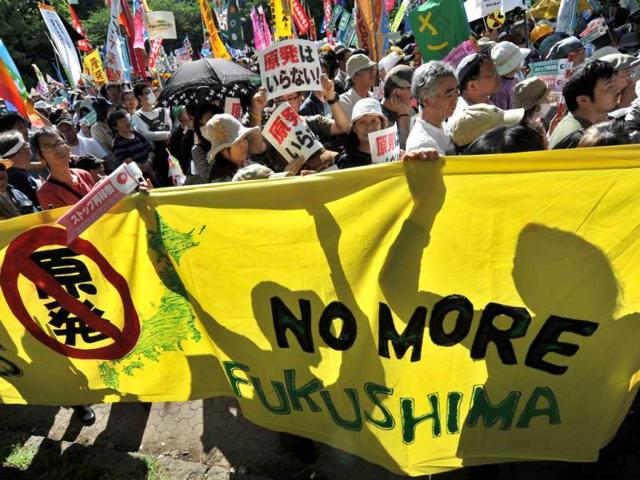
People gather at an anti-nuclear demonstration on the Children's Day national holiday, calling for a safer future for younger generations at a park in Tokyo. The last working reactor in Japan is to be switched off, leaving the country without nuclear power just over a year after the world's worst atomic accident in a quarter of a century. (AFP Photo)
10 / 11
 View Photos in a new improved layout
Updated on May 05, 2012 11:54 pm IST
A participant holds a ventriloquial dummy wearing anti-nuclear signs at a rally protesting against the usage of nuclear energy in Tokyo. Thousands of Japanese marched to celebrate the last of Japan's 50 nuclear reactors switching off Saturday, shaking banners shaped as giant fish that have become a potent anti-nuclear symbol. (AP Photo)
11 / 11
 View Photos in a new improved layout
Updated on May 05, 2012 11:54 pm IST