
 E-Paper



Deafening blast: Pune too loud for comfort, finds Neeri report
According to a report by National environmental engineering research institute (Neeri), Pune is among the most noisiest cities in Maharashtra.


A recent report from the National environmental engineering research institute (Neeri ) has stated that noise levels in Pune are considerably higher than the prescribed limit in many areas.
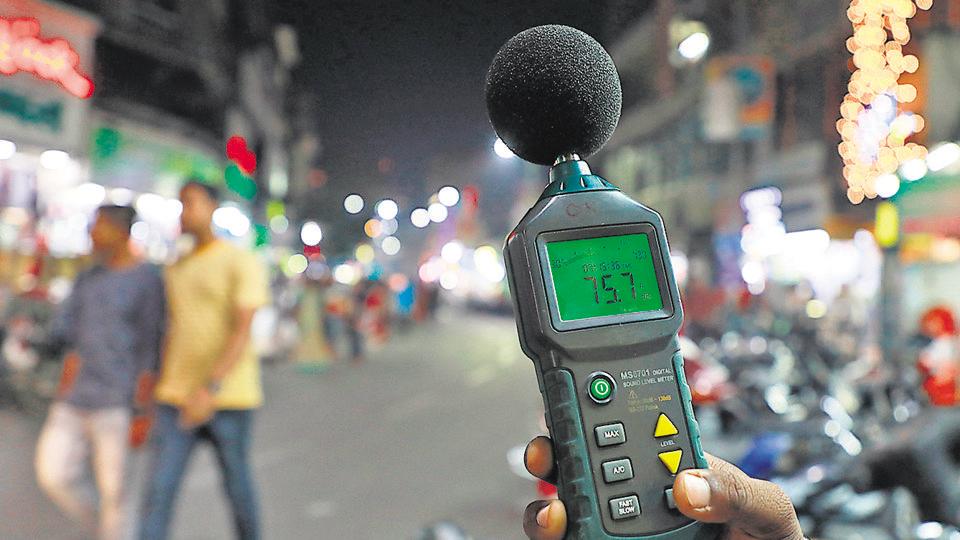
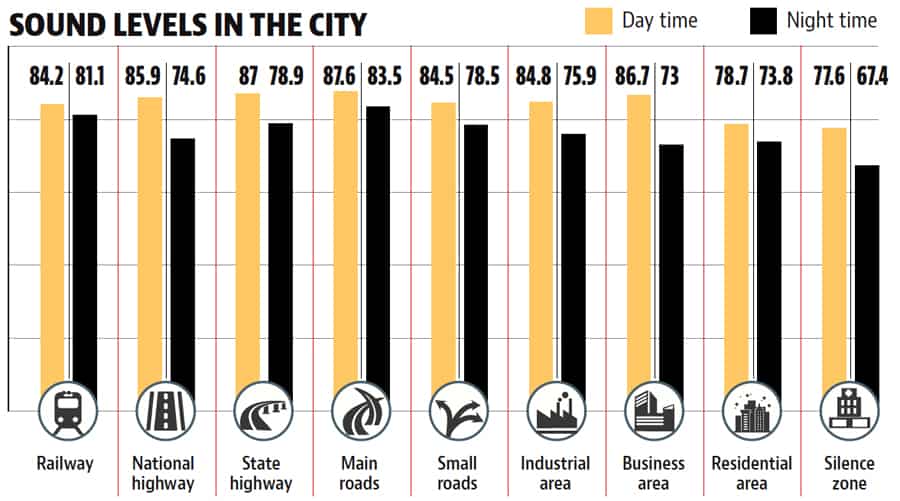
While the prescribed daytime noise limit for industrial areas is 75 dB, the recorded level of noise at such areas in the city was 84.8 dB. Similarly, the recorded noise level in commercial areas was 86.7 dB, as against the prescribed limit of 65 dB. In residential areas, the daytime record was of 78.7 dB, against the prescribed limit of 55 dB. With the highest gradiant, the recorded daytime noise levels were 77.6 dB, against the prescribed limit of 50 dB.
One of the major findings of the report is that "honking is the most problematic of the causes, and traffic is, of course, a major source" of noise pollution, according to Dr Ritesh Vijay, principal scientist at Mumbai zonal office of Neeri.
"The noise levels at the boundary of public places, where loudspeakers or public address systems or any other noise source is being used, shall not exceed 10dB above the ambient noise standards for the area," reads Rule 5(4) of Noise Pollution (Regulation and Control) Rules, 2000. The regulations also direct local governments to declare areas within 10 metre of any hospital, educational institute, court or religious place to be silence zones.
The report was submitted to the Maharashtra pollution control board (MPCB) in June, which in turn sent it to the Bombay high court, according to Dr Vijay. The research institute undertook the study under the guidance of Dr Rakesh Kumar, director of Neeri , and Dr Vijay.
In conclusion, the report made various observations and suggestions pertaining to the reduction of noise pollution levels. The Bombay high court has taken note of Neeri’s report and asked the involved municipal corporations to consider the observations and work accordingly.
One of the suggestions include, “Develop a system/device which can be installed in vehicles, which will reduce the noise level (honking intensity) with the speed of vehicle (work is being carried out on this subject at Indian institute of technology, Bombay).”
The study also suggests provisions and installation of sensors that limit the number of times a vehicle’s horn can be used. “The sensor will not allow a vehicle to exceed the number of times it can honk. After reaching the limit, a signal will come up on the dashboard and if the person honks again, a message will go via a network to the traffic department as a violation,” it reads, effectively advocating change in traffic police work as well.
Pointing towards another functional addition for the city traffic police, the report suggests, “Unnecessary honking should be avoided and penalised. However, this requires innovation in identifying and taking action.”
Another major highlight of the report was their suggestion for the formation of a city noise pollution control committee (CNPCC) “to provide the guidelines for monitoring and controlling noise pollution in the city” .
The survey was carried out in 10 major cities, including Pune, Mumbai, Aurangabad, Kalyan-Dombivli, Kolhapur, Nagpur, Navi-Mumbai, Solapur and Thane.


