
 E-Paper



Planning, finance key to merger success for PMC
The state government’s nod for the merger of 23 areas (villages), surrounding Pune city, may have initiated the process of further expansion of the city’s limits


Part 1 - The Pune Municipal Corporation is now the largest corporation in Maharashtra in terms of area covered. The merger of 34 fringe areas, 23 of which were finalised this month, puts PMC in a tough spot in terms of ensuring sustainable development. In this four-part series, HT investigates who is to benefit from the merger and how; exposing challenges faced and revealing expectations of Pune’s new residents
The state government’s nod for the merger of 23 areas (villages), surrounding Pune city, may have initiated the process of further expansion of the city’s limits.
However, the decision may leave the Pune Municipal Corporation (PMC) with an additional burden in terms of resources, that the civic body may find hard to deal with; especially when it is grappling with a shortage of revenue in the light of the Covid-19 pandemic.
The latest decision, after Urban Development minister Eknath Shinde cleared the merger proposal, is part of a 2014 notification issued by the state government, to merge 34 fringe areas into the PMC.
Accordingly, the state facilitated the merger of 11 areas into the PMC on October 27, 2017. The decision was taken after a court intervention. A citizen’s action committee approached the high court over a delay, to which the government said the 23 areas will be included within the PMC by October 2020.
While citizens from most of these areas want to be part of the PMC, fast becoming a “smart city” under the Centre’s scheme, the civic body is expressing concern over a lack funds.
Mahesh Pathak, principal secretary, Urban Development, Maharashtra, said that “not much budget has been provided” to the PMC despite the go ahead for the merger. Despite repeated phone calls and text messages, Pathak gave that brief response via SMS.
PMC commissioner Vikram Kumar said, “The corporation has already many problems we have to concentrate on. The State government has asked the corporation to submit a response on what will happen after the merger of the 23 villages. We have already sent our response to the state government.”
While Kumar was not specific about the contents of the response, other civic officials say the decision may put a burden on the PMC, already grappling with lack of basic amenities in the 11 areas merged in 2017.
In 2017, the PMC had estimated it would require ₹5,741 crore for the development of the 34 areas, including the 11 have already been merged.
The civic body officials say the estimate has now increased to ₹9,000 crore as of 2020.
Sanjeev Kumar Patil, Wagholi Housing Societies Association (WHSA) said, “Wagholi is the highest populated village of the 23 merged. Wagholi population has expanded rapidly with large real estate projects coming up in this eastern suburb of the city.
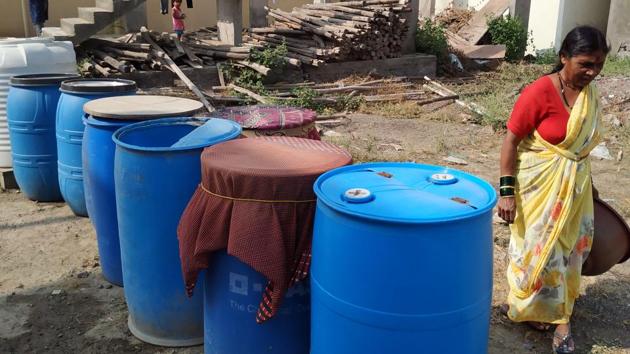
“Despite being located on the highway, the area lacks basic amenities like road, water, garbage disposal, and drainage.
“The local body has failed to provide facilities to citizens. We want accountability and responsibility from government machinery,” said Patil.
Sonali Kulkarni, another resident from Sus, a suburb on the west, said, the area has large projects where people working in IT firms live.
“However, Sus does not even have proper drainage or tar roads, which makes vastlt inferior to neighbouring Hinjewadi, where the roads are much better. At least Sus’ inclusion in the PMC will facilitate its development,” said Kulkarni, an IT engineer.
Girish Bapat, BJP’s member ofparliament (MP) from Pune, who was guardian minister during the Fadnavis government era, submitted an affidavit in court, which stated: “ State government should give funds so that PMC can make time bound program for the development of 23 merged villages. In these villages, there is less revenue generation and more expenditure. It will adversely affect existing city’s development. Government should give grants to five years in instalments to the development of these villages.”
Expansion of Pune city
After the merger of these 23 areas, Pune will emerge as one of the biggest municipal corporations in Maharashtra, covering an area of 516.18 sqkm kms, which is more than the Mumbai municipal corporation’s 437.71 sq km.
There is an addition of 2.78 lakh of population to the existing 35 lakh population of Pune city, as per the 2011 census.
Over the last 23 years, Pune has expanded thrice.


