
 E-Paper



Pune receives decade’s highest rainfall in Oct 2020
The second highest rainfall was received in 2010 wherein 262.99 mm rainfall was recorded

 Prefer HTon Google


Pune has received the highest rainfall of the decade in October 2020. The city registered a record 312.4mm rainfall last month, according to the data shared by the India Meteorological Department (IMD).
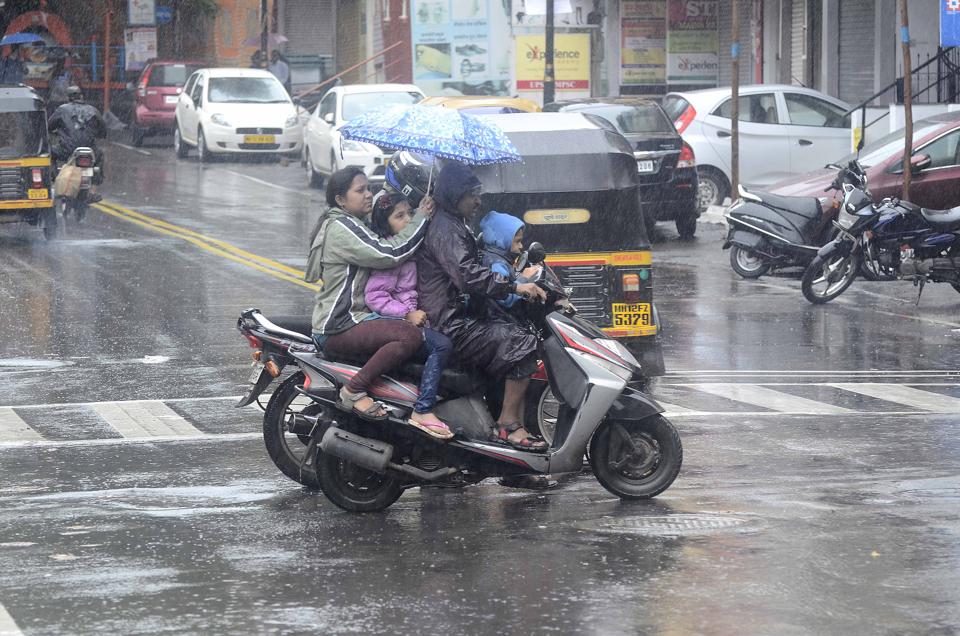
The second highest rainfall was received in 2010 wherein 262.99 mm rainfall was recorded while the third highest decadal rainfall was reported in 2019 when 235.5 mm rainfall was recorded at the observatory. Also, Pune received the highest rainfall in a single day on October 14 at 112.1 mm this year. The previous highest was on May 13, 2015 when Pune recorded 103mm on a single day.
Pune district, along with Mumbai, was placed on “yellow alert” in October on 13th, 14th and 15th by IMD following very heavy rains and thunderstorm. A red alert was issued for districts like Kolhapur, Satara, Sindhudurg and Osmanabad while Ratnagiri, Sangli, Solapur, Parbhani and Beed had an orange alert.
Weather experts have also termed global warming and climate change as influential factors which impacted the rainfall scenario in the country and the state during monsoon 2020. Weather scientists also said that due to a change in weather pattern due to climate change, intense and heavy rainfall has been reported instead of the traditional pattern of steady rains.
City environmentalists believe that large-scale destruction of human lives and property has been reported during the last two years of monsoon due to factors like rising temperatures and extreme rainfall. Similarly, rapid urbanisation and construction in the flood line areas of rivers crossing the city along with dumping of concrete in nallahs has led to disastrous situation in the city during the spell of current monsoon.
In June, Pune district was battered with widespread rain as cyclone Nisarga hit the western parts of the state such as Pune, Maval, Mulshi and Velhe. Other areas like Satara, Kolhapur and Sangli also witnessed rains during June. Cyclone Nisarga made landfall in the state’s Raigad district.
Anupam Kashyapi, head of weather, IMD Pune said, “Pune has received more than normal rainfall due to cyclonic rain due to Nisarga, good moisture incursion and again prevalence of thunderstorm and low-pressure conditions brought heavy rainfall.”
For the past three consecutive years, Pune has been receiving more than normal rainfall in June. In 2017, the normal rainfall recorded was 207 mm, 2018 recorded 148mm, 2019 recorded 194 mm.
City’s wet month
Rainfall recorded in October
2009 104.7mm
2010 262.8mm
2011 200.4mm
2012 144.5mm
2013 34.7mm
2014 25.9mm
2015 76.7mm
2016 80.4mm
2017 180.9mm
2018 36.1mm
2019 235.5mm
2020 312.4mm


