
 E-Paper



By the Way | Dear dog lovers, it’s time to stop barking and start biting
She loves dogs. I had mixed feelings for dogs. Now, I too love dogs because I love her back. Isn’t that a lot of love?


Love arrives in strange ways and from strange corners. My love for dogs is one such love. It’s been brought about by another love, a more conventional kind of love, between a girl and me. She loves dogs. I had mixed feelings for dogs. Now, I too love dogs because I love her back. Isn’t that a lot of love? Don’t you just love that? Sounds like puppy love!
I particularly love this group on Facebook that is supposed to help lots of people find cheap mobile connections, houses on rent, jobs, and other such stuff; but is filled instead with so much of love for dogs that there is hardly any space for anything else. It’s lovely how the members of this online forum and several offline groups make tireless effort to ensure that dogs get all the love they deserve.
If I were cynical, I could ask several questions. For instance, is your love for humans any less than that for dogs? But that would be lazy whataboutery. And I hate that. One must never indulge in hate. Love must trump everything else, including the overrated concepts of logic, reason and balance. Nuance is dead anyway.
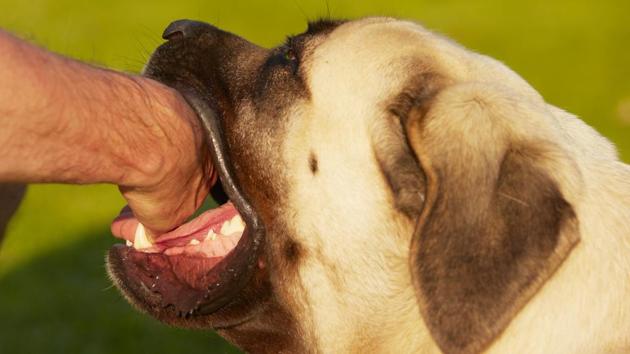
Every time a dog bites a human in the tricity of Chandigarh-Panchkula-Mohali, love and logic get into a dogfight. The situation is better than before in Chandigarh, but much worse in other towns across the country. Birth control programmes have worked sporadically or not at all.
But this does not get talked about, except in newspapers that are then accused of overtly or covertly backing the idea of culling. Look, if I were not a dog lover, I would’ve been happy to make this simplistic argument: Humans, being on top of the food chain, should have the right to guard themselves against other species with whatever means possible. But, given how vocal and well-connected some of my fellow dog lovers are, I’d not risk making that argument even for argument’s sake.
My argument revolves around — you guessed it — the idea of love. We all know that love does not mean that you let the other person — in this case, dogs — do whatever the hell they want. Imagine your boyfriend/girlfriend in the same position. (Actually, don’t imagine that. Dogs are better than human beings, we all know.)
Mohali mayor Kulwant Singh has suggested that residents adopt stray dogs. That sounds like a lovely idea. But how many strays can be adopted by how many residents? And what’s the MC’s duty then? Institutional responsibilities must never be outsourced to individual goodness. That’s akin to running a sanitation campaign without putting up dustbins for miles. Sounds familiar?
Many residents blame dog lovers who feed strays. They say that when the dogs don’t get fed, they attack. The Panchkula MC has even issued guidelines that street dogs should be fed at a particular place. I can already foresee an online campaign with a hashtag — #cullthecanines!
Do you see what’s happening here? A particular set of people is not only being blamed but even being used as a tool to distract from the real issue. And violence on helpless creatures is being seen as a solution now. At the core of the problem is the failure of civic bodies in ensuring that dogs are shifted and sterilised, regularly and safely, so that we have a long-term solution.
This leaves dog lovers in a peculiar position. They are being hounded for being in love. What must they do to defend themselves now? Turn around and bark lovely profanities at those who call for some strict measures to deal with the canine menace? Let me pontificate: It is the dog lovers’ duty now to engage with the authorities. Question them for bringing us to this catch-22 every few months after a series of incidents of rabid dog attacks. Use your vocal presence online and offline to build a movement that pushes authorities into action. It’s easier said than done.
Maligning culling-callers, the media, and stray commentators on Facebook, may all be coming from a good place in your heart, but it isn’t going to help anyone, least of all the dogs. Falling in love is the easier part. The real thing is much tougher. Figuratively speaking, it’s time to stop barking, and start biting.
Writer tweets @aarishc


