
Sign in

Meet DJ Varnika Kundu, back on the console, being ‘normal’

The resident DJ has just made way for Varnika Kundu, DJ Miracle Drugg, the 29-year-old woman who became a symbol of resistance against misogyny last month when she got her stalkers arrested while she was returning home at night from Chandigarh to Panchkula.

Updated on: Sep 14, 2017, 10:47:46 IST
Hindustan Times, Chandigarh | By , Chandigarh
Share
Share via
  • facebook
  • twitter
  • linkedin
  • whatsapp
Copy link
  • copy link

She is, after all, just a DJ. Or so she wants us to believe. Inside, the crowd roars as her name is announced. It’s not the usual.
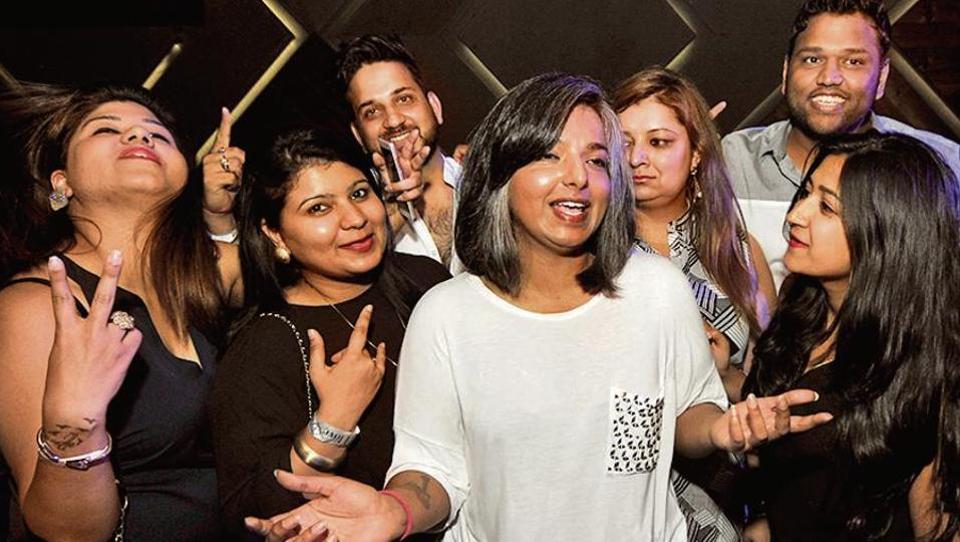
Varnika Kundu with friends at a Sec-26 club. (Ravi Kumar/HT)

The resident DJ has just made way for Varnika Kundu, DJ Miracle Drugg, the 29-year-old woman who became a symbol of resistance against misogyny last month when she got her stalkers arrested while she was returning home at night from Chandigarh to Panchkula.

Breaking barriers: How DJ Varnika Kundu stood up to VIP stalkers in Chandigarh

She is playing a gig at a club in Sector 26. The crowd has more women than men. It’s ladies night, when drinks are free for women. Men follow. Isn’t this misogynistic, we ask her. “Well, it’s really a question the men have to answer,” she quips.
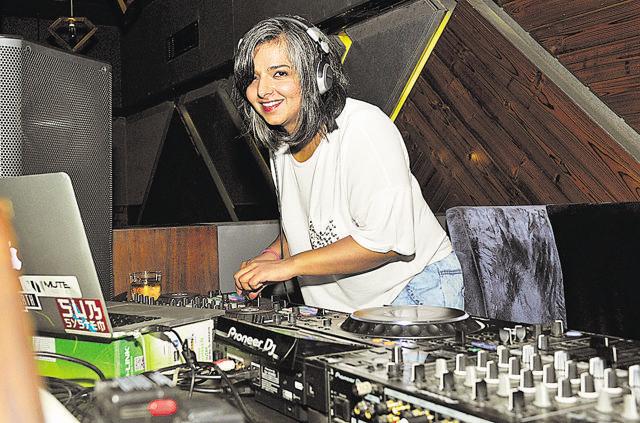
Varnika Kundu at work in Chandigarh on Wednesday. (Ravi Kumar/Hindustan Times)

On the console, she is swaying, immersed. Awkward posing for the camera. “That will look so lame,” she giggles. But then darts a smile right towards the lens. Bouncers are restless at the media presence. People – the club has about 80 – dance on.

She moves from Shape of You by Ed Sheeran to Justin Bieber, who wonders if it is ‘too late to say sorry’. No, she’s not bothered sending a message to her stalkers – Haryana BJP chief Subhash Barala’s son Vikas and his friend Ashish Kumar – through the lyrics. She’s just playing “whatever catches my fancy” — remixed Hindi classic to house to sugar.

But she has faced so many queries on her security that, “I felt I was going into war zone. But, except some extra precautions — the fact that I am in an SUV and not a sedan – it’s quite normal for me.”

Ask her if the case has changed her life, she finally lets it show that she is no longer just another DJ. “Women rights is definitely something I have to fight for… For now I am just doing talks, and doing my bit on social media. But I don’t think it’s nearly enough. It’s the least I can do.”

And then she gets back to the console. Being normal.

(Inputs by Aneesha Bedi)

  • Aarish Chhabra
    ABOUT THE AUTHOR
    Aarish Chhabra

    Aarish Chhabra is an Associate Editor with the Hindustan Times online team, writing news reports and explanatory articles, besides overseeing coverage for the website. His career spans nearly two decades across India's most respected newsrooms in print, digital, and broadcast. He has reported, written, and edited across formats — from breaking news and live election coverage, to analytical long-reads and cultural commentary — building a body of work that reflects both editorial rigour and a deep curiosity about the society he writes for. Aarish studied English literature, sociology and history, besides journalism, at Panjab University, Chandigarh, and started his career in that city, eventually moving to Delhi. He is also the author of ‘The Big Small Town: How Life Looks from Chandigarh’, a collection of critical essays originally serialised as a weekly column in the Hindustan Times, examining the culture and politics of a city that is far more than its famous architecture — and, in doing so, holding up a mirror to modern India. In stints at the BBC, The Indian Express, NDTV, and Jagran New Media, he worked across formats and languages; mainly English, also Hindi and Punjabi. He was part of the crack team for the BBC Explainer project replicated across the world by the broadcaster. At Jagran, he developed editorial guides and trained journalists on integrity and content quality. He has also worked at the intersection of journalism and education. At the Indian School of Business (ISB), Hyderabad, he developed a website that simplified academic research in management. At Bennett University's Times School of Media in Noida, he taught students the craft of digital journalism: from newsgathering and writing, to social media strategy and video storytelling. Having moved from a small town to a bigger town to a mega city for education and work, his intellectual passions lie at the intersection of society, politics, and popular culture — a perspective that informs both his writing and his view of the world. When not working, he is constantly reading long-form journalism or watching brainrot content, sometimes both at the same time.Read More