
 E-Paper



As a first-time homebuyer, should you invest in a Tier 2 city and rent in a metro?
With most metros becoming unaffordable for first-time homebuyers, Tier 2 cities like Nagpur, Greater Noida, and Mysuru offer a practical investment alternative

 Prefer HTon Google


With cities like Mumbai, Gurugram, and Bengaluru becoming increasingly unaffordable, even for high earners, it may be more practical for first-time homebuyers to continue renting in a metro while investing in property in a Tier 2 city, where they can benefit from potential capital appreciation and rental income.
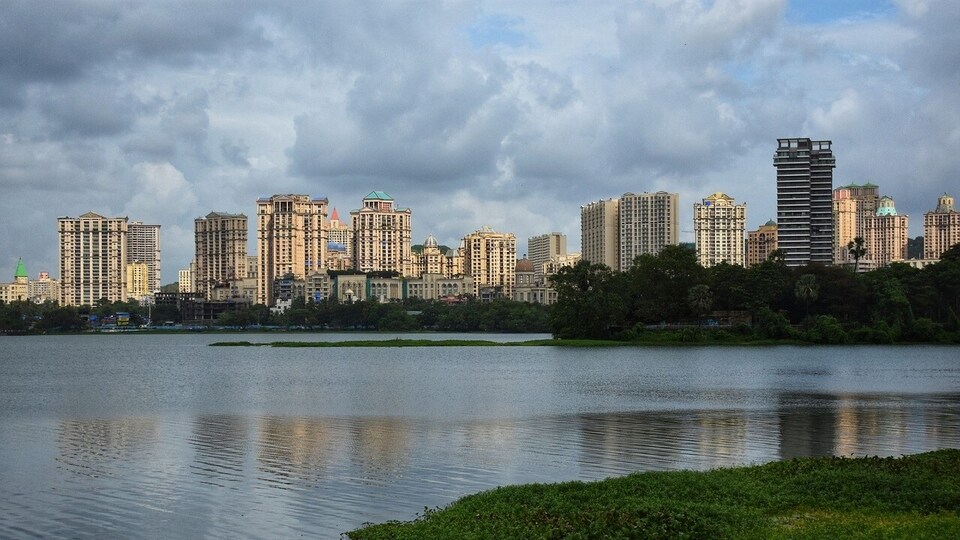
For those looking to buy their first home, Tier 2 cities nearby like Nagpur, Greater Noida or Mysuru may offer a better option. They may continue to stay in the city on rent, yet own a property which has the potential to appreciate in price and also earn them a rental income.
Also, in a Tier 2 city, lenders tend to be slightly more flexible on account of lower property costs. In these cities, eligibility can go up to 4 to 5 times annual income, that is in the range of ₹1.2 crore to ₹1.44 crore. This is assuming the individual keeps EMIs capped at 40% of post-tax income.
Let us say someone earns ₹24 lakh in Mumbai. He can afford a very small property in the city. However, it is a different story in a Tier 2 city.
Here’s a detailed breakdown of home loan eligibility and property affordability for someone earning ₹24 lakh annually, assuming…

Let us look at it in another way.
Home loan eligibility in metros such as Mumbai, Delhi-NCR and Bengaluru typically ranges from 5 to 6 times a buyer’s annual income. For someone earning ₹24 lakh annually, this would translate to an approximate loan eligibility of ₹96 lakh to ₹1.2 crore.
In a Tier 2 city, lenders tend to be slightly more flexible on account of lower property costs. In these cities, eligibility can go up to 4 to 5 times annual income, that is in the range of ₹1.2 crore to ₹1.44 crore. This is assuming the individual keeps EMIs capped at 40% of post-tax income. Affordability will also depend on prevailing interest rates and the borrower's credit score. “As a general practice, homes in Tier 2 cities offer better value per square foot and so make it possible to have spacious or premium properties within the same budget bracket,” says Sanjay Daga, CEO and Managing Director of Anex Advisory.
Total cost of homeownership
Not just the EMIs, homeownership in Tier 2 cities cost significantly lower in Tier 2 cities. Besides the monthly EMIs, maintenance charges, property taxes, and utility bills are also on the lower side. For instance, maintenance charges in a mid-tier society in Nagpur or Mysuru could be half or even a third of what one might be paying in Mumbai or Bengaluru. This cost differential can result in huge monthly savings and strengthen long-term wealth creation.

“These savings can be turned into creating SIPs, investing in mutual funds, or making equity investments. So, for a ₹24 lakh per annum earner, even saving ₹15,000– ₹20,000 monthly can have a meaningful compounding impact over the long-term,” says Daga.
Does it make sense to invest in Tier 2 cities next to big metros?
“Tier 2 cities like Nagpur, Greater Noida, and Mysuru are increasingly becoming not just affordable alternatives, but also compelling long-term bets for homeownership, provided you approach the investment strategically,” says Deepak Mishra, Director and Head, North India, Residential Services, Colliers India.
With government increasing focus on infrastructure development of Tier 2 cities and their proximity to major employment hubs like Greater Noida to Noida, Mysuru to Bengaluru, and Nagpur to Pune, these cities strike a practical balance.
“Projects like Metro rail, expressways and IT parks are making these cities more connected and livable. They offer the comfort of being near metros while benefiting from lower living costs, more spacious homes and a better quality of life,” says Santhosh Kumar, vice chairman, ANAROCK Group.
For those looking beyond the lifestyle and fast pace of metros, these emerging cities present a smart and liveable alternative with long-term potential. However, buyers should keep in mind certain points while buying a home in tier 2 cities. While capital appreciation may come with time, rental demand, yield and resale liquidity might be slower than metros.
Also Read: To rent or sell property? Here’s what you should know to make the right decision
How to plan financially for buying a home in a Tier 2 city?
The answer lies in early planning. Anyone with a ₹24 lakh annual income will be eligible for a monthly EMI of around ₹60,000– ₹80,000. “For Tier 2 cities where property prices range between ₹3,500 to ₹6,500 per sq ft, this offers significant leverage. The buyer should aim for at least 20–25% of the property value as downpayment, keeping the loan-to-value ratio healthy,” says Daga.
It is advisable to apportion funds to reduce the principle by 5%-7% every year apart from the usual EMI payments. “This will help to reduce the tenure of the mortgage and lower the interest outflow of the property.” says Kumar.
Anagh Pal is a personal finance expert who writes on real estate, tax, insurance, mutual funds and other topics


