
 E-Paper



Beyond goals and assists, Alexia Putellas' playmaking influence explains her third Ballon d'Or
Alexia Putellas claimed her third Ballon d’Or Féminin after leading Barcelona to four trophies in 2025–26.

 Prefer HTon Google


Alexia Putellas returned to the Ballon d’Or podium four years after her last triumph. The 32-year-old Spaniard had previously won the award in 2021 and 2022. She has now drawn level with her former Barcelona teammate Aitana Bonmatí at three Ballon d’Or Féminin awards.
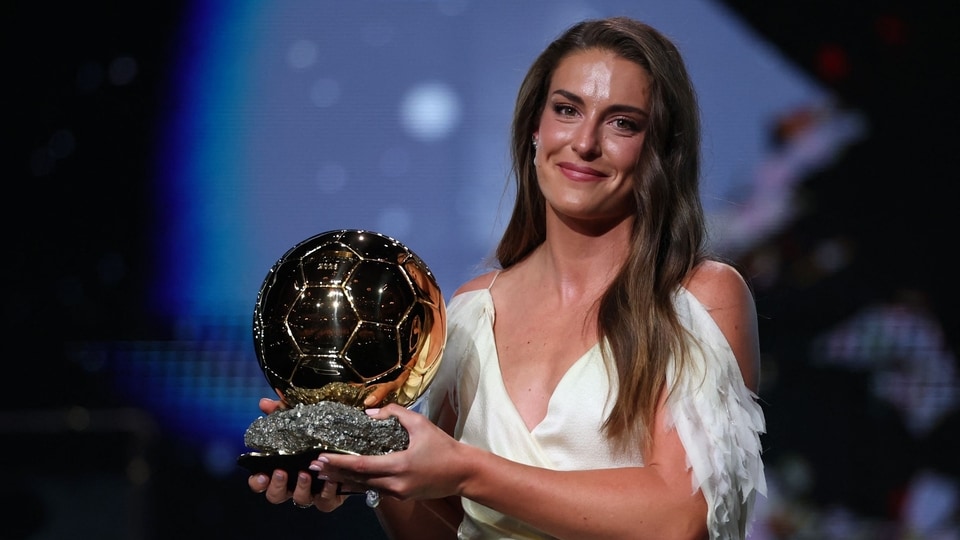
Putellas led Barcelona to four trophies in the 2025-26 season. The individual award is recognition of the exceptional season she had. But it had not always been a smooth-running story.
The seasons that disappeared
Putellas's career lately has been a story of momentum interrupted by unfortunate injuries. In 2021-22, she played 3,118 minutes for Barcelona. Putellas made 42 appearances that season and scored 34 goals.
Deep Dive

However, she could not build on that form after suffering an ACL injury in July 2022. The following campaign saw her play only 114 minutes, making six appearances and scoring one goal.
During the 2023-24 season, Barcelona won another European title, but Putellas managed only 1,411 minutes across 27 games. She gradually made her presence felt on the field as she recovered from the setback.
According to Barcelona's historical records, Putellas played 2,797 minutes in 2024-25 while scoring 22 goals. Last season, she was on the pitch for 2,926 minutes across 43 games, scoring 20 goals.
More than the final touch
Opta’s figures for the 2025-26 season credit Putellas with 21 goals and 13 assists. But her influence runs much deeper than goals and assists. During the period, she created 89 chances, 13 of them classified as big chances. Her expected assists stood at 13.1, the highest in the Opta dataset.
Her influence is noteworthy not only in the final third but also throughout the playmaking sequence. Putellas completed 965 passes ending in the final third during the campaign, again topping the charts. In Liga F, she made 931 successful passes in the opposition half. Putellas was also involved in 151 open-play sequences that led to a shot.
In the Champions League, she scored seven goals and provided seven assists in 11 appearances. Barcelona won the trophy, defeating Lyon 4-0 in the final, and she was named the competition’s Player of the Season.
The numbers suggest that Putellas was not simply there to make a dramatic pass or provide the final touch; she was at the heart of it all. Barcelona’s dominance can inflate possession stats, but that cannot take away from the central role Putellas played in the team’s decisive attacking moves.
Also Read: Harry Kane’s Ballon d’Or triumph ‘beyond wildest dreams’, but he’s not done yet
The award and the argument
There never was, and never will be, universal agreement about who should win the Ballon d’Or. Before the ceremony, The Athletic published an independent survey in which football professionals placed Barcelona midfielder Patri Guijarro first with 298 points, Shaw second with 276 and Putellas third with 272. The official standings turned out completely differently: Putellas first, Pajor second and Shaw third, with Guijarro occupying fifth spot.
Guijarro’s recognition in the independent survey suggests that some experts placed greater importance on midfield organisation than on visible contributions. Putellas winning the award, meanwhile, is recognition of her combination of creativity, end product and silverware.
Putellas has already moved on to the next chapter of her footballing story. After spending 14 years at Barcelona, she joined London City Lionesses in July. Her third Ballon d’Or was the final recognition of what she achieved in an established, familiar and dominant system. But now, England will test whether she can produce the same level of control and brilliance somewhere else. She has made her comeback from the agonising injury. Now it is time to answer the next argument about her greatness.


