
 E-Paper



The South American statement: How 2026 World Cup has challenged Europe's narrative
This World Cup has also challenged the long-held belief that South American football begins and ends with Brazil and Argentina.

 Prefer HTon Google


For years, European football has often been viewed as the benchmark in the international game, with many placing the UEFA European Championship above the Copa America in terms of quality and competitiveness. The strength of Europe's domestic leagues, world-class academies and elite club competitions has helped shape that perception. However, this World Cup has offered a different picture. South American teams have consistently matched Europe's leading nations and, in several key knockout matches, come out on top. Their blend of technical ability, defensive resilience and competitive edge has stood out throughout the tournament.
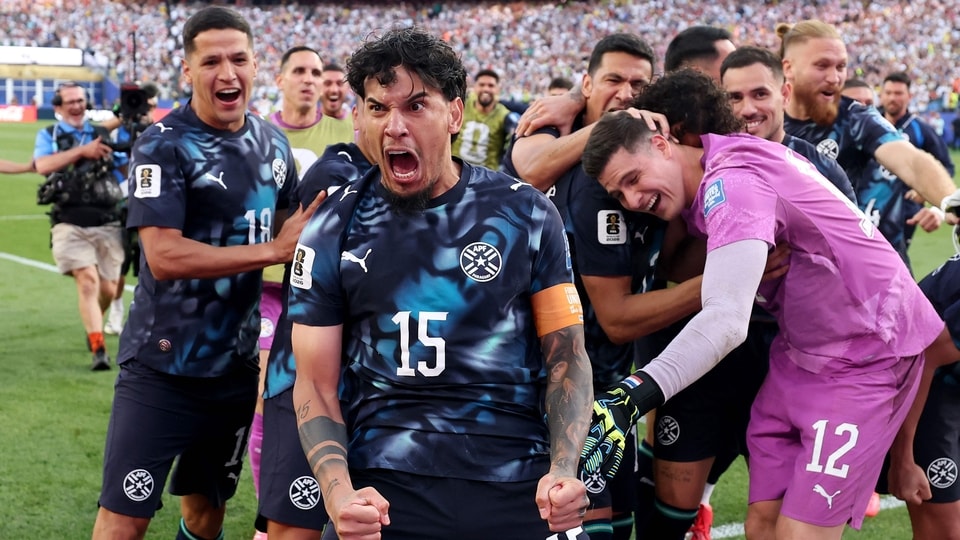
Results on the pitch have challenged long-held opinions about the balance of power between the two continents. Rather than reinforcing Europe's reputation, this World Cup has shown that South American football continues to produce teams capable of competing with, and defeating, the very best on the biggest stage.
South American teams have been among the standout performers at this World Cup, particularly when facing European opposition. In seven meetings between the two continents, South American sides have won five, underlining their ability to compete with and overcome some of Europe's biggest names. Those victories have been built on disciplined defending, tactical organisation and the composure to deliver in decisive moments. Their physical approach has also caused problems for European teams, with compact defensive structures disrupting the attacking rhythm that many European sides rely on. Rather than being drawn into open contests, South American teams have dictated matches on their own terms.
South America teams vs European teams in this World Cup
Brazil 3-0 Scotland
Paraguay 1-0 Türkiye
Ecuador 2-1 Germany
Uruguay 0-1 Spain
Argentina 2-0 Austria
Colombia 0-0 Portugal
Paraguay (P)1-1 Germany
The tournament has also challenged the long-held belief that South American football begins and ends with Brazil and Argentina. Ecuador, Paraguay and Colombia have all made strong statements on the world stage. Ecuador defeated Germany in the group stage to keep their campaign alive, while Paraguay produced one of the biggest upsets of the tournament by eliminating the four-time world champions in the Round of 32. Colombia, meanwhile, proved they could match one of Europe's leading sides by earning a hard-fought 1-1 draw against tournament favourites Portugal in the group stage.
Also Read - The unfinished rebuild: Why Germany remain stuck in the shadow of 2014
Several of Europe's traditional heavyweights have struggled to stamp their authority on matches, while South American teams have repeatedly delivered under pressure. Their performances have highlighted the strength and depth of football across the continent, showing that success is no longer confined to Brazil and Argentina. This World Cup has served as another reminder that South America continues to produce teams capable of competing with anyone on football's biggest stage.
South America's rise has not been limited to the World Cup. The continent's teams have produced impressive results throughout the World Cup qualifiers and other major competitions, showing they can consistently challenge the world's best. Paraguay made a strong statement by defeating both Argentina and Brazil during the qualifying campaign, highlighting their ability to compete against the traditional powerhouses. Colombia also enjoyed an outstanding Copa América, putting together an impressive run to the final before narrowly losing to reigning world champions Argentina after conceding in extra time. Those performances have carried into this World Cup, where South American sides have continued to trouble Europe's biggest teams.
Ahead of Paraguay's meeting with Germany, coach Gustavo Alfaro said his players would draw confidence from their victories over Argentina and Brazil, believing those results proved they could compete with any opponent.
"We have been up against Argentina, we have been up against Brazil, teams with the same stature or perhaps even more stature than Germany," Alfaro told reporters on Sunday.
"They're all candidates for world champions. We faced them and it was tough for us but we pulled it off," he said.
His players backed up those words on the pitch, giving everything against Germany to prove that South American football extends far beyond Argentina and Brazil. Paraguay's performance was another reminder that the continent's strength runs deep, with teams capable of competing with and defeating Europe's traditional powers on the biggest stage.


