
 E-Paper



Indian-origin chess prodigy Bodhana Sivanandan makes history at 11 as youngest woman grandmaster
Bodhana Sivanandan, an 11-year-old British chess prodigy, becomes the youngest player to earn the Woman Grandmaster title.

 Prefer HTon Google


At an age when most children are only beginning to understand the pressures of competitive sport, Bodhana Sivanandan is already rewriting chess history. The 11-year-old British prodigy has become the youngest player ever to earn the Woman Grandmaster title after securing her third and final WGM norm while representing England at the 46th Chess Olympiad in Samarkand, Uzbekistan.
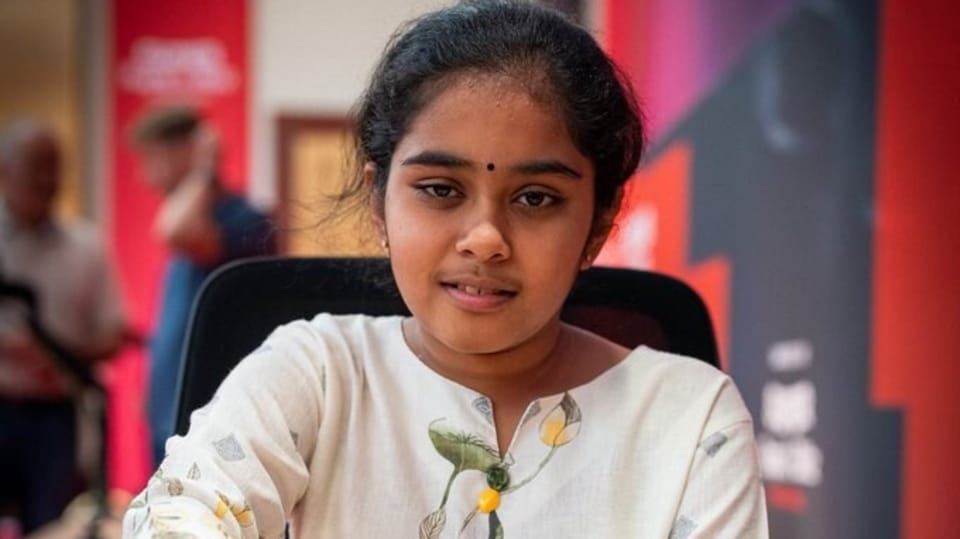
Sivanandan, who played on England’s top board throughout the Olympiad, finished the tournament with eight points from 11 rounds and completed the requirements for the title after having already crossed the necessary 2300 rating threshold. Her achievement breaks the long-standing age record previously held by Kateryna Lagno, who became a WGM at 12, while China’s Hou Yifan also earned the title at the same age before later becoming the youngest woman to achieve the open Grandmaster title.
For Sivanandan, however, the latest record appears to be another checkpoint rather than a destination. Speaking after the achievement, she made it clear that she was already looking ahead. “I'm happy to do it, but I want to keep going and keep making history as well, instead of just stopping here,” she told FIDE, a statement that neatly captures the ambition behind one of the fastest rises in modern junior chess.
From lockdown discovery to England’s top board
Sivanandan’s journey began almost accidentally during the coronavirus lockdown, when she taught herself the basics of chess after becoming interested in a set left behind by a family friend. Neither of her parents was a serious chess player, yet the youngster quickly displayed an understanding of the game that went far beyond her age, entering her first tournament at Harrow Chess Club in July 2021.
Within a year, the scale of her talent had become obvious. At seven, she won all 24 of her games at the European Schools Championship, and by 2023 she had become the youngest person to avoid defeat against a grandmaster in a competitive game at the European Rapid and Blitz Championship in Croatia. Her progress continued at such speed that England selected her for the 2024 Chess Olympiad in Budapest when she was nine.
That selection itself made history, with the English Chess Federation stating that Sivanandan was the youngest person to represent England internationally in any sport. Two years later, the progression is even more striking: instead of appearing as a promising junior or reserve option, she was trusted with board one in Samarkand, repeatedly facing the strongest players opposing teams could field.
Her record since then has continued to expand. At 10, she became the youngest female player to defeat a grandmaster when she beat Peter Wells at the British Chess Championships. Earlier this year, she earned her first International Master norm at the Dole Open in France and defeated grandmaster Marc'Andria Maurizzi, becoming the youngest girl known to beat a player rated above 2600 in a classical game.
The Olympiad has now added another layer to that trajectory. Along with completing her WGM title, Sivanandan earned her second IM norm, leaving her one norm away from satisfying another major part of the requirements for the open International Master title. Players generally need three norms and a rating of at least 2400 to become an IM, a title considered higher than WGM and available to players of either sex.
That is what makes Sivanandan’s latest record particularly significant. Becoming the youngest WGM in history would already stand as an extraordinary achievement, but her results suggest she is moving rapidly towards challenges beyond the women-only title structure. Still attending school full-time and only 11 years old, she is already Britain’s youngest women’s champion, England’s leading young chess phenomenon and, increasingly, a player whose next record may arrive sooner than expected.


