
 E-Paper



'Working on myself, being better than yesterday was the focus, not winning medals': Rhythm Sangwan
In an interview with HT, Rhythm opened up about her Asian Games campaign in China, her introduction to sport and her bid to qualify for the Paris Olympics.

 Prefer HTon Google


For 19-year-old Rhythm Sangwan, process and technique were more important than a medal. Getting better than yesterday was the goal. But as 'Three Idiots' taught us, it was her drive for excellence that landed her on the doorsteps of success. On September 27, Rhythm, along with Manu Bhaker and Esha Singh clinched the elusive gold medal in the women’s 25m pistol team event at the Asian Games in Hangzhou. It was the second time that the trio finished top of the podium in the discipline after a gold medal haul in Baku in the ISSF World Shooting Championships.
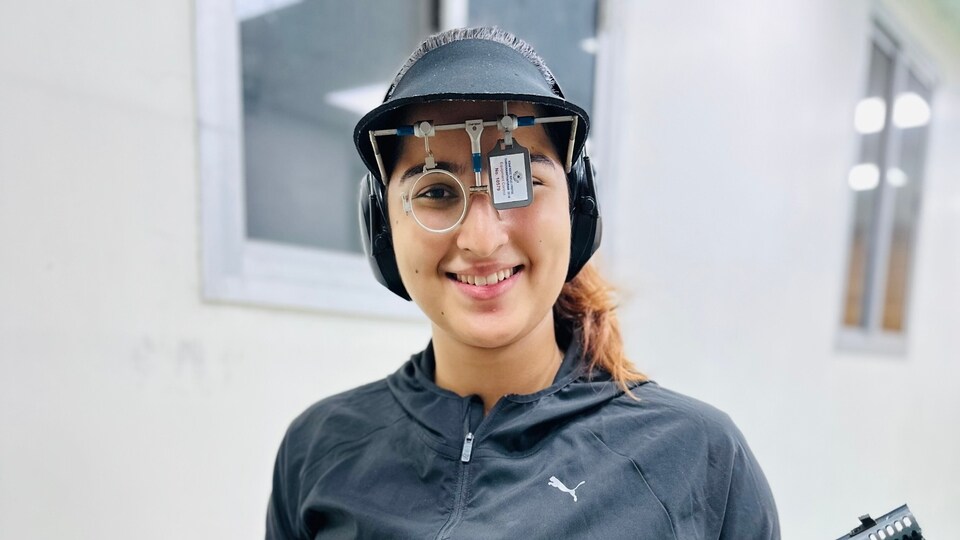
In an exclusive interview with Hindustan Times Digital, Rhythm opened up about her Asian Games campaign in China, her introduction to sport and her bid to qualify for the Paris Olympics. She also talked about her association with Puma and how their support played a key role in her Asian Games tour.
Here are excerpts...
Q) All of just 19, you'll be hailed as an Asiad medalist from here on in your career. How has that realisation been so far?
I'm really happy to achieve such a great feat at such a young age, and I'm happy that I have lots of opportunities ahead of me. But I think age is just a number. Whether you are 15 or 50 or 19, it doesn't matter. Shooting is more of a mental game. So I think age doesn't matter. What matters is how you play the game. How interested you are and your passion for it.
Q) There was a heartbreak in Cairo last year, a near miss in Baku despite a record, and then you get this Asian Games gold in China. How did you turn things around?
I was working hard, but neither the Asian Games, nor the World Cup was my goal. I was just working on myself, trying to get better, trying to be better than what I was yesterday. Me and my coach worked a lot on my technique and I just kept my focus on that. Getting a quota or winning a medal at the Asian Games was not my focus. Of course I wanted to win it, but my focus was not on that. It was entirely on my game, on technique, on what I have to do, not that I have to win this competition.
ALSO READ: Prathamesh Jawkar's archery journey: A chance start, a filmy trigger and golden finish at Asian Games
Q) Rhythm, if you could briefly talk about how you were introduced to the sport.
Well, my mother was very interested in sports, and she wanted me to pursue any kind of sports. As a hobby though, initially. So one day, around six years back, we just went to the shooting range, and I just loved the environment there. I just love the sound of the guns firing, the ammunition and everything like that. So that's how I just started, and I just knew that this is what I want to do and that I'm going to do it.
And I wasn't scared of guns (laughs). It is because my father is a DSP in Haryana police, so I was always surrounded by guns and bullets. And my parents have been supportive throughout, 101 per cent. They always told me to pursue my dreams, whatever I wanted to do. I had no pressure. Even after the setbacks, even after failures, they were always like, 'you tried your best and that is all that you can do. The result is not in our hands. You just go there and you just enjoy your game.'
Q) You're in college, am I right?
Yes, I'm in Lady Shri Ram, pursuing English honours.
Q) That's a tough college. So how have you been balancing academics and sports?
Well, my parents always clear that academics and sports should go hand in hand. It's not like you focus only on one thing. I didn't have that much time even in the boards. It was a very tough year for my class 12 boards. But I had 2-3 days to prepare for it and so I just focused on one exam at a time and I just gave it all in. Even in college, I submit the assignments, give my tests and everything whenever I can and yeah, that's how I do it.
Q) You previously mentioned about the mental aspect of the game. So what are your exercises in terms of getting mentally prepared for these big competitions?
When you're preparing for any competition, the first thing that you ask yourself is, are you ready for the competition? And are you feeling confident? And second, I have my coach, who is also like a mental trainer. He's a one man army. So whenever I have any doubts or issues, I just talk to him. I just tell him everything and then I feel absolutely free. I feel nothing, no burden on me.
I would definitely say that mentally you got to enjoy the game. At the end of the day, it's just a game. You don't take it as a life if it's not there, if you don't win or succeed, it's okay. It's part of the game. You have to accept the ups and downs of it.
Q) You are associated with Puma now, so how does the support help you focus more on the game?
Puma took me onboard right before the Asian Games. And at the age of 19, having a brand like Puma to have your back, and give you global recognition, it's a big deal. And it clearly shows one simply needs to follow their passion and follow their heart and work towards their goal. So for any youngsters out there, a brand like Puma is here to help you climb the ladder of success. And it's also committed towards contributing to India in becoming a sporting nation. Puma has launched the revolutionary 'Let There Be Sport' movement as well, which promotes sports as a life skill and advocates of the sports in the main educational curriculum rather than an extra activity. So I'm really happy that I'm part of a brand that not only supports my discipline, like shooting, it also supports cricket, football, hockey, and all of the other sports. And I feel really privileged to be part of the Puma family, which has various top athletes such as Mary Kom, Virat Kohli and para athlete Avani Lekhara.
Q) Two of the names you mentioned are female athletes. Puma has been extensively working with female sports persons across the country. So how important is the support of a brand like Puma for the career?
Well, for me, how Puma supported me, it just makes me want to focus on the game alone. So all the workout gear and everything is footwear. It's all taken care of and all the support is provided. The only requirement from my end is to play the sport well and focus on my game. So it takes the burden off the shoulders of the athlete, even financially, or in terms of if there's any person who is not that much financially stable or he can't buy the good equipment, gear or walkout gear, and it's really a big help to them.
Q) Your goal remains the Olympic qualification. You were part of the Asian Shooting Championship last week. So what next when it comes to making it to Paris?
We have a few competitions ahead of us, like in 1-2 months. So my next focus is on that. Hopefully we'll succeed with everyone's blessing. I'm hoping that we do succeed.


